
-
News
- 19 hours ago
A beginner's guide to the World Cup
10 Jun 2026 12:00 CDT |
25 min read
Analysis

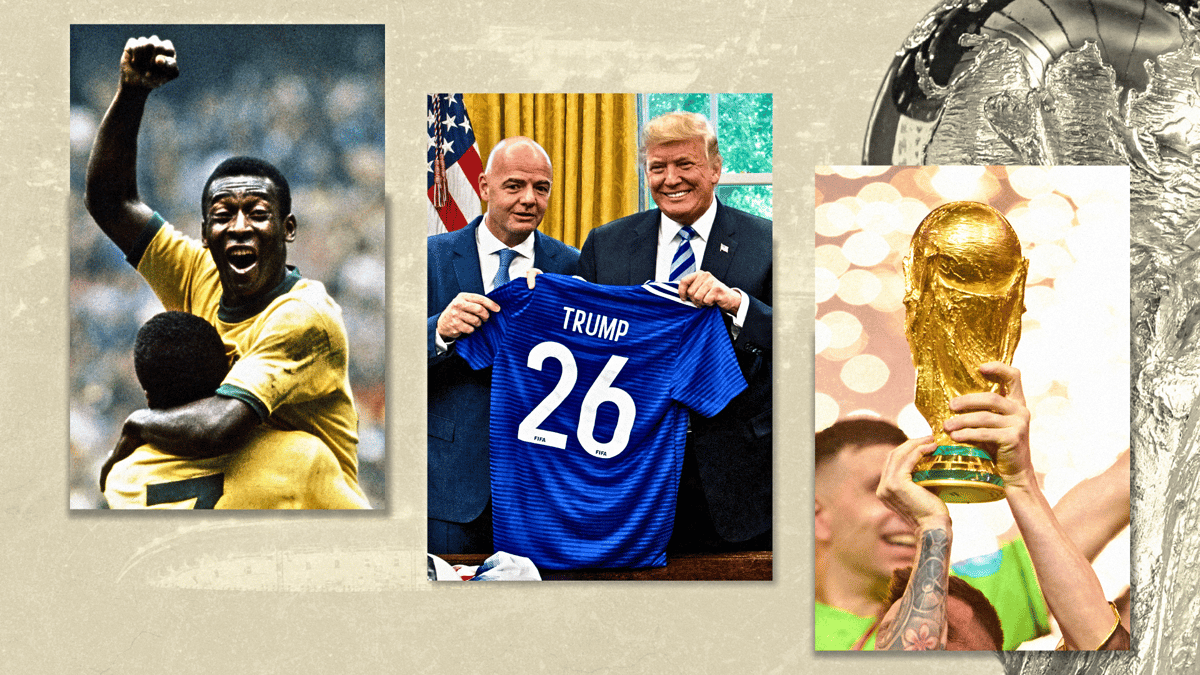
The 2026 World Cup kicks off on Thursday with co-hosts Mexico taking on former hosts South Africa at the glorious, renovated Mexico City Stadium (better known as Estadio Azteca).
For the next month or so, soccer will dominate the headlines. There will be celebrations and tears. New heroes and villains will etch their names into the annals of history. And at the end of it all, on 19 July at New York New Jersey (MetLife) Stadium, a new world champion will be crowned.
The 2026 World Cup in the USA, Canada and Mexico will be the biggest edition yet, with a whopping 48 nations descending on North America for the greatest sporting spectacle on earth.
1,248 players will do battle across 16 venues, but only 26 of them will be allowed to hoist the golden trophy next month.
Whether you're a soccer newbie or simply someone who wants to learn more about the best tournament in sports, FootballTransfers has got you covered with everything you need to know about the World Cup.
What is the World Cup?
Let's start with the most basic question: what actually is the World Cup? It's pretty simple. It is an international soccer competition hosted by the sport's governing body, FIFA, to determine the best national team on the planet. It takes place every four years.
The participating nations are drawn into groups of four, with all the teams in the same group playing each other once. At the end of the group stage, the top two in each group, as well as some of the best-performing third-placed teams, advance to the knockout stages.
Because FIFA has expanded the tournament from 32 teams to 48, there will be an additional knockout stage this summer, the round of 32. Based on their final group position, all the teams that made it out of the initial phase will face each other in predetermined, one-off match-ups.
For example, the very first round of 32 game, slated to be played on 28 June at SoFi Stadium near Los Angeles, will pit the second-placed team from Group A against the second-placed team from Group B.
In order to prevent the best teams from playing each other early on, FIFA has decided to make the progression paths such that the tournament favourites will only face off in the latter knockout stages, provided they perform as expected in the group stage.
The winners from the round of 32 progress to the round of 16, then to the quarter-finals, and then to the semi-finals. The last two teams standing will play each other on 19 July to determine the winner of the World Cup.
The day prior, the two semi-final losers will face off to determine the third and fourth-placed sides.
While draws are permitted in the group stage and award one point - compared to three points for a win - knockout games that finish with the score level will go to a 30-minute extra time period and then a penalty shoot-out.
Who is in the 2026 World Cup?
As mentioned, the 2026 World Cup will be the biggest one yet, with 48 countries from seven confederations participating. The three hosts - the USA, Canada and Mexico - automatically qualified, as is customary.
Japan, who are part of the Asian Football Confederation (AFC), were the first non-host country to qualify. They were followed by New Zealand from the Oceania Football Confederation (OFC). Curiously, Australia - who also qualified - are part of the AFC, not the OFC.
They were previously an OFC member, but the Australian federation petitioned FIFA in 2005 to switch to the AFC in pursuit of tougher opposition - but an easier qualifying route - and better commercial opportunities.
2022 World Cup winners Argentina were the first country from CONMEBOL, the South American Football Confederation, to qualify. Unlike in the UEFA Champions League, the pinnacle of club football, winning the World Cup no longer automatically guarantees a spot in the next edition.
The first CAF (Confederation of African Football) team to qualify were Morocco, while England were the first nation from the Union of European Football Associations (UEFA) to get in.
CONCACAF, the Confederation of North, Central America and Caribbean Association Football, only decided its first participant in November 2025, with Panama qualifying for just their second World Cup after the 2018 edition.
42 nations had booked their spot at the World Cup at the end of the qualifying phase in November, but there were still six places up for grabs that were to be determined via the playoffs in March 2026. It gave some teams that disappointed in qualifying a second chance.
Four-time world champions Italy were among the countries that had to take the playoff route in order to get in. However, they failed to beat Bosnia and Herzegovina in one of the UEFA playoff finals and thus missed out on the World Cup for a third consecutive time.
Another big-hitter, Sweden, on the other hand, managed to belatedly get in despite not winning a single game during the actual qualifying phase. They had achieved eligibility for the playoffs on the basis of their previous performances in the UEFA Nations League.
The expansion of the World Cup to 48 teams has allowed several minnows to qualify for the tournament for the very first time. Cape Verde, Curacao, Jordan and Uzbekistan will all make their debuts this summer.
The 12 2026 World Cup groups look as follows:
Group A: Mexico, South Africa, Korea Republic, Czech Republic
Group B: Canada, Bosnia and Herzegovina, Qatar, Switzerland
Group C: Brazil, Morocco, Haiti, Scotland
Group D: USA, Paraguay, Australia, Turkey
Group E: Germany, Curacao, Ivory Coast, Ecuador
Group F: Netherlands, Japan, Sweden, Tunisia
Group G: Belgium, Egypt, Iran, New Zealand
Group H: Spain, Cape Verde, Saudi Arabia, Uruguay
Group I: France, Senegal, Iraq, Norway
Group J: Argentina, Algeria, Austria, Jordan
Group K: Portugal, DR Congo, Uzbekistan, Colombia
Group L: England, Croatia, Ghana, Panama
Where will the 2026 World Cup games be played?
The 104 World Cup games will be spread out over 16 venues in different host cities in Canada, Mexico and the United States.
The games in Canada will take place in Toronto and Vancouver. Toronto Stadium, commonly known as BMO Field, has been expanded by almost 18,000 temporary seats to meet World Cup standards.
The historic Vancouver Stadium - or BC Place - will also host World Cup games despite uncertainty over the future of the arena’s main tenants, the Vancouver Whitecaps from Major League Soccer.

Mexico is represented by three host cities: Mexico City, Guadalajara and Monterrey. The Estadio Azteca in the capital hosted the World Cup final in 1970 and 1986, but it will not get to stage this year’s showpiece, leading to some consternation from football die-hards.
Instead, the world champions will be decided at MetLife Stadium, which will be known as New York New Jersey Stadium for the duration of the tournament.
Games in the US will also be played at Seattle Stadium (Lumen Field), San Francisco Bay Area Stadium (Levi’s Stadium), Los Angeles Stadium (SoFi Stadium), Dallas Stadium (AT&T Stadium), Houston Stadium (NRG Stadium), Kansas City Stadium (Arrowhead Stadium), Atlanta Stadium (Mercedes-Benz Stadium), Miami Stadium (Hard Rock Stadium), Philadelphia Stadium (Lincoln Financial Field) and Boston Stadium (Gillette Stadium).
Who are the favourites to win the 2026 World Cup?
Due to the expansion of the tournament and the additional knockout round, it is harder to predict the 2026 World Cup than previous editions. That said, predictions are rarely straightforward anyway. As the old adage goes: anything can happen in football.
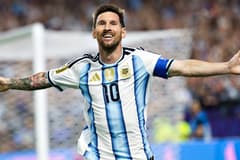
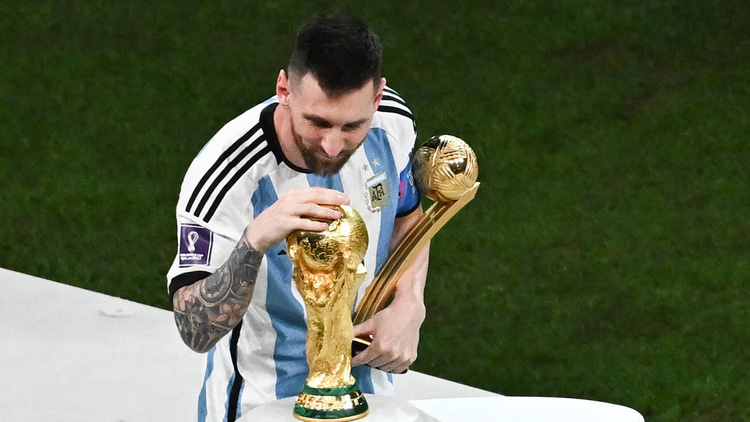
That wasn’t necessarily the case in 2022, however. Argentina went into the tournament as the favourites, and they came out on top after beating France in a thrilling final. Captain Lionel Messi, widely considered to be the greatest player of all time, finally managed to get his hands on the trophy that had eluded him for so long.
Messi is still playing - he has been with Inter Miami since 2023 - and he is one of three players set to take part in a record sixth World Cup this summer, alongside Portugal legend Cristiano Ronaldo and Mexico icon Guillermo Ochoa.
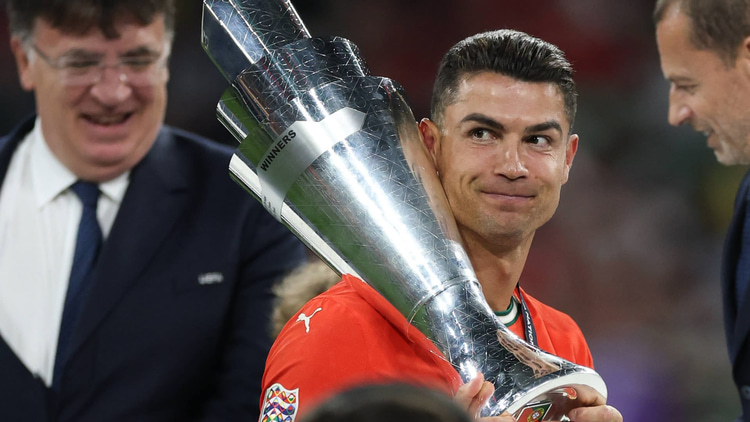
Messi, the first player to win back-to-back MVP awards in MLS, remains an incredible player, but there are doubts over Argentina’s ability to defend their crown.
The biggest favourites this summer come from Europe in the form of France, Spain and England. The French won the World Cup in 2018 and narrowly finished runners-up in 2022. They have an incredibly deep squad and will be determined to give their departing coach, Didier Deschamps, a perfect send-off.
Spain, meanwhile, are the reigning European Champions after triumphing in 2024. Luis de la Fuente’s exciting side played some incredible football at that tournament. However, two of the most important players from Euro 2024 - Lamine Yamal and Nico Williams - head into the World Cup with fitness concerns.
England managed to repair their tarnished reputation under Gareth Southgate, who led the Three Lions to back-to-back finals in the European Championship, but he just couldn’t get them over the line. Consequently, the FA hired a proven winner in former Chelsea boss Thomas Tuchel in the hope that he can help the team finally get that monkey off their back.
Record five-time world champions Brazil could be a force to be reckoned with this summer. While their squad is not as good on paper as some of the legendary Selecao teams of years past, they now have a truly elite coach in serial winner Carlo Ancelotti.
Ronaldo and Portugal will be keen to make an impact this summer, too. Not only will this be CR7’s final major tournament with his country, but Roberto Martinez’s side will also look to honour the memory of the late Diogo Jota, the Liverpool striker who passed away in a car accident last summer. It was his dream to represent his country at this year’s World Cup.
Four-time world champions Germany are a bit of an enigma, having crashed out in the group stages in both the 2018 and 2022 editions after winning the World Cup in 2014. They have the talent to go deep, but will they be able to play up to their potential?
The Netherlands, Belgium, Colombia, Japan, Morocco and Senegal could also potentially make deep runs if things go their way this summer.
Who will be the players to watch at the 2026 World Cup?
Some of the biggest names competing in this year’s finals have already been mentioned: Lionel Messi, Cristiano Ronaldo and 18-year-old prodigy Lamine Yamal.
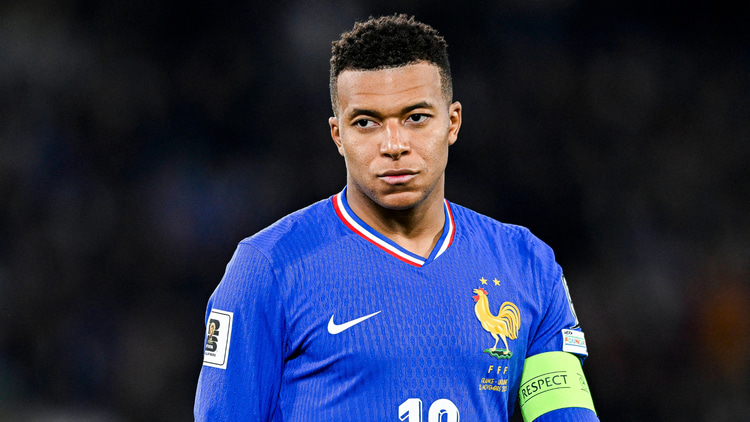
France captain Kylian Mbappe will play with a chip on his shoulder this summer. Despite scoring 42 goals for Real Madrid this season, the forward has faced fierce criticism in Spain, with fans of the LaLiga club starting an anti-Mbappe petition that garnered millions of signatures.
His compatriot Michael Olise will also be one to watch. Coming off a spectacular season at Bayern Munich in Germany, the London-born French winger could be one of the most exciting performers at the World Cup. He netted a hat-trick against Northern Ireland in Les Bleus’ final pre-tournament friendly.
For England, the obvious player to watch will be Harry Kane. The captain and his country’s all-time record goal-scorer, the Bayern Munich striker is desperate to finally win his country’s second World Cup after 1966. Aston Villa attacker Morgan Rogers could also turn a few heads for the Three Lions.
Besides Yamal, one of Spain’s most aesthetically pleasing and naturally gifted players is Barcelona midfielder Pedri. He sees things on the pitch that most people don’t even notice on TV or from the stands. Also keep an eye on Real Sociedad striker Mikel Oyarzabal - he was deadly in qualifying and is currently on a remarkable streak of having scored in every major final he has played in.
Germany has two hugely talented playmakers in Florian Wirtz and Jamal Musiala, while Portugal have Man Utd captain Bruno Fernandes, the reigning Premier League Player of the Year and the holder of the division’s new single-season assist record.
Scandinavian countries Sweden and Norway impress with their firepower: the former have Liverpool striker Alexander Isak and Arsenal forward Viktor Gyokeres, while the latter boast Man City’s goalscoring machine Erling Haaland.
In South America, Luis Diaz from Colombia and Vinicius Jr from Brazil are sure to make headlines. The Brazilians have also brought along ageing former Barcelona and Paris Saint-Germain megastar Neymar, though he is currently injured.
In Mexico, all eyes will be on Gilberto Mora, the 17-year-old Tijuana prodigy who is his country’s great hope. He started last year’s Gold Cup final against the US and will be the youngest player at the tournament this summer. He has just been handed a bumper new contract by his club, but a big transfer to Europe seems inevitable once he is eligible to move after turning 18.
The main attraction for the US is AC Milan winger Christian Pulisic, although head coach Mauricio Pochettino has made the surprising decision to also include Borussia Monchengladbach attacker Gio Reyna in his squad. He is a naturally gifted player, but he has struggled with injuries and caused a scene at the 2022 World Cup, which almost resulted in him getting sent home from the tournament.
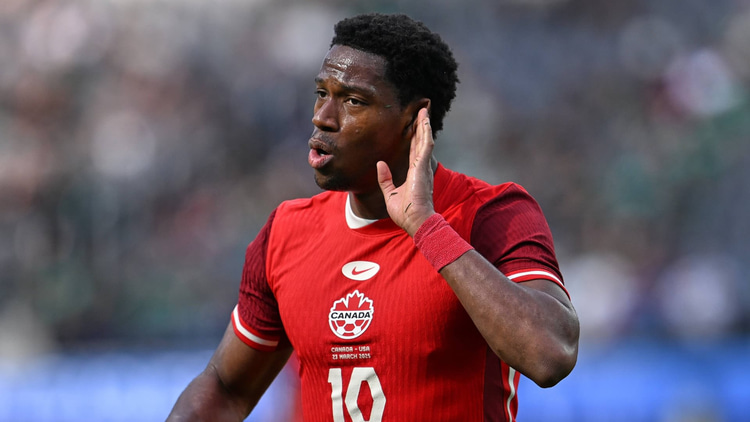
Canada will need Juventus striker Jonathan David to find his scoring form again if they want to impress on home soil. The 26-year-old is coming off a hugely disappointing season in Italy. Additionally, Canadian hopes will rest on the shoulders of Bayern Munich left-back Alphonso Davies, but he is currently not fully fit.
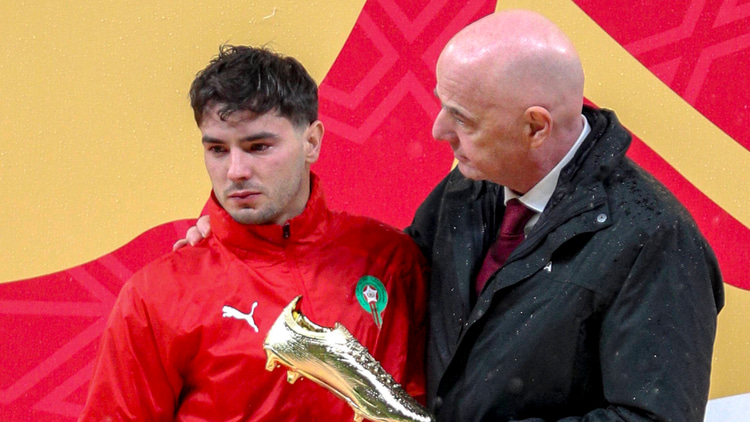
Morocco went on a fairytale run in 2022, and they have several exciting players. PSG right-back Achraf Hakimi is the best player in his position when fit, while Real Madrid attacker Brahim Diaz is also eminently talented.
Senegal, who beat Morocco in the final of the African Cup of Nations in January only to controversially have the title stripped of them (several months after the final), have some deadly attackers in the shape of Liverpool legend Sadio Mane and Ismaila Sarr, who enjoyed a great season at Crystal Palace.
Speaking of Liverpool legends, Mohamed Salah will be one to watch for Egypt. He is playing for a transfer after announcing his departure from the Premier League giants. Yan Diomande of the Ivory Coast is one of the most exciting young wingers in the game right now - he could perhaps replace Salah at Liverpool after a successful World Cup.
World Cup history
The 2026 World Cup will be the 23rd edition of the tournament. The idea to stage large-scale international soccer tournaments emerged in the early 20th century, although international games already took place in the late 19th century.
With British sailors, businessmen and emigrants introducing soccer to many countries around the globe, the sport’s popularity exploded in the early 20th century, leading to its incorporation into the Olympic Games.
When FIFA was founded in 1904, concrete steps were taken to stage major events. First continental tournaments were trialled in the 1900s and early 1910s, but things only really began to snowball in the 1920s when the Olympic tournament was recognised as a football world championship.
Jules Rimet, one of the creators of FIFA and its long-time president, successfully lobbied for the creation of an independent World Cup, with the inaugural tournament taking place in 1930. After his death, the original World Cup trophy was named in his honour.
The first-ever World Cup was staged in Uruguay because of the incredible development of the game there. The small South American country had won the Olympic tournament in 1924 and 1928, and it would win the World Cup on home soil in 1930 after beating Argentina.
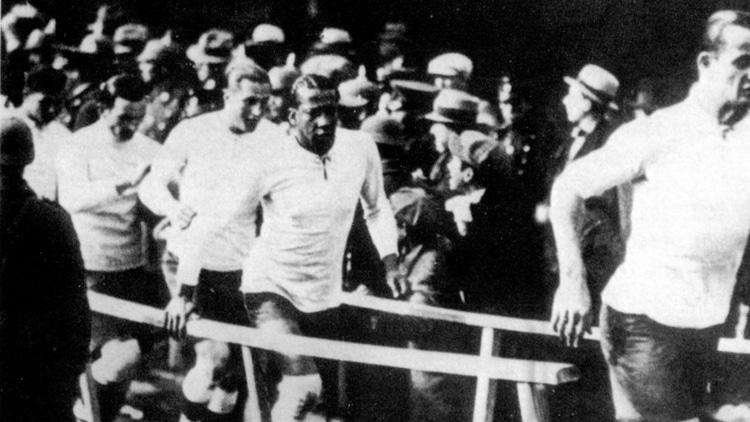
The World Cup has never been without controversy - as illustrated by the 2026 edition. Even the first-ever edition was contentious as European nations protested against the decision to let Uruguay host it.
Because of the means of transportation at the time - with teams travelling by ship - the World Cup was a time commitment of several months, cutting into the club season. Moreover, the tournament took place in the midst of the Great Depression, with national associations forced to shoulder the cost of sending their squads. Belgium, France, Romania and Yugoslavia were the only European countries to show up after Rimet’s personal intervention.
Egypt, Siam (Thailand) and Vietnam withdrew from the tournament before it kicked off, meaning that ultimately only 13 teams participated. The four European nations and Uruguay were joined by the USA, Mexico, Argentina, Bolivia, Brazil, Chile, Paraguay and Peru.
The controversies didn’t stop there. Oh no, things were about to get way worse. The 1934 World Cup was the first edition on European soil - and it was staged in fascist Italy. Benito Mussolini expertly instrumentalised the tournament to support his regime, with Rimet later admitting that the Italian dictator, rather than FIFA, ran the show.
The tournament, which now featured 12 European nations but only four from the other continents (Egypt, the USA, Argentina and Brazil), was again won by the hosts, with Italy beating Czechoslovakia in the final. Out of protest against the governing body’s collusion with the fascist regime, a left-wing Workers’ World Cup was staged two months later in FIFA’s birthplace of Paris, with the Soviet Union defeating Norway in the final. However, neither this tournament nor similar subsequent competitions were recorded as official events.
The World Cup remained in Europe - much to the annoyance of South American countries - when France was chosen to host the 1938 edition over Argentina and Nazi Germany. Italy received automatic entry into the tournament as the 1934 champions - a convention that would remain in force until 2002. They would retain their title after beating Hungary in the final. Vittorio Pozzo remains the only coach to win two World Cups with the same team.
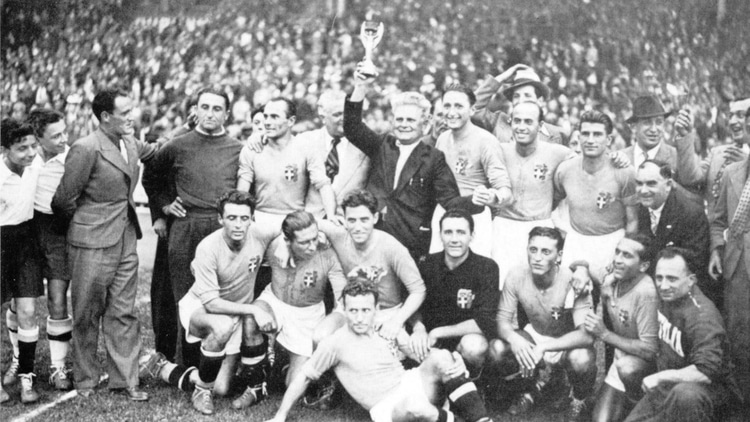
The outbreak of World War II and the devastation it wrought across several continents led to a 12-year hiatus, with the World Cup only returning in 1950. A lack of interest due to post-war reconstruction efforts enabled Brazil, now an emergent footballing powerhouse, to make an unchallenged bid to host. What followed was a national trauma that haunts the country to this day.
After mostly cruising through a truncated tournament - four qualified nations withdrew - the Selecao faced Uruguay in what was effectively the final at the Maracana in front of a crowd rumoured to have been larger than 200,000. Instead of the usual one-off knockout games, FIFA trialled a final group phase at this tournament, and the only two countries that could still win faced each other in the last game.
Brazil were the overwhelming favourites and only needed to avoid defeat. They even took the lead early in the second half - but Uruguay would complete a shock comeback, scoring twice and leaving the record crowd crestfallen. The “Maracanaco” went down as one of the greatest upsets in history.
The 1954 edition in Switzerland would attain similar legendary status, with another major shock occurring in the final. The Mighty Magyars - the uncoquereable golden generation of Hungary which had gone 32 games without defeat - faced West Germany in the showpiece. A thrilling and hugely controversial game finished 3-2 in favour of the Germans and was dubbed the “Miracle of Bern.”
Brazil managed to banish their Maracanaco demons in 1958. A Selecao team inspired by a 17-year-old Pele defeated hosts and surprise package Sweden - who had eliminated the reigning champions from West Germany - in an exciting 5-2 final. That World Cup was also notable for French striker Just Fontaine scoring a whopping 13 goals - a single-tournament record that stands to this day.
The subsequent edition in Chile would prove to be shambolic for several reasons. The country suffered the worst earthquake ever recorded in 1960 but managed to rebuild most of its footballing infrastructure by the start of the competition in 1962. However, the resources devoted to the World Cup were minimal amid ongoing reconstruction efforts.
Moreover, the product on the pitch was unconscionable, with violence between the players widespread. A first-round match between Chile and Italy went down in history as “The Battle of Santiago.” At the end of it all, Brazil once again secured their place at the top of the food chain after beating Czechoslovakia in the final.
Football came home - quite literally - in 1966 when England hosted the tournament, but controversy erupted before a first ball was even kicked. The World Cup was boycotted by the entire continent of Africa after FIFA announced that nations from Africa, Asia and Oceania would have to fight for just one qualifying spot. That spot was ultimately attained by North Korea.
In a strong parallel to the 2026 edition in the US, the UK had concerns over allowing the delegation from the DPRK into the country. Unlike today, however, when FIFA bends over backwards for political leaders, back then the governing body threatened to relocate the World Cup if one of the qualified nations was not allowed to participate. The North Koreans were one of the biggest surprises, reaching the quarter-finals.
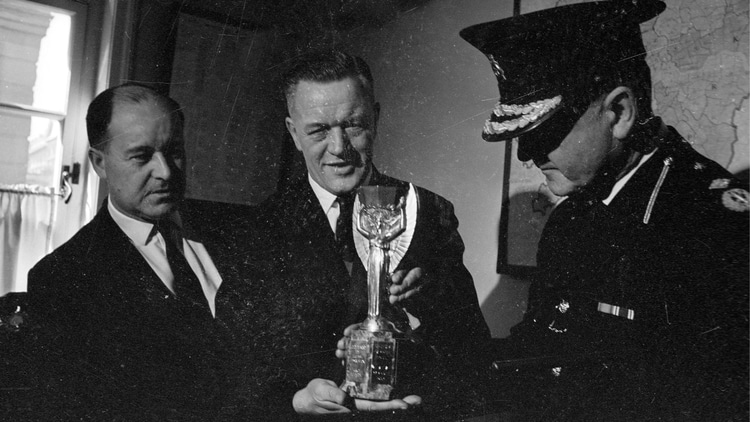
Politics weren’t the only issue. The Jules Rimet trophy was stolen before the tournament started, sparking a nationwide hunt that culminated with a dog named Pickles locating it in a bush in a garden in London. England would win their first and, to date, only World Cup after beating West Germany in the final, with Geoff Hurst becoming the first player to score a final hat-trick. Defending champions Brazil suffered the ignominy of crashing out in the group stage.
However, the Selecao bounced back in emphatic fashion four years later in Mexico - widely regarded as one of the most iconic World Cups. Broadcast around the globe, including for the first time in colour, record audiences witnessed brilliant attacking football across the board. Brazil’s triumph over Italy in the final at the Azteca saw them claim their third championship, allowing them to permanently keep the Jules Rimet trophy.
The current trophy has been in use since 1974, when the tournament was staged in West Germany. Again, there was controversy in the build-up, with the Soviet Union being disqualified after refusing to play a qualification playoff in Chile following the establishment of a US-backed ultra-nationalist military dictatorship by Augusto Pinochet. The Estadio Nacional de Chile, where the game was supposed to take place, had been used as a concentration camp for Pinochet’s political enemies.
Zaire became the first-ever sub-Saharan African country to qualify for a World Cup, while Australia became the first team from Oceania to get in. FIFA again tinkered with the format in 1974, creating a second group phase that would ultimately determine the two finalists.
East Germany, making their only senior tournament appearance, famously beat West Germany in Hamburg and finished above them in the first group phase. However, this actually worked in the latter’s favour. It put West Germany in the easier Group B in the second phase, which allowed them to cruise to the final, where they met the Netherlands. The Dutch, playing their attractive “Total Football,” suffered their first of several World Cup final heartbreaks when they let an early lead slip and lost 2-1.
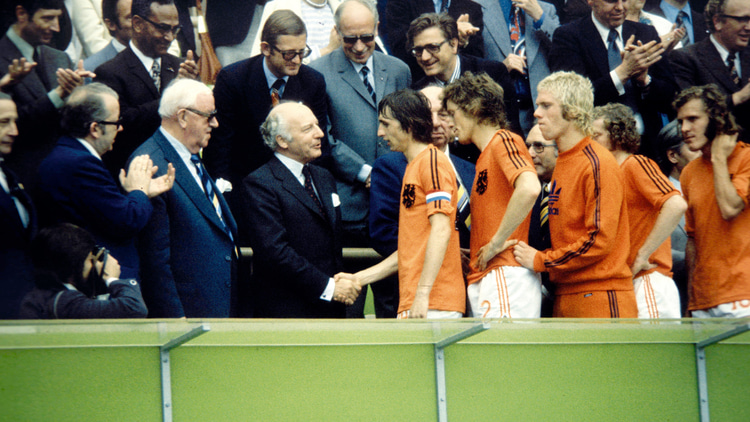
History repeated itself in 1978 in Argentina, when the Dutch were again defeated in the final by the hosts. The tournament was overshadowed by politics as Argentina had fallen under a repressive military dictatorship in 1976. Accusations of match-fixing in favour of the triumphant Albiceleste were levelled at the government, while the Dutch were without their superstar Johan Cruyff. It was rumoured that he boycotted the tournament for political reasons, but he later stated that he and his family had been the victims of a kidnapping attempt.
Large-scale protests outside of Argentina drew attention to the political climate in the country, and some national teams considered boycotting the tournament, but the “dirtiest World Cup of all time” ultimately went ahead as planned.
Spain 1982 was, by contrast, a more hopeful tournament. Participation was expanded from 16 to 24 teams, which enabled more African and Asian countries to qualify, and the host nation was undergoing a democratic transition following the death of quasi-fascist dictator Francisco Franco.
Nevertheless, Spain also had its controversy, with West Germany and Austria featuring in the “Disgrace of Gijon,” where they basically stopped playing after the Germans took a 1-0 lead because that result suited both sides, helping them advance to the second group phase at the expense of Algeria. Italy claimed their third crown after beating the Germans in the final.
FIFA abandoned its experiment with two group phases ahead of 1986. Once again, it was Mexico that staged one of the all-time great World Cups. The star of the show was Argentine legend Diego Maradona, who produced two of the most iconic moments in the history of soccer - and he did so in the same game. He unfairly netted with his hand - the “Hand of God” - in the semi-final against England before then scoring the “Goal of the Century” just four minutes later after a 60-yard dribble from his own half. The “Golden Boy” would end up lifting the trophy after a win over West Germany, who again finished as runners-up.
Despite dismay over the on-field product, with the tournament producing 16 red cards, Italia ‘90 was similarly iconic - and it would prove to be one of the most transformative World Cups ever. As defensive tactics marred the games, new rules were introduced after the tournament: goalkeepers were no longer allowed to handle backpasses from teammates and three points were awarded for wins instead of two. The unexpected success of England, who finished fourth, breathed new life into the domestic First Division and influenced the creation of the Premier League in 1992.
Maradona would yet again make headlines. He was playing for Napoli at the time and was revered as a god in the city of Naples after leading the club to their first Serie A title in 1987. Aptly, the semi-final clash between Italy and Argentina took place at Napoli’s Stadio San Paolo (now named after Maradona), with Maradona converting the penalty that proved decisive in the shoot-out. It dented his popularity in Italy and, after off-field escapades, he would leave Napoli in 1992.
Despite overcoming hosts Italy, Argentina did not actually win the 1990 World Cup. In the final, they were defeated by West Germany in what would prove to be their last tournament before German Reunification. Manager Franz Beckenbauer matched Brazil’s Mario Zagallo by becoming just the second man to win the World Cup both as a player and a coach.
The USA was awarded the hosting rights for 1994 despite the sport’s lack of popularity in the country. The US didn’t even have a professional top division following the collapse of the NASL in 1988, but US Soccer promised to create a league if given the chance to host. It would lead to the creation of MLS, which played its inaugural season in 1996.
USA ‘94 would be one of the most commercially successful World Cups ever. The US advanced to the knockout stage as one of the better-performing third-placed teams, but they were beaten by eventual winners Brazil in the round of 16. The Selecao defeated Italy in the final to win their fourth championship and reclaim their place as the most successful national team in history.
The US’s progression out of the group came at the expense of Colombia, with Andres Escobar scoring an own goal that helped the USMNT win 2-1. After his return to Colombia, Escobar was murdered. The story goes that it was out of retaliation for his mistake. Maradona, whose career had gone downhill in the early 90s due to his well-documented cocaine addiction, also hit the headlines as he was expelled from his final World Cup after failing a drug test.
The 1998 World Cup in France was the biggest one yet following an expansion from 24 to 36 teams. Croatia made their debut and immediately stole the show, finishing third. Along the way, they defeated Germany before losing to hosts France, who would go on to win their first World Cup after dispatching reigning champions Brazil 3-0.
The first World Cup to be hosted by more than one nation took place in 2002 when historical rivals South Korea and Japan reluctantly put their differences aside to stage the first tournament in Asia. It was a competition of remarkable upsets, with reigning champions France crashing out in the group stage without scoring a single goal.
South Korea and debutants Turkey would amazingly face each other in the game for third place after both enjoyed fairytale runs to the semis. Brazil, led by the irresistible striker Ronaldo Nazario, extended their lead at the top of the world charts to five after beating Germany in the final.
South Korea still grapples with the legacy of the 2002 World Cup to this day, as several gigantic stadiums were built for the tournament. However, because of the size of the country and the domestic K League’s middling popularity, many of these expensive grounds have rarely been filled since, with teams opting to move into smaller stadiums. South Africa 2010, Brazil 2014, Russia 2018 and Qatar 2022 have had similar results.
The 2006 edition in Germany went down in history as one of the best organised and most watched World Cups. There was also the curious case of Serbia and Montenegro, who played as one national team despite the two countries splitting up before the start of the tournament. An unfancied Germany team enjoyed a surprise third-placed finish, while the final between Italy and France ended up being one of the most iconic soccer games of all time.
The game finished 1-1 after 90 minutes and descended into chaos in extra time when French icon Zinedine Zidane - the player of the tournament - headbutted Marco Materazzi and received a red card in his final game. He went out with a bang, but it was the Italians who had the last laugh, winning their fourth World Cup on penalties.
South Africa beat Egypt to win the hosting rights for the first African World Cup in 2010, and it is one that remains fondly remembered, not least because of Siphiwe Tshabalala's stunning "goal for all of Africa" for the hosts against Mexico in the opening game.
Despite losing to Switzerland in the group stage, an all-conquering Spain side would go on to win their first-ever World Cup after beating the Netherlands in a heated final. England midfielder Frank Lampard had a goal controversially ruled out in a 4-1 loss to Germany, leading to the creation of goal-line technology to determine whether the ball has fully entered the goal on close calls.
The World Cup returned to Brazil in 2014, but with a similar result to the Maracanaco in 1950. The Selecao, without injured superstar winger Neymar, suffered a traumatising 7-1 defeat to eventual winners Germany in the semi-finals and then lost to the Netherlands in the game for third place. The Germans defeated Messi’s Argentina in the final thanks to an extra-time winner from Mario Gotze to win their fourth World Cup overall but their first and, to date, only one as a unified nation.
Russia was selected as the first Eastern European host for the 2018 edition in a decision that sparked widespread concerns given the authoritarian nature of Vladimir Putin’s rule. The tournament ended up being a resounding public relations success for Russia - only for the country to be banned from FIFA competitions after the 2022 invasion of Ukraine.
The hosts enjoyed a fairytale run to the quarter-finals, where they ultimately lost to eventual finalists Croatia on penalties. The Croatians themselves, inspired by classy midfielder Luka Modric, outperformed expectations to get that far, though they were ultimately beaten by France. Modric would controversially go on to win the Ballon d’Or, football’s most prestigious individual award, courtesy of his World Cup exploits.
The authoritarian theme continued with Qatar 2022, the first World Cup to be held in the Middle East. Despite widespread protests over the country’s human rights abuses, the tournament went ahead as planned - though it did get moved to the winter due to Qatar’s climate, which also sparked outrage.
Like Russia in 2018, though, the Qatar World Cup proved to be a great success, at least in terms of the on-field product. Morocco took everyone by surprise and became the first African country to storm to the semis, while the United States’ golden generation made it out of the group before losing to the Netherlands.
France superstar Kylian Mbappe became the first player since the aforementioned Geoff Hurst to score a hat-trick in a World Cup final, but it wasn’t enough. After a remarkable 3-3 game, Messi’s Argentina prevailed on penalties. The Albiceleste captain became the World Cup’s record appearance maker in the final, overtaking Germany legend Lothar Matthaus.
That brings us to 2026, which some are already calling the worst World Cup of all time before a ball has even been kicked. The history of the competition shows that there has rarely been a World Cup that hasn’t courted controversy in one form or another, but the sheer volume of grievances does make 2026 stand out.
From visa issues for players, referees, fans and journalists, to exorbitant travel costs, racial profiling, concerns over gun violence and potential hours-long weather delays, the 2026 World Cup in the USA, Canada and Mexico is shaping up to be a memorable one - but for all the wrong reasons.
Every World Cup
| Year | Hosts | Winners | Runners-up |
| 1930 | Uruguay | Uruguay | Argentina |
| 1934 | Italy | Italy | Czechoslovakia |
| 1938 | France | Italy | Hungary |
| 1950 | Brazil | Uruguay | Brazil |
| 1954 | Switzerland | West Germany | Hungary |
| 1958 | Sweden | Brazil | Sweden |
| 1962 | Chile | Brazil | Czechoslovakia |
| 1966 | England | England | West Germany |
| 1970 | Mexico | Brazil | Italy |
| 1974 | West Germany | West Germany | Netherlands |
| 1978 | Argentina | Argentina | Netherlands |
| 1982 | Spain | Italy | West Germany |
| 1986 | Mexico | Argentina | West Germany |
| 1990 | Italy | West Germany | Argentina |
| 1994 | USA | Brazil | Italy |
| 1998 | France | France | Brazil |
| 2002 | South Korea/Japan | Brazil | Germany |
| 2006 | Germany | Italy | France |
| 2010 | South Africa | Spain | Netherlands |
| 2014 | Brazil | Germany | Argentina |
| 2018 | Russia | France | Croatia |
| 2022 | Qatar | Argentina | France |
Read more about:
World Cup U20
FIFA Club World Cup