
-
News
- 1 hour ago
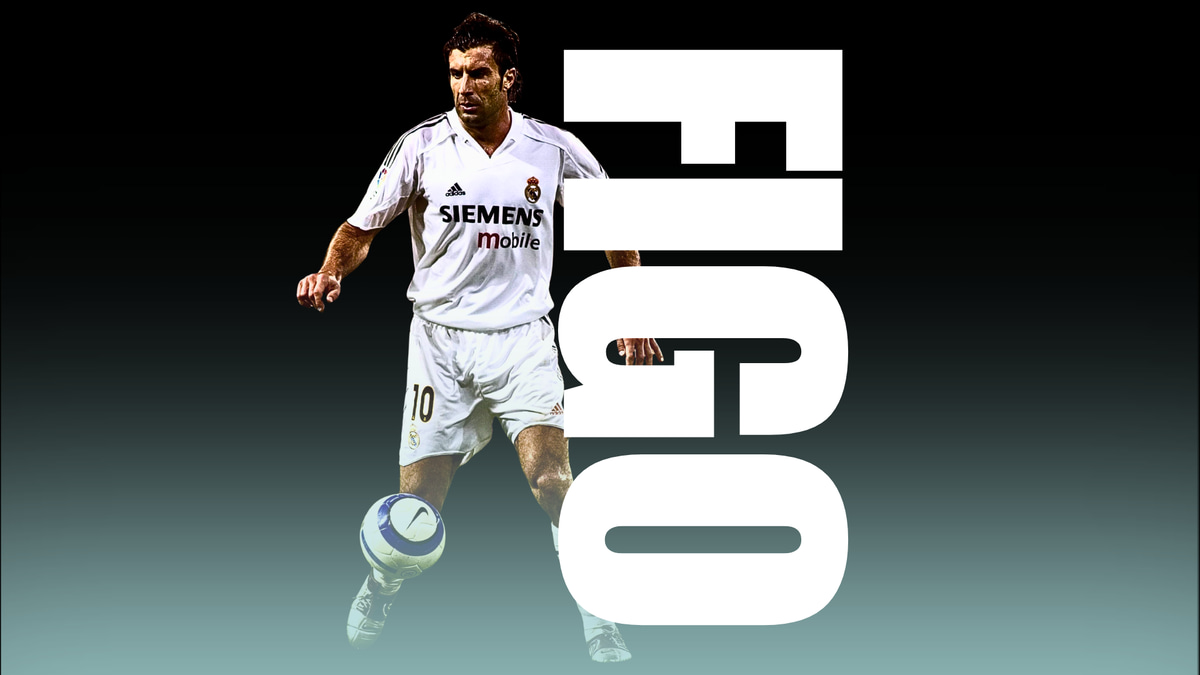
Luis Figo ditches Barcelona for Real Madrid as the Galactico era is born
Updated: 31 Mar 2026 07:34 CDT |
4 min read
Analysis

Few actions in world football cause as much uproar as when a star player moves to a rival team, and when you consider the two clubs involved are two of the biggest in the world, that only exacerbates the vitriol.
That's exactly what happened when Luis Figo ditched Barcelona for their Clasico rivals, Real Madrid, in 2000.
And, it all came about due to the ambition of newly-elected Real Madrid president Florentino Perez, who set about putting the chess pieces in place for his first 'Galactico' era at the Bernabeu.
Why did Real Madrid sign Luis Figo?
In simple terms, Real Madrid signed Figo because he was one of the very best players in the world at the time.
He helped revitalise Barcelona in the late 1990s and inspired the club to two La Liga victories and the Cup Winners' Cup as well as other accolades, though success in the Champions League evaded club and player during his period at Camp Nou.
But, there were also political reasons for the deal as Perez wanted to poach the best player from Real Madrid's eternal rivals.
The transfer
Real Madrid bought Figo for a world-record €60 million fee - his buyout clause - and that instantly made the player a hate-figure among the Barcelona faithful.
"I was a guinea pig," Figo previously explained to the Guardian in reference to his move across the Clasico divide.
“I’d like more value given to my whole career than one episode that marks an age and altered the market, the philosophy of football."
After making the move, he revealed that he lost contact with people whom he considered as friends.
“Maybe it was good because I thought they were friends and they weren’t. You realise," he added.
"When it happened, they no longer want to appear with you because of how it looks [in Barcelona]. I had everything in Barcelona, but you think: ‘It’s not like I’m going to a second-rate club.’
"If it hadn’t been Madrid, maybe I wouldn’t have gone. It’s a challenge, a decision based on feeling valued, convincing me I was going to be an extremely important piece. It could have been a cagada, a cock-up, but it wasn’t, thank God."
Did the transfer work out?
In October 2000, Figo returned to Camp Nou for the first time as a Real Madrid player and the sounds of boos were deafening each and every time he touched the ball, to the point where he had to put his fingers in his ears. There were banners hung around the stadium with words like "Traitor", "Judas", "Scum", and "Mercenary", while he was also targeted with some missiles from the crowd.
A regular corner-taker for Madrid, he didn't take set-pieces to avoid close proximity to the Barca fans.
"That night when Figo first went back was incredible," team-mate Ivan Campo said.
"I’ve never heard anything like it. Luís didn't deserve that. He'd given his all for Barcelona. It was built up before: 'a traitor’s coming,' the media said. No, Luís Figo is coming, one of the greats for you. That night hurt him, you could see. His head was bowed and he was thinking: 'bloody hell, I was here last season...' But my lasting emotion was admiration: you’ve got balls."
To rub salt in Barca wounds, Figo won the Ballon d'Or in November 2000 largely due to his exploits for the Blaugrana the previous campaign.
Figo, to his credit, focused on his football after things settled down, though he did once have a pig's head thrown at him from the Barcelona crowd!
For Real Madrid, he won two La Liga titles, two Supercopa de Espana titles, one UEFA Super Cup, one Intercontinental Cup and, crucially, one UEFA Champions League.
Legacy
The acquisition of Figo from Real Madrid kickstarted Perez's first Galactico era as the names that followed to the Bernabeu in the coming years would include Zinedine Zidane, Ronaldo and David Beckham.
It was Perez's plan to fill his squad with some of the most marketable superstars in world football and he would repeat the feat a decade later when he signed Cristiano Ronaldo, Kaka, Karim Benzema and Xabi Alonso all in one transfer window in 2009.
There have been players who have crossed the Clásico divide before, such as Michael Laudrup, but none have received as poisonous a response as Figo, which is perhaps a testament to his abilities as well as the feelings of Barcelona fans at the time.
While his individual statistics and later years don’t place him among Madrid’s very top legends, his influence as a transformative figure and elite performer at his peak ensures he remains a crucial part of the club’s modern history.
Figo wasn't only a strategic signing from Perez, but a symbolic one.