
-
Analysis
- 6 hours ago
The greatest Premier League transfers ever - Best of the Rest
20 Apr 2026 02:01 CDT |
18 min read
Analysis

The Premier League has never been just about the fortunes of the so-called elite.
It's often framed as a playground for the big clubs - the billion-pound squads, global superstars, and title races dominated by a familiar handful of teams. But that’s only part of the story.
Who could forget N'Golo Kante and Leicester famously winning the Premier League in 2016, Alan Shearer's goalscoring exploits firing Blackburn to the title, or how about Carlos Tevez scrambling in the last remaining games of the season in 2007 to keep West Ham up?
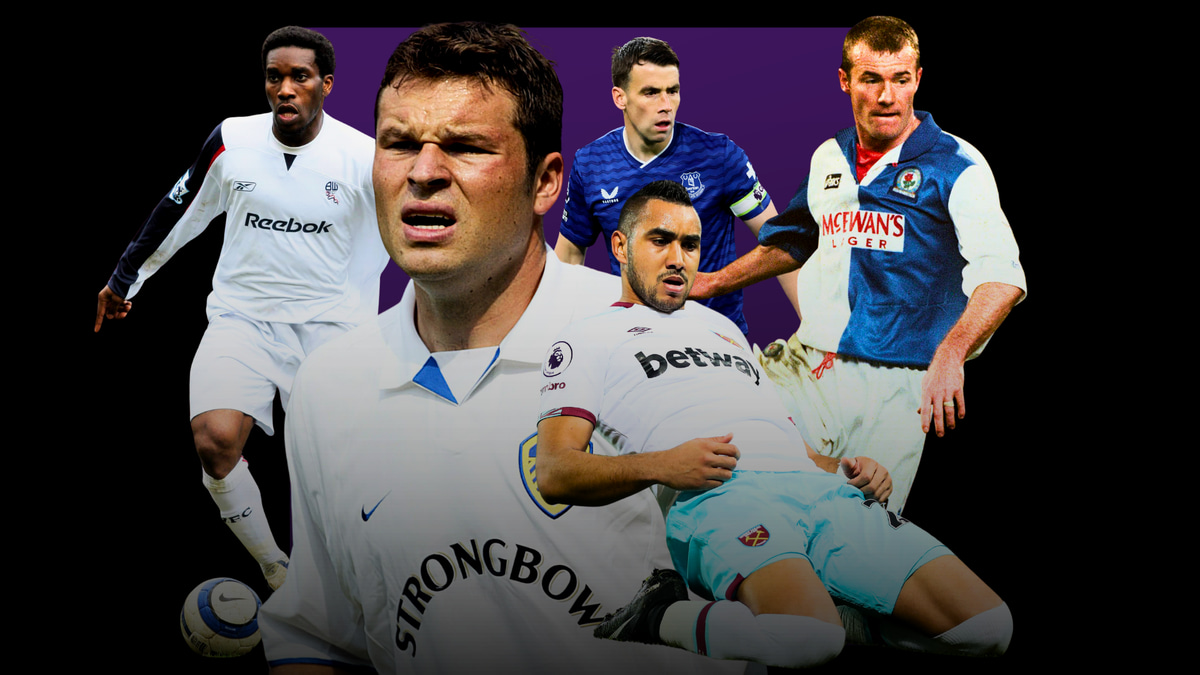
Here, we celebrate some of the greatest Premier League deals completed by those outwith the bigger clubs.
Ashley Young - Watford to Aston Villa (€13.2m, 2007)
Ashley Young’s first spell at Villa was where he established himself as one of the Premier League’s most exciting wingers. Having emerged as an exciting talent at Watford, Young quickly became the creative heartbeat of Villa’s attack.
Under Martin O’Neill, he played a central role in Villa’s push for European qualification, consistently contributing goals and assists while forming a dynamic partnership with the club’s forwards. His ability from set pieces made him a constant threat, and he twice earned PFA Team of the Year honours during this period.
By the time he left for Manchester United in 2011, Young had not only developed into a full England international but had also become one of Villa’s standout players.
He would return to the club for a second spell in 2021.
Stiliyan Petrov - Celtic to Aston Villa (€7.5m, 2006)
Stiliyan Petrov emerged as one of the best box-to-box midfielders in Britain during his time at Celtic, where he won no less than 10 trophies.
In April 2006, he handed in a transfer request and was eventually sold to Aston Villa to work under his former boss O'Neill.
After a steady first couple of seasons, he really kicked into gear in 2008/09 and was named Villa's supporters' Player of the Year and Players' Player of the Year. It was in that campaign that he scored that outrageous long-range goal against Derby from near the halfway line.
That summer he was named club captain and with him leading the team, Villa finished sixth in the Premier League, reached the semis of the FA Cup and the final of the League Cup.
In May 2013, he was forced to retire due to a diagnosis of leukaemia.
Ollie Watkins - Brentford to Aston Villa (€34m, 2020)
Aston Villa broke their transfer record to sign Ollie Watkins from Brentford in 2020, having been impressed by his goalscoring exploits for the London side.
Though Watkins has had to contend with plenty of competition for that starting centre-forward position, especially from the likes of Marcus Rashford and Jhon Duran, he's seen off them all and remains the club's key man in that role.
His performances led to him becoming a regular in the England squad and in May 2025, he became Villa's greatest ever goalscorer in the Premier League era.
Alan Shearer - Southampton to Blackburn (€4.5m, 1992)
Alan Shearer’s spell at Blackburn was the beginning of his ascent to becoming the greatest goalscorer the Premier League has ever seen. Signed from Southampton for a British record fee at the time, he quickly justified the investment with his powerful finishing and relentless consistency in front of goal.
His partnership with Chris Sutton in the “SAS” strike duo became one of the most feared in English football, firing Blackburn to the 1994/95 Premier League title in a dramatic season-long battle with Manchester United. Shearer finished as the league’s top scorer in three consecutive seasons, underlining his status as the division’s most lethal forward.
By the time he left for Newcastle United in 1996 for another record fee, Shearer had not only delivered Blackburn their first top-flight title since 1914 but had also cemented his reputation as the Premier League’s standout goalscorer.
Graeme Le Saux - Chelsea to Blackburn (€1.1m, 1992)
Graeme Le Saux was a vital player for Blackburn between 1993 and 1997 and a key part of their rise from ambitious challengers to Premier League champions.
A shrewd signing from Chelsea, he quickly became first-choice left-back at Ewood Park, giving the team real balance on the left side with his energy, attacking runs, and quality delivery. He wasn’t just a defender - he was very involved going forward, often overlapping and helping create chances, which suited Blackburn’s aggressive, front-foot style under Kenny Dalglish and later Ray Harford.
Le Saux’s performances earned him a place in the PFA Team of the Year in the 1994/95 title-winning season as recognition for his performances.
Youri Djorkaeff - Kaiserslautern to Bolton (€0.5m, 2002)
Youri Djorkaeff had an impressive and slightly unexpected impact during his time at Bolton, joining in 2002 as a 1998 World Cup winner with plenty of experience the highest level. Even though he was in the later stages of his career, he immediately added real quality and composure to Bolton’s midfield.
What stood out most was his intelligence on the ball. Djorkaeff wasn’t about pace or power - he controlled games with his passing and ability to find space between the lines. He linked midfield and attack expertly, and often popped up with important goals and assists in tight matches, helping Bolton become more competitive in the Premier League than many expected.
Who could forget that fabulous chest and overhead-kick against Charlton?
Quite simply, Djorkaeff was a very class act.
Jay-Jay Okocha - PSG to Bolton (FREE, 2002)
So good they named him twice. Jay-Jay Okocha left PSG to join Bolton on a free transfer following the 2002 World Cup and he became an instant hit at the Reebox Stadium under the club's legendary manager Sam Allardyce.
Okocha remains one of the most talented players to ever grace the Premier League and he is one of the most well-loved faces from the famous 'Barclaysmen' era of the English top flight.
The Nigerian spent four spectacular seasons at Bolton before his exit in 2006, notching 14 goals and 11 assists in 124 Premier League games, and he provided the attacking magic for a truly fantastic team.
Kevin Davies - Southampton to Bolton (FREE, 2003)
Kevin Davies was a defender's nightmare during his time at Bolton and although he wasn't the most prolific goalscorer, he always made sure his presence was felt.
Using that big frame and, sometimes, those big elbows, he would get in amongst the opposition defence, often creating space and opportunities for his team-mates.
In the 2008/09 season, he scored 13 league goals, his best return in a single top-flight campaign. Overall, Davies made 407 appearances for Bolton, scoring 85 goals.
Eberechi Eze - QPR to Crystal Palace (€17.8m, 2020)
During his teenage years, Eberechi Eze looked as though he may not make it as a footballer after being released by Arsenal, Fulham and Millwall, and failing trials at Sunderland and Bristol City.
However, QPR believed in his talent and he soon repaid their faith. After excelling in the Championship at Loftus Road, Eze earned himself a move to Crystal Palace in 2020 and he immediately became one of their most important players.
Across a hugely successful five-year stint at Selhurst Park, Eze scored 40 goals in 169 games, including the winner in the 2025 FA Cup final as he helped Palace secure their first ever major trophy. He left to rejoin Arsenal for a whopping €69.3m just months after the showpiece event at Wembley.
Wilfried Zaha - Man Utd to Crystal Palace (€3.8m, 2015)
In his first spell with Crystal Palace, Wilfried Zaha emerged as one of the most dazzling wingers in the country. He was a throwback in many ways, relying on trickery and quick feet in order to get by defenders.
United saw the potential and brought him to Old Trafford, but after things didn't work out there, he returned to Palace to once again become a big fish in a small pond.
Over the years, Zaha played a key role in stabilising the club in the top flight and was instrumental during cup runs, including the 2016 FA Cup final appearance. He eventually took on leadership responsibilities, captaining the side and leading by example. By the time he left in 2023, he was widely regarded as the club’s greatest modern-era player by many Eagles supporters.
Leighton Baines - Wigan to Everton (€7.5m, 2007)
The unassuming Leighton Baines was picked up by Everton from Wigan in 2007 and although he was viewed as a fine player, perhaps nobody would have predicted that he would become one of Everton's standout icons in the Premier League era.
While he was an accomplished defender, patrolling that left-back spot with authority, he'll perhaps be best-known for his set-pieces as he was a real danger to the opposition from corners and free-kicks and once scored two in one game against West Ham.
He recorded over 50 assists for the club but the most impressive aspect of his career was his longevity as he played for the Toffees for 13 seasons and in 2010/11 he played every minute of every league game - an incredible feat.
Baines was named Everton's Player of the Season in 2011 and 2013 and made the PFA Team of the Year in 2012 and 2013.
Seamus Coleman - Sligo Rovers to Everton (€0.07m, 2009)
Unquestionably the most value-for-money signing in the history of the Premier League, Everton signed Seamus Coleman from Sligo Rovers for a pittance of £60k (€0.07m).
That was in 2009 and he is still playing for the club to this day, closing in on 450 appearances.
At his peak, he became one of the Premier League’s standout full-backs, combining defensive reliability with attacking intent, making overlapping runs and contributing goals and assists. His performances were crucial during Everton’s strong seasons in the early 2010s, including their push for Champions League qualification under Roberto Martínez.
The Irishman's leadership has been just as important as his on-pitch ability. Appointed club captain, he has been a steady presence through both successful periods and more challenging years.
Romelu Lukaku - Chelsea to Everton (€35.4m, 2014)
Up until Neymar's €90m transfer from PSG to Al Hilal, no player had accumulated more transfer fees in the history of football than Romelu Lukaku.
Around €35m of that was due to Everton's huge outlay for the big Belgian in 2014 as they were impressed by him in an initial loan spell from Chelsea the prior season.
Lukaku developed into one of the most feared strikers in the league during his time at Goodison Park and by the time he left for Manchester United in 2017, he was averaging a goal every two games.
What makes this transfer one of the best is not only his performances for Everton, but the fact that the club made a huge profit on him when he left for the Red Devils for €85m.
Duncan Ferguson - Newcastle to Everton (€5.4m, 2000)
Duncan Ferguson actually played for Everton in three different spells, officially. After an initial loan from Rangers in 1993/94, he signed for the Toffees permanently before being sold to Newcastle.
In 2000, he returned to Everton for second spell and although it wasn't a period littered with goals for the player, it was one in which he became a cult hero to the Goodison Park faithful, earning the 'Big Dunc' nickname.
A quintessential target man, Ferguson was not there to score goals, necessarily, but to ruffle the feathers of the opposition with his unmatched aggression and physicality.
Yes, he went overboard at times - he has the joint-most red cards in Premier League history with nine alongside Patrick Vieira and Richard Dunne - but there was more to him than that aforementioned aggression, as any Everton team-mate would tell you he was a joy to play alongside.
A key player, for sure, his goals towards the end of the 2000/01 season against Man City, Liverpool and Bradford ensured league survival.
Tim Cahill - Millwall to Everton (€2.2m, 2004)
Tim Cahill was one of the most influential players for Everton during the 2000s. Joining in 2004 for a modest fee, he made an immediate impact by finishing as the club’s top scorer in his debut season and helping the club secure a surprising fourth-place finish in the Premier League.
The Australian began as an attacking midfielder, but David Moyes soon identified his prowess inside the box and he would subsequently move up the pitch as the Toffees often utilised his strength and unique heading ability, considering he wasn't the tallest. He consistently contributed goals across multiple seasons and had a reputation for delivering in big moments, including important goals in high-pressure matches like the Merseyside derby.
In fact, he has scored more post-war goals against Liverpool than any other Everton player which made him a true icon at Goodison.
Clint Dempsey - New England Revolution to Fulham (€3m, 2007)
Fulham made Clint Dempsey the most expensive player in Major League Soccer history when they signed him in 2007 from New England Revolution for $4m.
After taking a little while to settle in England, he eventually consistently produced important moments in both league and European competition, with his goal output rising year after year. His standout campaign came in 2011–12, when he scored 17 Premier League goals and became the focal point of Fulham’s attack.
He had a reputation for stepping up in big matches, including memorable goals in the Europa League, and his confidence on the ball made him a constant danger. By the time he left Fulham, he had established himself as one of the club’s most influential modern-era players.
What made him stand out was his personality as much as his ability - he played with swagger, edge, and a bit of attitude. Fans loved that he could change a game on his own, and his chip against Juventus in the Europa League became one of the most iconic moments in the club’s history.
Geovanni - Man City to Hull (FREE, 2008)
After failing to make the grade at newly-rich Manchester City, former Barcelona star Geovanni found himself at Hull in 2008.
The quintessential 'streets won't forget' player, his most iconic moment came early on, scoring a stunning long-range goal against Arsenal at the Emirates in Hull’s first-ever Premier League away match.
That strike set the tone for his reputation at the club - capable of producing moments of real quality even if he wasn’t consistently dominant every week. He finished his first season as one of Hull’s top scorers and played a key role in their strong start to life in the top flight.
While his spell at the club was relatively brief, the Brazilian is still remembered by fans for those flashes of flair and, in particular, that famous goal against Arsenal which remains one of Hull’s standout Premier League moments.
Lucas Radebe - Kaizer Chiefs to Leeds (€0.4m, 1994)
Arriving from Kaizer Chiefs for a tiny fee considering the impact he would have on Leeds, Lucas Radebe developed into a commanding centre-back, known for his composure, strength, and excellent reading of the game.
As captain, he led Leeds during one of their most successful modern periods, including consistent top-half Premier League finishes and a run to the UEFA Champions League semi-finals in 2000/01. His leadership and defensive reliability were central to a team that competed with some of Europe’s best sides at the turn of the millennium.
The South African was admired not just for his performances but also for his humility and loyalty, remaining with the club through both highs and financial struggles after relegation. By the time he retired, he had cemented his status as a Leeds legend, widely regarded as one of the greatest captains in the club’s history.
Mark Viduka - Celtic to Leeds (€9.2m, 2000)
Mark Viduka was named the Scottish Player of the Year with Celtic in 2000 but campaigned to leave the club after the famous Scottish Cup loss against Inverness Caledonian Thistle.
The Hoops eventually succumbed to his demands as David O'Leary signed him for Leeds to become the focal point of the attack at Elland Road.
Looking at Viduka, you'd be forgiven for thinking he was just a 'big man up top' but he possessed a delicate first-touch and a finishing ability that defied his size, while he formed superb partnerships in attack with Alan Smith and Robbie Keane.
What Leeds fans really remember is his ability to produce brilliance in big games, including his famous four-goal haul against Liverpool in 2000. He combined strength, touch, and composure in a way that made him almost unplayable when he was in form.
Jimmy Floyd Hasselbaink - Boavista to Leeds (€2.8m, 1997)
Jimmy Floyd Hasselbaink made a big impact at Leeds United between 1997 and 1999, establishing himself as one of the most clinical strikers in the Premier League. Signed from Boavista for a paltry sum considering his talent, he hit the ground running in his debut season, scoring 18 Premier League goals and quickly becoming Leeds’ main attacking threat under George Graham.
His second season in 1998-99 was even better - he scored 20 Premier League goals, finishing as the league’s joint top scorer alongside Dwight Yorke and Michael Owen. That year, he was central to Leeds’ push for Champions League qualification, regularly scoring decisive goals in tight matches, including important strikes against top-six rivals that helped keep Leeds in the mix at the top end of the table.
Despite leaving for Atletico Madrid after just two seasons, his record of 34 Premier League goals in 69 appearances cemented him as one of Leeds’ most lethal forwards of that era and he would return not long later, joining Chelsea.
N’Golo Kante - Caen to Leicester (€9m, 2015)
Nobody could have predicted that when N'Golo Kante signed for Leicester, he would go on to become one of the most complete midfielders the Premier League has ever seen.
He was spotted by scout Steve Walsh, who also recommended the club sign Jamie Vardy and Riyad Mahrez, and those three would be integral to the Foxes side that defied 5000-1 odds against to win the league in 2016.
Kante was as tenacious on the pitch as he was shy off it, making more interceptions and more tackles than any other player in 2015/16.
By the end of that season, Kante had gone from an under-the-radar signing to one of the most highly rated midfielders in the world. His performances were a huge part of one of football’s greatest underdog stories, and even after he left, the shockwaves of that title win were felt for years.
Gareth Southgate - Aston Villa to Middlesbrough (€9.8m, 2001)
Gareth Southgate is one of the most influential figures in Boro's modern history as, after starring with the club as a player between 2001 and 2006, he would also act as the club's manager between 2006 and 2009.
As club captain, he played a central role in the team that won the 2004 League Cup - the first major trophy in Middlesbrough’s history - and helped guide them to the 2006 UEFA Cup final.
His calmness on the ball and organisational skills were vital during one of the most successful periods the club has experienced, and it was that calm demeanour and stoicism that saw him eventually excel as head coach of England.
In 2004, he was forced to deny reports that he was set to move to Manchester United after Rio Ferdinand's drug ban, which only enhanced his reputation for loyalty.
Mark Schwarzer - Bradford to Middlesbrough (€2.5m, 1997)
There is only one goalkeeper (David James) with more Premier League appearances than Mark Schwarzer, who took to the field 514 times in the top-flight.
The majority of those appearances came with Middlesbrough across an 11-year span at The Riverside where, like Southgate mentioned above, he also played a crucial role in Boro winning their only major trophy.
Perhaps his best moment in a Boro shirt came on the last day of the season in 2004/05 when he saved a penalty from Manchester City's Robbie Fowler in injury time as Boro earned the draw that allowed them to qualify for the UEFA Cup. Had Fowler scored, City would have taken that spot.
Boro went on to reach the final of the UEFA Cup the following campaign.
Juninho - São Paulo to Middlesbrough (€5.5m, 1995)
Middlesbrough pulled off one of the biggest coup transfers of the 1990s when they convinced Brazilian star Juninho to move to Teeside, apparently beating a raft of European giants to his signature.
Despite playing for a relatively unfashionable club at the time, Juninho had a huge impact on the pitch. He could unlock defences with quick feet, clever passing, and the kind of dribbling that made him a nightmare to defend against.
Nicknamed "TLF" (The Little Fella), he was central to Middlesbrough’s rise in competitiveness during the Premier League era and helped elevate the club’s profile significantly, with other extravagant signings like Fabrizio Ravanelli to follow.
His most famous moment came in 1997, when he scored in the FA Cup Final against Chelsea, giving Middlesbrough a brief lead at Wembley. Even though Boro eventually lost the match, Juninho’s goal on one of English football’s biggest stages cemented his status as a club hero.
Marian Pahars - Skonto to Southampton (€1.2m, 1999)
Marian Pahars is undoubtedly a Premier League cult hero and one of the most popular Southampton players of the last 30 years.
Small in stature but with bags of quality, the Latvian terrorised defenders with his close control, ability to drift into space and his exquisite first-touch, though he did have his fair share of injuries, too.
Perhaps his most memorable moment came when he scored a quick double against Manchester United at Old Trafford in a thrilling 3–3 draw, a game that underlined his ability to finish calmly in high-pressure moments against elite opposition.
If you ask Southampton fans, though, they'll probably say the fantastic derby strike against Portsmouth in December 2003 - his first goal for a year.
Niall Quinn - Manchester City to Sunderland (€1.3m, 1996)
Signed from Manchester City, Niall Quinn had to watch on from the sidelines for the first six months of his career with the Black Cats due to injury. The club would eventually be relegated in his first season but he remained with them and his goals helped fire the club back to the top-flight.
Forming a prolific 'Big-Man, Little-Man' partnership with Kevin Phillips, Quinn played a crucial role in Sunderland’s promotion and their subsequent impressive top-flight finishes under Peter Reid. His aerial ability, hold-up play, and unselfish style complemented Phillips perfectly, creating one of the league’s most effective strike pairings.
Beyond his contributions on the pitch, Quinn was admired for his leadership and professionalism, later returning to the club as chairman. By the time he retired, he had firmly established himself as a Sunderland legend, remembered for both his impact and his deep connection with the club.
Dimitri Payet - Marseille to West Ham (€15m, 2015)
Dimitry Payet is one of the most beloved West Ham players of the last 15 years and one that the Hammers faithful took to their heart, despite him staying in East London for just two seasons.
Never the hardest-working player on the pitch, but he was a true maverick with the ball at his feet and was particularly adept at set-pieces.
His ability to strike and dip ferocious free-kicks was incredible and one particular effort against Crystal Palace is one of the most mesmerising dead-ball hits in the history of the Premier League, while that 32-yarder against Man Utd at Old Trafford wasn't bad, either.
Unfortunately, his spell at the club ended on a sour note as he reportedly asked to leave for Marseille, which he eventually did, but the moments he gave West Ham fans live long in their memory.
Carlos Tevez - Corinthians to West Ham (€16m, 2006)
The image of Carlos Tevez standing alongside teammate Javier Mascherano and Hammers manager Alan Pardew is one that will go down in folklore, with the duo signing from Brazilian side Corinthians on a joint deal for a fee that was merely reported as ‘undisclosed’.
What emerged was a murky deal engineered by ‘super agent’ Kia Joorabchian, who owned the rights to Tevez and Mascherano through his firm Media Sports Investments (MSI) and who reportedly wanted to take over West Ham.
On the pitch, it definitely took the Argentine time to adapt to English football, but everything changed in March 2007 when Tevez scored a free-kick in a 4-3 loss to Tottenham that proved a catalyst for a fairytale run of six goals in the final nine matches of the season, picking up seven wins in the process.
At the time of the Tottenham game, West Ham were bottom of the Premier League and ten points from safety, having not won a match in nearly three months, but they went into the final day knowing a win could complete the great escape - and Tevez scored the winner at Old Trafford.
He proved the club's saviour at the time.
Paolo Di Canio - Sheffield Wednesday to West Ham (€2.2m, 1999)
There's undoubtedly an element of baggage that comes with Paolo Di Canio as for every majestic volley against Wimbledon comes a ban for pushing the referee to the floor.
When the fiery Italian didn't allow his emotions to get the better of him, he was one of the best players around at the turn of the millennium.
For good or bad, Di Canio was a man of moments, even if they didn't have anything to do with the game. One of the most famous acts of sportsmanship in the history of the game was him grabbing the ball out of the air to stop play, rather than score into an open goal, so that Everton goalkeeper Paul Gerrard could receive treatment after going down injured.
He won the FIFA Fair Play award for that act.
Jarrod Bowen - Hull to West Ham (€21.3m, 2020)
Jarrod Bowen has become one of the most important and consistent players for West Ham United since joining in 2020, developing from a promising signing into a key figure in the club’s attack, eventually featuring at centre-forward out of necessity, only to flourish up top.
His biggest moment came in the 2023 UEFA Europa Conference League final against Fiorentina, where he scored a last-minute winner to secure West Ham’s first major European trophy in over 50 years. That goal instantly made him a club hero and he was named as Man of the Match.
Beyond that, Bowen has been a reliable source of goals and assists in the Premier League and was eventually made captain. Though he has often been linked with a move to a bigger club, he has remained loyal and that's something West Ham fans truly care about.