
-
News
- 12 hours ago
What does the ACL injury recovery process look like?
4 min read
Analysis

Football players are under more strain than ever, and the injuries continue to accumulate.
Some are simple strains due to the intensity of the football calendar, but in others, there have been season-ending problems. Over the past week or so, we have seen both Tottenham's Wilson Odobert and Porto's Samu Omorodion suffer Anterior Cruciate Ligament injuries to end their respective campaigns.
Despite improvements in technology aiding the recovery process, cruciate ligament injuries are, unfortunately, still too common an injury in football.
Going back a few decades, such an injury could potentially be career-ending, but advances in medicine and surgery means that many players can make a full recovery and, in the main, return to their former range of movement and ability.
We can confirm that Wilson Odobert has sustained a ruptured anterior cruciate ligament in his left knee.
Wilson will see a specialist next week before undergoing surgery, and will then commence his rehabilitation with our medical staff.
We're all behind you, Wilson 🤍 pic.twitter.com/lC4bDP0SM3— Tottenham Hotspur (@SpursOfficial) February 12, 2026
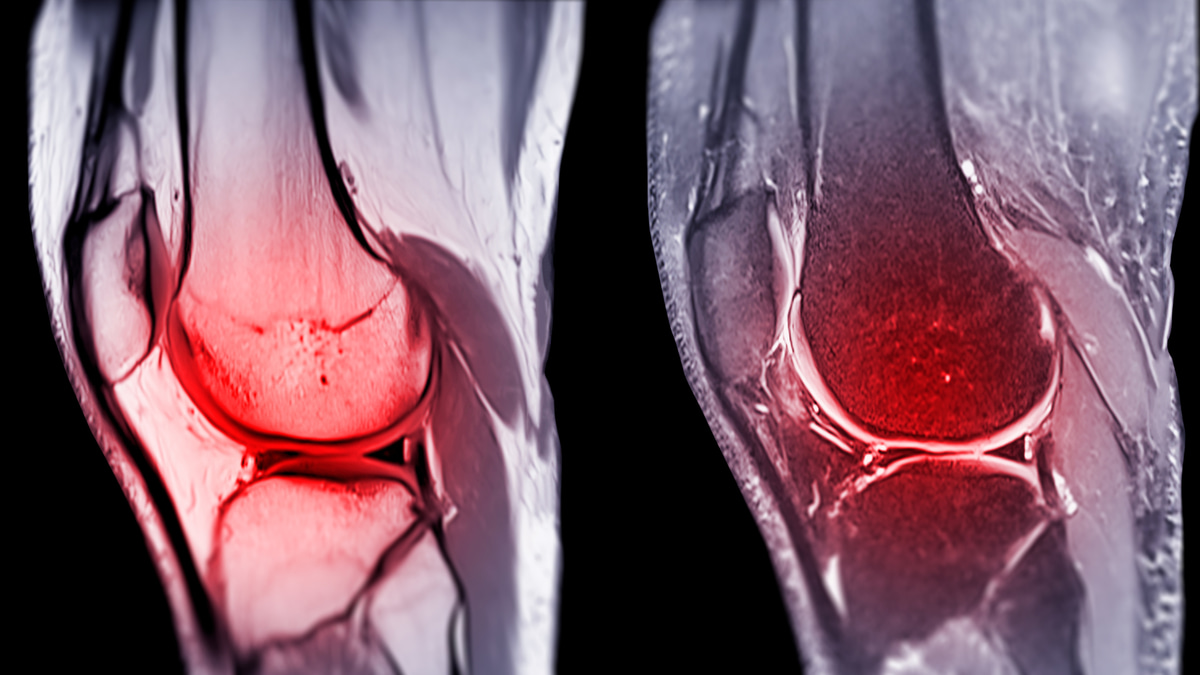
But what exactly is a cruciate ligament injury, how does it happen, and what kind of rehabilitation do players face?
How do Anterior Cruciate Ligament (ACL) injuries happen?
You'll have seen the footage yourself many times. A player's foot is planted and he or she tries to change direction. The foot remains in the ground and the knee doesn't travel with the rest of the body.
{inlineimage[http://res.cloudinary.com/dsumlcn9m/image/upload/v1601074027/general/shkfewrqbb6g3mqalgbe.webp][][3]}
It's the ACL, the anterior cruciate ligament, that takes the strain and if the strain is too much, it gives in, in various levels of severity.
Can you walk on a torn ACL?
You'll often hear commentators also say that 'it can't be too bad because he walked off the pitch'. ACL injuries can be walked on by the sufferer - it's not like a broken bone. The player would be in pain but it is possible to limp off, with the initial swelling subsiding.
It doesn't in any way provide an indicator of how serious the injury is, however. Players who walk off the pitch usually have ice applied immediately before they can be taken for surgery.
ACL injury surgery options
There are significant differences in the severity of ACL injuries and also different options that are available in order to resolve the issue.
1. Autograft v Allograft
The 'autograft' method utilises the players' existing tendon in order to make repairs. It has a low risk rate but generally the surgery time increases the length of the recovery.
The 'allograft' uses what is known as 'donor or cadaver' tissue to fix the problem. Historically, it is a less painful procedure for the player but the risk of failure is higher than the autograft method. The cost of the surgery is also higher, though this isn't necessarily a concern for top professional clubs.
2. Patella Tendon Graft
This method uses 1/3 of the patella tendon using bone blocks. It has the lowest failure rate of all the procedures and involves bone-to-bone healing. As Injury Mechanisms points out, this is considered the optimum approach for athletes wishing to return to their very best.
3. Hamstring Autograft
The hamstring autograft uses the same method as the original autograft in terms of taking an existing part of the body to assist with the repair. Taking a piece of the hamstring is an easier 'harvest' process and requires a smaller incision, but the graft failure rate is historically higher using this method in younger athletes.
It requires longer integration in order to work and takes longer biological healing, and there are also other issues at play such as the graft stretching or the hamstring suffering weakness afterwards.
4. Quadriceps Tendon Autograft
This is the least common method of repairing ACL injuries. It has a predictable graft size and also requires a small incision, but recent studies have shown the failure rate to be higher, hence the reason that it is less commonly used.
Does an ACL injury require surgery?
Not necessarily. Players are increasingly exploring methods by which surgery isn't required, but it requires an intense consultation and dedication to the methods of repair to work (rest + likely workload post surgery).
For example, athletes who are not predisposed to changing direction regularly or pivoting can see more success in this respect. But for footballers, basketball players or specific NFL positions (like wide receivers), surgery is still recommended.
Different severity of ACL injuries
Not all ACL injuries are equally serious and there are various grades to describe the severity of the injury.
Grade 1 means that the ligament has sustained mild damage and and has been overextended but is still mild and the knee joint has remained stable.
Grade 2 means that the ACL has been stretched and has become loose. In this scenario, the ligament has likely suffered a partial tear but it's rare for this mid-level injury to happen.
Grade 3 is referred to as a complete ligament tear. It means that the ACL has split into two pieces and the knee itself needs to be stabilised. This is the most common serious injury suffered among football players.
What is the expected recovery time?
This is dependent on many factors. Players are usually walking again after two weeks and this leads them into a false sense of security that everything is ok. They need to be very carefully managed through the rehabilitation procedure to ensure that they are not overextending themselves while the ligament continues to heal.
The optimal period of recovery is six months but much of the process is in the hands of the player. If they are compliant with the exercises and regimes provided to them then the process can be expedited, but the utmost care has to be taken to ensure that there is no relapse.
There are countless examples of players trying to rush back to finish too soon, and in the most severe cases, it can take a player up to a year to be ready for first-team football once again.
The FootballTransfers app
Check out FootballTransfers' new app for all of football's big storylines, transfer rumours and exclusive news in one convenient place directly on your mobile device.
The FootballTransfers app is available in the Apple App Store. Download here:
Read more about:
Premier League