

-
News
- 23 hours ago
UEFA launches new VAR access tool to determine why and when it should be used
11 Aug 2026 08:01 CDT |
5 min read
News

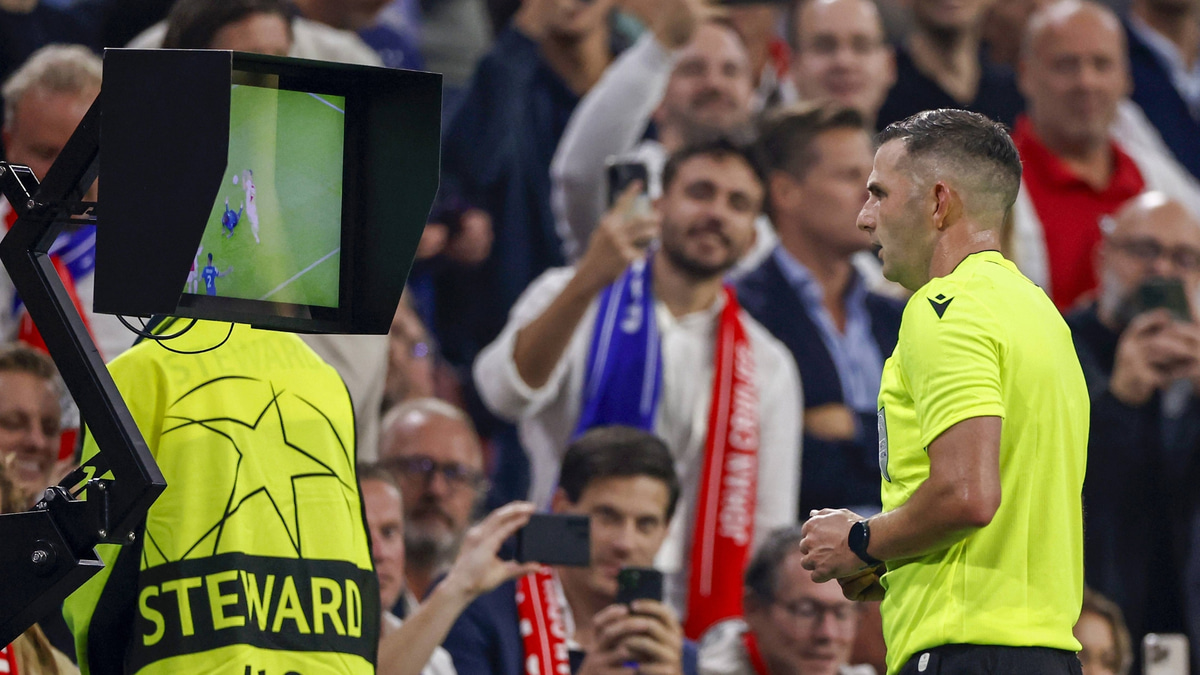
UEFA has launched a new online VAR access tool that allows supporters, clubs, referees - anyone - to gain an insight as to when and why VAR should be used in a game.
Named UEFA Clear Line, it is a new guide designed to make VAR decisions more consistent and easier to understand for all football stakeholders.
The governing body of European football has taken around eight years of VAR experience and more than 100 different incidents and created a reference guide explaining when VAR should intervene and when it should leave the referee's original decision alone.
The main principle is that VAR should only get involved when there is a clear and obvious error, rather than using VAR to re-officiate every decision. The on-field referee remains the person making the final decision.
It's not just intended for referees. UEFA says players, managers, journalists and supporters can use Clear Line to understand why certain VAR decisions are made. The guide will also be updated as new situations arise.
It is UEFA's attempt to give everyone a clearer, more consistent set of rules for when VAR should and shouldn't intervene.
There are a number of sections in the tool and below you'll see an explanation of each directly from the UEFA website.
Penalties
Penalty area incidents often require match officials to evaluate multiple factors before determining whether an offence has taken place. Assessing these situations involves more than identifying whether contact has occurred – referees must also consider its nature, cause, impact and context.
This section explains the principles used by referees and VARs when evaluating incidents inside the penalty area. Through real-life video examples, it shows how match officials assess contact between players, handball situations, challenges for the ball, goalkeeper actions and potential simulation before deciding whether a penalty should be awarded.
Explore the relevant sections to understand:
- How handball offences are assessed
- When holding, pushing and shirt-pulling become punishable offences
- The considerations applied to tripping incidents
- How stepping on an attacker's foot is evaluated
- How match officials determine who played the ball first in a challenge
- The factors considered when assessing goalkeeper actions
- The distinction between fouls and simulation
Red Cards
Red-card incidents are among the most significant decisions in football and require referees to assess whether an offence meets the threshold for a player to be sent off.
Depending on the nature of the incident, match officials must evaluate a range of factors, including: the likelihood of a goalscoring opportunity, the intensity and point of contact of a challenge, the use of force, and the potential risk to an opponent's safety.
This section explains the key considerations used by referees and VARs when assessing incidents that may result in a red card. The real-life video examples illustrate how key principles are applied in practice and highlight the situations where VAR should, and should not, intervene.
Explore the relevant sections to understand:
- How officials determine whether a player has denied an obvious goalscoring opportunity (DOGSO)
- The factors used to assess serious foul play, including force, intensity and danger to an opponent
- When an action constitutes violent conduct, including off-the-ball incidents and acts committed when not challenging for the ball
- The considerations applied when assessing offences that lead to a second yellow card and subsequent dismissa
Attacking Offences
Every attacking phase is made up of a series of actions – and decisions – that may influence the outcome of an incident.
When a goal is scored, a penalty awarded, or a disciplinary sanction issued, referees and VARs may need to review what happened earlier in the attacking phase of play.
Basic principles for decision-making:
- VAR should check whether any infringement occurred before the referee awards a goal, penalty or red card (DOGSO or second yellow card for SPA).
- VAR should review the build-up to the incident and how the attacking team gained possession of the ball.
- VAR may only review incidents that occur within the APP and cannot intervene for offences that took place before the APP began.
- VAR should not intervene if an incident occurred within the APP but the available footage does not clearly show that an offence occurred.
This section explains the main types of incidents considered during reviews and the principles used to assess them. Through video examples, it shows when an offence has had a sufficient impact on the outcome to require a VAR intervention or when play should be allowed to continue.
Explore the relevant sections to find out more about:
- How offside offences are evaluated
- When fouls and handballs by the attacking team become reviewable
- How offences committed before the ball is in play may affect a subsequent match-changing incident
Factual Decisions
Here we cover decisions of fact rather than of judgement. Either the ball was out of play or it was not. Either the offence happened inside the penalty area or outside it. Where the footage answers the question, the VAR informs the referee and the decision is corrected without an on-field review.
There are certain objective or factual situations in which the VAR should always intervene and, in most cases, the referee will change the original decision without the need for an on-field review. These include:
- An offside before a goal, a penalty kick or a red card (for Denial of a Goal Scoring Opportunity (DOGSO) or second yellow card for stopping a promising attack) where an attacker in an offside position touches or plays the ball in the build-up
- Whether the ball has gone out of play in the build-up to a goal, a penalty kick or a red card
- A situation where the goalscorer touches the ball with their hand or arm immediately before a goal, even if accidental
- Whether an offence sanctioned with a direct free kick occurs inside or outside the penalty area
- A clearly incorrectly awarded corner, provided that the decision can be changed without delaying the restart
- An encroachment offence by the goalkeeper at a penalty
- A double touch by a penalty taker
- A player encroaching into the area at a penalty and subsequently playing the ball
Mistaken Identity
VAR should intervene in cases of mistaken identity where the referee has shown a yellow or red card for an offence but has clearly penalised the wrong player of either team, instead of the one who committed the offence in question. The offence itself cannot be reviewed.
If the mistaken identity concerns players from the same team, VAR should inform the referee who should take the final decision without reviewing the incident on the pitch-side monitor.
If the mistaken identity concerns players from opposing teams, the incident should be reviewed by the referee on the pitch-side monitor.
Read more about:
UEFA Champions League