

-
News
Eric Roy: The manager who defied a cancer death sentence to create a Champions League miracle
Updated:
4 min read
Analysis

Eric Roy had been in his new job at Brest for just a few days when he received his death sentence: he was told he had stage four pancreatic cancer.
The disease would eventually kill him on 17 June, 2026, aged 58, but he refused to let it break him.
Before his passing, he led the club into the hitherto untouched heights of the Champions League in the 2024/25 season, where they would progress to the knockout rounds only to be eliminated by eventual winners PSG.
In Brest’s first European foray, they travelled to Barcelona while they welcomed Bayer Leverkusen, PSV and Real Madrid to Brittany, though not to their ramshackle home of Stade Francis-Le Ble, which was unable to receive a UEFA certificate for holding such games.
A team that was supposed to be relegation fodder instead mixed it with the very best. This was Eric Roy’s miracle, and he achieved it all while keeping his diagnosis a closely held secret known to just a handful of confidants.
The cancer diagnosis Eric Roy kept secret at Brest
Speaking publicly for the first time, his widow Loetitia told his tale of resilience and passion to Le Parisien, explaining why the diagnosis was kept under wraps and how football prolonged the life of a man dubbed ‘King Eric’ in Brest long before his untimely passing.
“From the beginning, we told ourselves he would work and honour his contract with Brest,” Loetitia explained. “The doctors thought we were crazy, because they knew he would have to undergo very heavy chemotherapy.
“Logically, he should have survived four months, maximum. But I knew work would keep him going. If we had brought him back to Nice just to treat him, it would have been fatal much sooner.”
Initially, the club’s perilous state in the Ligue 1 relegation battle was the reason Roy kept his illness private.
“When he arrived in Brest, the team's situation was very complicated,” Loetitia said. “Eric was the manager appointed to avoid relegation.
“The players in front of him thought he was the superhero who was going to stop them from going down to the second division. So if he arrived saying: 'Hello, I have cancer, I might die in a few months,' it's not going to work. So, he kept it to himself. He told his president (Denis Le Saint) and his sporting director (Gregory Lorenzi), who told him not to worry and to take time for himself when he needed it.”
The extraordinary lengths Eric Roy went to hide his illness
The lengths Roy went to in order to hide his illness, meanwhile, were extraordinary.
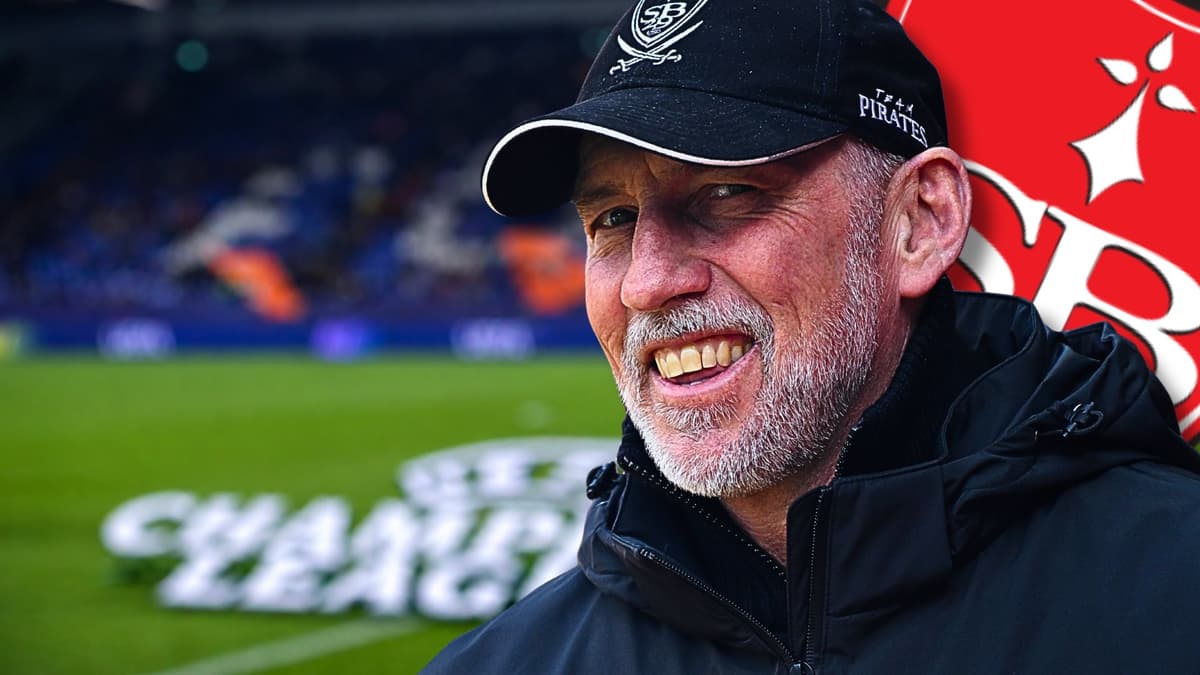
“I told him to wear a cap right from the start. Because of the chemo, he risked losing his hair,” Loetitia explained. “At the hospital, we went through the back door and went out through other corridors. We had to hold him because he was so tired.
“At training, he had to carry a container for three days for the chemo, an infusion pump, and he hid it under his jacket.
“The Champions League season was when he coped best. Afterwards, there were difficult times, when he’d hide in the locker room to cope with the horrible side effects of chemotherapy.
“He only missed one match, a trip to Lyon. Officially, he had flu, but in reality he had a very serious lung infection and was forbidden to travel.
“Brest finished last season with trips to Paris FC and PSG. I had to travel with him because he couldn’t get dressed anymore. He could barely walk. There are images of Kamory Doumbia raising his arm in front of the fans. He was completely worn out, in pain all over.”
From cancer diagnosis to Champions League miracle: Roy’s legacy
Brest’s first home game since Roy’s death was a celebration of what the coach had achieved during his period with the club. On the field, the side, now coached by his assistant Julien Lachuer secured a 2-2 draw, with Ludovic Ajorque, a figure emblematic of Roy’s battling spirit, netting a 95th-minute equaliser.
“The first person I called when I was told I was going to take over was Eric’s wife Loetitia, and she told me that was what he wanted,” Lachuer told L’Equipe.
“We knew Eric was ill, but he didn't want to talk about it. As soon as I saw he was a little physically weakened, I'd ask him if he was okay, he'd say a few words and change the subject. It was a form of defence, maybe denial.
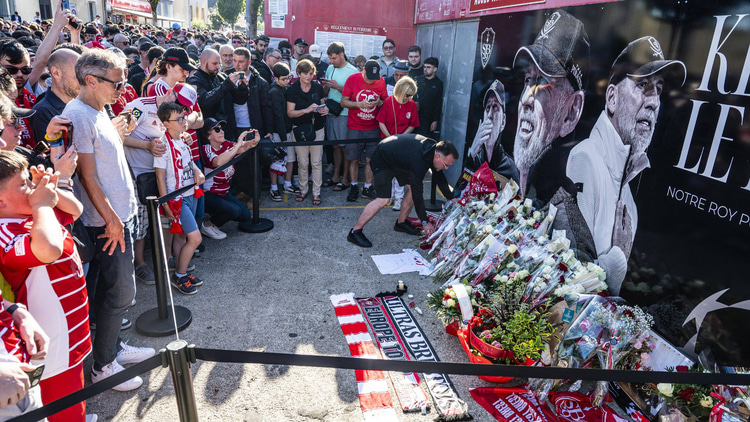
“He didn't talk about it with the squad because he didn't want it to be used as an excuse. The players knew, but I think they didn't know the extent of his illness.
“We'll continue to honour his legacy, but we won't talk about it every day, because he didn't want that. He didn't want us to pity him. And paying tribute to him also means talking about what comes next.”
And what comes next for Brest is not the Champions League. Instead, it is the grim reality of a fight against relegation, the day-to-day grind of a Ligue 1 side with one of the smallest budgets in the league. But as they undertake it, they will do so inspired by the fight, determination and attitude of their former coach, where Eric Roy will forever be King Eric.
Read more about:
UEFA Champions League
Brest