
-
News
- 21 hours ago
Zidane steals the show for good and bad as Italy triumph - the story of the 2006 World Cup
11 Jun 2026 02:00 CDT |
6 min read
Analysis

Any other exit would have been preferable. If Zinedine Zidane had missed the decisive penalty in the World Cup final shootout the world game would have thrown down its regrets but still remembered the genius of achievement in 1998 and 2000 with France, and in 2002 with Real Madrid.
If Zidane had missed the final through injury or suspension it would not have affected his reputation. After all, when he quit Les Bleus after Euro 2004 no one expected to see him at another World Cup, let alone with a chance of winning it.
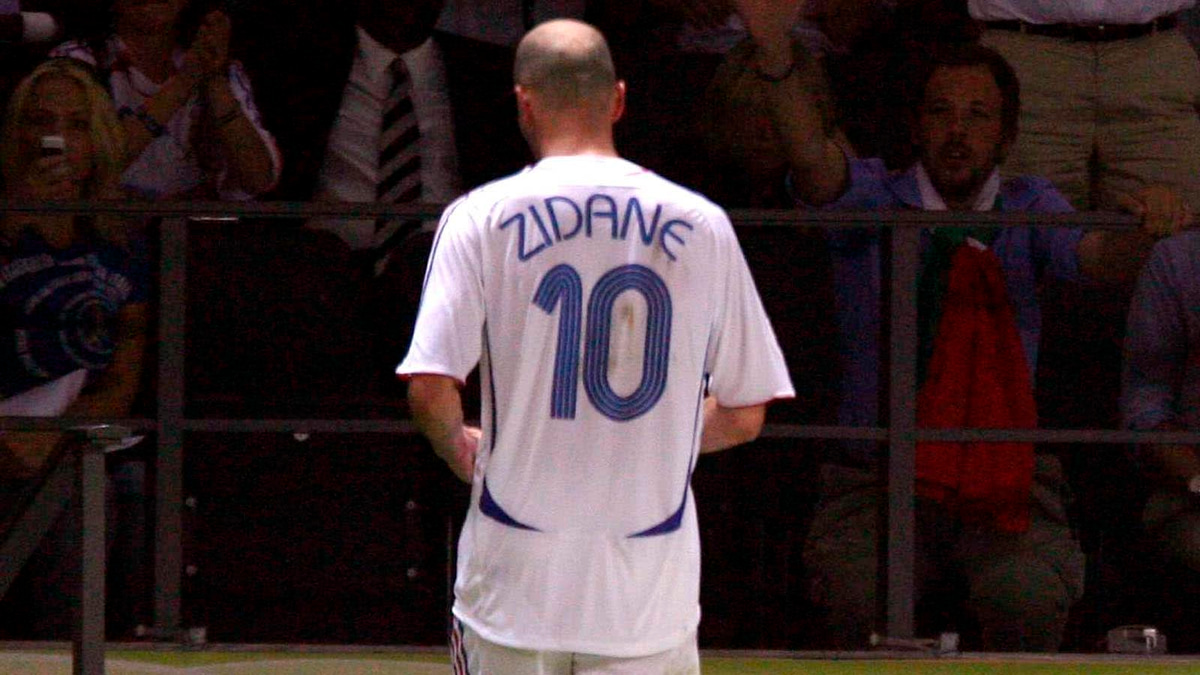
But getting sent off for a butt, ten minutes from the end of extra-time in his very last game? Sad. But maybe not surprising. Before the final, Zidane had been sent off 13 times in his career, the first in 1993, making it an average of one per year. Yet he had not been dismissed since April 2005. Statistically, the red against Italy was overdue.
His excuses are immaterial. The damage of that image, flashed around the world, has been done. The man voted finest player at the 2006 World Cup will be remembered not for the award, weight of trophies and titles down the years, but for that flashpoint.
Up until that moment in Berlin, Zidane was unquestionably the greatest of the four Frenchmen who have been hailed as European Footballer of the Year. Raymond Kopa collected his prize for inspiring Les Bleus to third place at the 1958 World Cup; Michel Platini won a hat-trick of awards in the mid-1980s when he rivalled Diego Maradona as the finest footballer on Earth; Jean-Pierre Papin was crowned for his avalanche of goals with Marseille.
But great as Kopa and Platini were – Papin was a “mere” shooting star – neither had won the World Cup. Zidane not only collected a winners’ medal after the 3-0 final victory over Brazil in 1998, he also scored two of the goals.
After the butt, an internet poll run by L’Equipe questioned whether Zidane’s career would be forever marred by the manner of his farewell. Only 39 per cent of French fans agreed, with 61 per cent firmly in denial. But we all know what we saw. Sadly.
Keir Radnedge
FORZA ITALIA
The finals’ structure and schedule meant that the best football at the 2006 World Cup was not in the knockout phase, where it should have been, but in the early group games
Four events rolled into one. That is the World Cup. Hence the mixed, confused reactions to Germany 2006. Was it a football classic? Was it a demonstration of organisational perfection? Was it a fan fest? Or was it just a cash cow?
“The best ever World Cup,” said FIFA president Sepp Blatter, as he says after every World Cup, and, in financial terms, he was right.
But, beyond the business end, the World Cup is a sporting romance, and FIFA does not give the competing countries the respect they are due in terms of logistics and schedule.
Once upon a time, the finals generated their finest football in the knockout stages when the shackles had come off and the players were into all-or-nothing. Sadly, now, the opposite is true. The best football of the finals – and the finest goals – came in the opening two rounds of the group stage when the players were more relaxed and still at the peak of condition after the four-week break since the end of their domestic competitions.
By the time the groups were over, every surviving coach understood the dangers posed by long-range shooting and drilled their teams to close down the shooters at high speed.
Fatigue had also set in. A number of teams underestimated the effect of the heat in the afternoon and oppressive atmosphere within the tent-style stadia even in the late evenings. Some teams had so little ambition they did not think beyond the first round – notably Ukraine and Switzerland, as their horrendous second round meeting demonstrated.
Great matches? None. Outstanding performances? Argentina against Serbia & Montenegro, but that was compromised because the Serbs were so poor. Maybe the semi-final between Italy and Germany, but by then the snap had gone out of Germany’s legs as the emotional weight of domestic expectation took its toll.
Disappointments? The Czech Republic, who ran out of strikers, which was more bad luck than bad planning. And awful England, an embarrassment whose underwhelming displays against Paraguay, Trinidad & Tobago, Sweden and Ecuador before the penalty-shootout exit to Portugal should prompt a realistic reassessment of what is supposed to pass for quality in the Premiership.
Then again, what sort of World Cup is it when a team – Italy – need perform “properly” only once to reach the final?
Everywhere but Italy, this final will be remembered for all the wrong reasons. It will be remembered as a final that sunk to the depressing nadir of penalties and for a disastrous end to the career of Zinedine Zidane when he was sent off for the second time in three World Cups (his first was against Saudi Arabia in 1998).
A final that sunk to the depressing nadir of penalties and a disastrous end to the career of Zidane
- Zidane, who had put Les Bleus ahead from a “normal” penalty in only the seventh minute of the game, was dismissed by Argentinian referee Horacio Elizondo on the evidence of the fourth official after butting Italy defender Marco Materazzi in the chest.
France, who had already substituted attacking spearhead Thierry Henry, thus were missing their two finest penalty exponents for the shootout, which the Italians had earned after Materazzi had equalised with a 19th-minute header.
The only player to miss in the shootout was David Trezeguet. His shot, France’s second penalty, flew up past his Juventus club-mate Gigi Buffon and ricocheted back down off the crossbar and away.
Nemesis thus caught up with Trezeguet: he had scored one of the penalties with which France beat Italy in the 1998 quarter-finals, and he had scored the golden goal that beat Italy in the Euro 2000 final.
Fabio Grosso, Italy’s fifth penalty-taker, rasped home his kick, and finally Italy had claimed a fourth World Cup. In doing so they also righted the sad memory of their shootout defeat by Brazil in the 1994 final.
The final was an anti-climactic finish to a tournament in which neither Italy nor France had appeared likely finalists after the first round. They had stumbled through their groups and neither had forged a goal-strewn path through their knockout-phase games. So it was no great surprise when their final meeting ended in a shootout.
Zidane told us in advance that he would retire whenever Les Bleus reached the end of the road. Sadly, he reached the end of his particular road before the rest of his team-mates.
By Keir Radnedge
Read more about:
World Cup U20