

-
News
- 19 hours ago
2010 World Cup: Spain's golden generation earn first win in first final for La Roja
11 Jun 2026 06:01 CDT |
6 min read
Analysis

“The first World Cup in Africa is hugely symbolic for a continent that is so often mired in the misery of mankind: famine, war and poverty. It has the potential to be a coming-out party, an opportunity to put a firm foot forward and make a bid for respect where to date there has been but pity and derision.
The four-yearly footballing fiesta is an event of such strong international symbolism – not to mention a media interest unlike anything else – that its mere hosting by an African country has widespread resonance.
It is the first time Africa has hosted anything of this magnitude. There is no past history of failure for there has been no past opportunity. Instead there are now monuments to the potential of success: six magnificently built stadia – breathtaking symbols of what is possible.
African football is still a mercurial beast, frustratingly full of potential but inconsistent. Playing on home soil was supposed to be the springboard for its progression but there is not much hope in the six nations it fields in 2010.
Algeria, Cameroon, Ghana, Ivory Coast and South Africa were all handed tough draws and do not have enough playing resources to believe they can create anything like the awe-inspiring, dream-like performance that it was hoped this World Cup would engender. Nigeria are the one side who can claim to have been fortunate in the draw, yet their knee-jerk reaction in changing coach just months before the finals may prove an act of self-sabotage.
So, instead of a prolonged assault on the knockout stages that was forecast when an African World Cup was first mooted, and one that would elevate African football to a potential of all kinds of new riches, now any progress past the first round will be celebrated.
But Africa will still resonate with World Cup fever even if her own sons are no longer competing in the finals. The global reach of the modern game means that the likes of Lionel Messi and Wayne Rooney are as fervently followed as Didier Drogba and Samuel Eto’o.
Mark Gleeson
HAIL THE CHANGE
Spain, for so long the great underachievers, are now the overachievers of the international game after adding World Cup success to their European Championship triumph
So accustomed to ask what went wrong, Spain – for so long the game’s great underachievers, now its world and European champions – are now asking what went so right? And so too is everyone else.
The temptation might be to answer everything, but that just wouldn’t be true. And not just because Spain lost their opening game against Switzerland. Until Spain beat Paraguay in the quarter-finals, there were countless questions and debates swirling around the Seleccion.
It is as if it took Spain breaking that barrier and reaching a first-ever semi-final for critics to agree that, actually, they were rather good after all. Maybe just not good in quite the same way as everyone had expected. By the end of the tournament, as much was being said about the quality of Spain’s defence as their attack, as much about solidity as fantasy.
“Among the questions, the queries and the fears were the form of striker Fernando Torres, eventually dropped against Germany, and the role of the infamous double pivot – most didn’t see the need for two nominally deep-playing midfielders and called for one of Xabi Alonso or Sergio Busquets to be ditched. Some wanted Cesc Fabregas in the side, some David Silva. Some feared that Andres Iniesta was not fit enough.
Then there were those who were concerned about the relative lack of goals, David Villa rescuing Spain almost single-handedly – and becoming a huge national hero into the bargain, finally getting the unqualified recognition he had long deserved.
The path had been relatively clear – they avoided Brazil, Italy and Argentina – and though they had reached the final against the Netherlands, their progress had not always been as impressive as hoped.
They had been under terrible pressure against Chile – a game they needed to win to even get out the group – until Villa scored a wonderful long-range goal. Against Portugal, they struggled to find a way through, Villa eventually scoring from what looked very close to an offside position. Against Paraguay, Iker Casillas saved a penalty that might well have put them out, then made a stunning point-blank stop in the dying minutes that certainly would have put Paraguay back in it.
Even against Germany in the semi-finals, there was a wonderful chance for Toni Kroos and the Spain goal came from a powering header at a corner – not the most tiki-taka of goals.
After the Germany game there was a very different reading, though. That was natural enough – the opponents were different and, in truth, the performance had been too. Control without flair appears so much more impressive against a side that had mostly wowed watchers rather than, say, Paraguay.
When they defeated Germany, any doubts were finally washed away with the sports daily AS declaring: “That must be how football is played in paradise.”
For Spain, the way they reached the final was significant – if not, obviously quite as significant as the fact they got there at all. After the Honduras and Chile games – oddly, the only ones in which they scored twice, making Spain the lowest-scoring world champions of all time – some had accused them of selling out on their tiki-taka style.
They were wrong. The opposite is in fact true: if there is one thing that went right above all others it is Spain’s commitment to a footballing style. It might not have been as dazzling as some hoped, but it was devastatingly effective. Possession of the ball was shown not only to be a means to scoring goals but, more importantly, a means to preventing them too, a way of controlling the game.
One thing that went right above all others is Spain’s commitment to a footballing style
- And no one maintains possession quite like Spain. Yes, they had had their nervy moments. Sure, they had not created the chances they expected, but there was an unquestioned mastery to their games – no other side in the World Cup produced as many passes or enjoyed greater possession, effectively neutering the opposition. Tiki-taka can, it seems, be a defensive tactic as much as an offensive one.
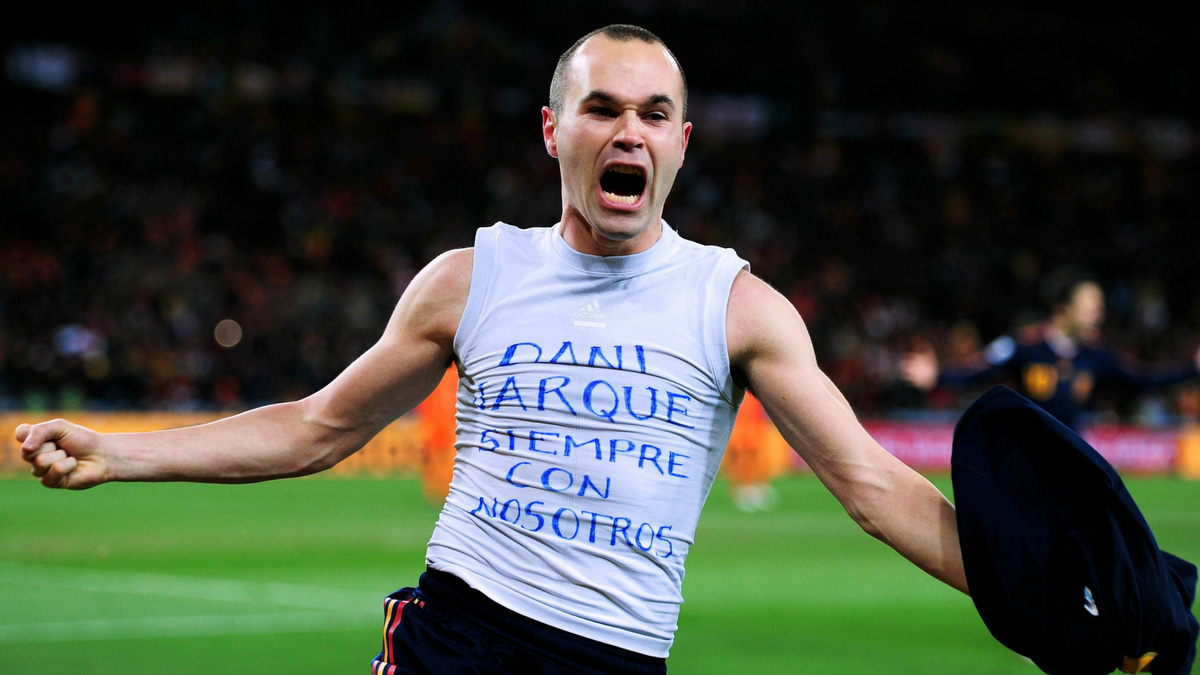
And so to Spain the glory. Justice left it very late in the final but finally had the utterly deserved last word. Not until four minutes from the end of extra-time and the fearful threat of a penalty shootout did Iniesta strike down a clumping, kicking and clogging Dutch team.
Spain made desperately hard work of it, but the Spanish have long considered their football the most aesthetic. It has finally proven the most effective too.
By Sid Lowe & Keir Radnedge
Read more about:
World Cup U20