

-
News
- 17 Sep 2026
Tired of ads during World Cup hydration breaks? Better get used to it - Fox won't change a thing
16 Jun 2026 20:00 CDT |
5 min read
News

Viewers have been complaining about being inundated with mid-game ads during World Cup hydration breaks, but this practice is here to stay, at least for the remainder of the competition.
The 2026 World Cup in the USA, Canada and Mexico is easily the most commercialized tournament in the history of the sport, with FIFA and everyone involved trying to squeeze every last penny out of match-going supporters.
While there have been some games with large empty sections in the stands, most matches have been pretty well attended. In that sense, FIFA's greed is already being rewarded. However, it's not just those attending games who have to deal with soccer's Americanization.
Even viewers at home can't escape FIFA's nonsense. The fact that every fixture has two mandated hydration breaks of at least three minutes - regardless of the outside temperature or the air conditioning in the stadium - has allowed broadcasters to run mid-game commercials.
The game has essentially been split into four quarters, which hasn't gone down well with soccer traditionalists. This change has even had an impact on the product on the field, with teams essentially getting two timeouts.
On Sunday, minnows Curacao had Germany on the ropes and even scored before the cooling break allowed the Europeans to regroup and reassert their dominance. The Germans would probably have won anyway - they put seven past the World Cup debutants - but perhaps Curacao could have done a bit more damage without the unnecessary interruption in Houston's closed, air-conditioned NRG Stadium.
Hydration break ads are going nowhere
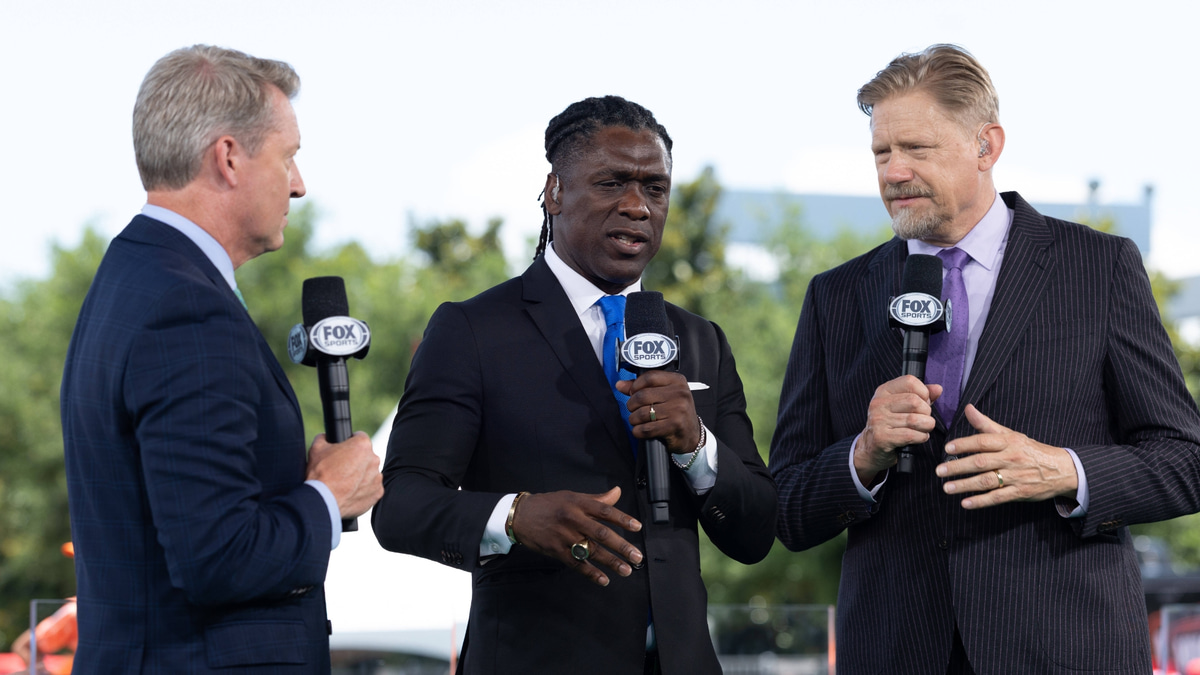
The most contentious aspect of FIFA's hydration break policy is that broadcasters are exploiting it for advertising. While not all of them do it, many use the downtime as an opportunity to show commercials.
This ranges from promoting their own products - German state broadcaster ZDF advertises one of its documentaries about the 2006 World Cup on home soil - to full-scale advertising from external brands, as seen on Fox.
All it took was literally the second hydration break for FOX to run too many commercials and miss some live action.
Absolutely ridiculous conceit.— Tom Bogert (@tombogert) June 11, 2026
Indeed, Fox's advertising strategy has been the most egregious. The network is cramming as many commercials into the cooling breaks as possible, which early on in some games resulted in the resumption of the broadcast only after the play had already continued.
Because of this, referees in charge of games in the US are now urged to coordinate the resumption of play with FIFA personnel so that the match doesn't restart before the Fox broadcast has returned. This was confirmed by a commentator on-site during the Saudi Arabia-Uruguay game on Monday.
Ahead of the tournament, there were reports that Fox may utilize a hybrid strategy, where it would alternate between full-screen advertising and picture-in-picture commercials depending on the situation, but this has not happened to date.
So far, every single refreshment period has been filled with a full ad break. That may yet change during real high-stakes games later on in the competition, but don't hold your breath.
The reason why Fox is doing this is incredibly simple: money. Awful Announcing estimates that Fox will recoup more than half of its $485 million investment in the World Cup broadcasting rights just from hydration break ads alone.
That's a conservative estimate, by the way. The Wall Street Journal claims that Fox charges $200,000 per 30-second ad during early-round games and around $750,000 for United States fixtures.
There are 104 World Cup matches this summer, with each of the three-minute breaks allowing Fox to run four 30-second ads (if it abides by FIFA guidelines, which it hasn't always done). At an average price of $300,000, that amounts to $249.6 million for the network.
Hydration breaks have proven to be a chance to switch momentum during the games.
A story of the FIFA World Cup so far! pic.twitter.com/eCj4YD5Tgi— Yash (@Odriozolite) June 15, 2026
That number increases substantially if the average price rises - and this is entirely possible. In short, cooling break advertising alone is paying the bills for Fox.
It is therefore no surprise that Fox pundit Alexi Lalas, the most divisive and annoying voice in American soccer, is a fan. "I have no problem with hydration breaks," he wrote on X on Monday. "It benefits players and advertisers. Win/win.
"Yes, it changes how you play/coach/watch, but so did substitutions, 3 points for win, VAR, etc. Evolve and adapt. There will be a generation whose version of the beautiful game includes quarters."
Fox won't pass up a massive payday, so their full-scale advertising during cooling breaks is here to stay for the rest of the tournament, whether fans like it or not.
And if soccer continues down its path of commercialization, we may soon see mandatory hydration breaks in league play too. After all, TV revenues are a hugely important part of the soccer business.
Many broadcasters are already doing picture-in-picture advertising during matches. If they want full-scale mid-game ad breaks, they might get them in the future.
Read more about:
World Cup U20
FIFA Club World Cup