
-
News
- 21 hours ago
Football in the shadow of Fascism: When Benito Mussolini's Italy won the 1934 World Cup
4 Jun 2026 19:10 CDT |
4 min read
Analysis

With qualification required for the first time, the holders choosing not to defend their trophy and political machinations clearly at play, the ground-breaking second edition of the World Cup, won by hosts Italy, was a historic event...
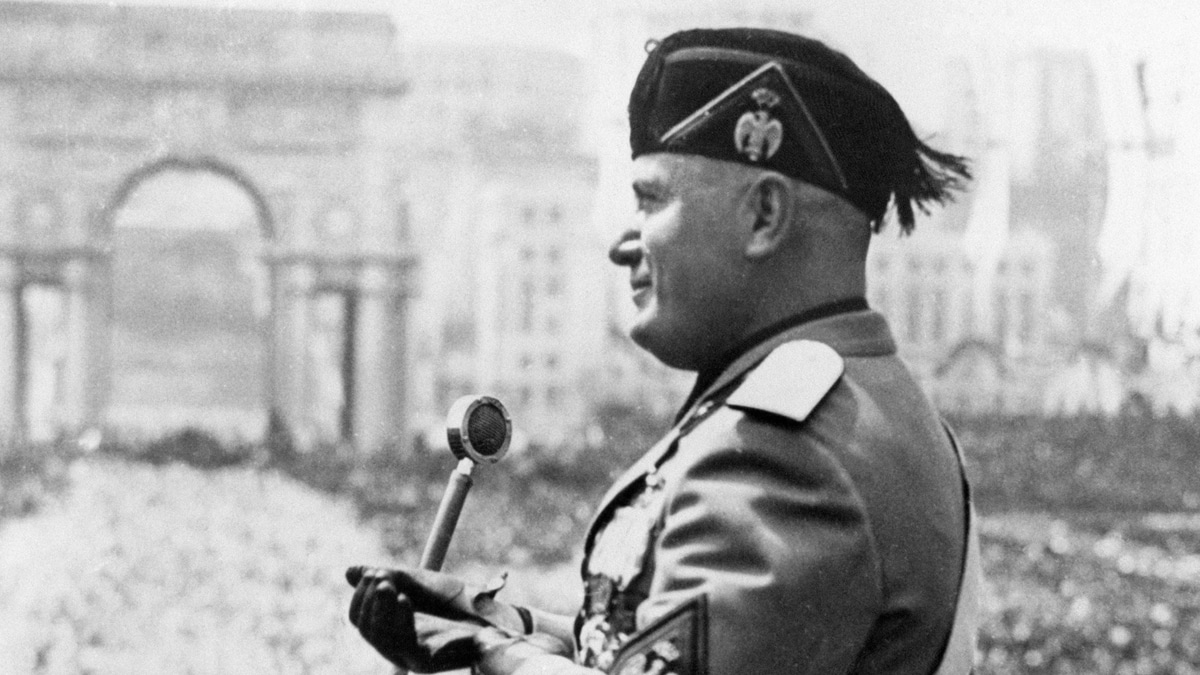
Whether it is a true story, or merely apocryphal, it deserves to be told here as the key to all that happened when Mussolini’s Italy staged the 1934 finals.
“General Vaccaro,” Mussolini is said to have addressed the head of the Olympic Committee. “Italy must win the World Cup.”
“We’ll do everything possible, Duce,” replied Vaccaro.
“General,” repeated Mussolini. “I don’t think you quite understood me. I said Italy must win the World Cup.”
And Italy did just that – with the aid of three Argentinians: midfielder Luis Monti, and wingers Enrique Guaita and Raimundo Orsi. Their team was based on Juventus, but they also had at their head one of the greatest of managers in Vittorio Pozzo.
Pozzo was the first manager to think deeply about how to bring the best out of his players by understanding them as men. If two players had scrapped in a league match he would put them together as room-mates when the Italian team went into retiro.
At the start of the finals he dropped Gianpiero Combi, the experienced goalkeeper who had been first choice for almost a decade. He preferred the younger Carlo Ceresoli. But in a training accident, Ceresoli broke a finger. Pozzo went up to Combi, and said simply: “Are you ready? I need you.” Combi, unlike many players today, had refused to sulk and stepped straight back into the team.
The finals were played on a knockout basis and Italy were fortunate in that Uruguay, angry at the European semi-boycott of 1930, stayed at home – the only title holders in history not to defend the trophy – and also that Argentina, fearful of losing any more players to the big Italian sides and the lure of the lire, sent a weakened team.
This was the first World Cup in which teams had to qualify to take part – 16 survivors remained from an initial entry of 32 nations – and the tournament was played across eight Italian cities. Any innocence from the inaugural edition was fast disappearing, and the political machinations of the Fascist era gave a glimpse of the sporting future.
“The 1930s may have been decadent, but they were also a golden era for European football – an age of legends. And two great European visionaries, the aforementioned Pozzo and Hugo Meisl of Austria, had the immortals of the generation at their disposal. The Azzurri, with Mussolini watching every match, easily beat the United States 7-1 with Angelo Schiavio scoring a hat-trick. Understrength Argentina succumbed, sadly, 3-2 to Sweden, and they weren’t the only South Americans to make the long journey for just one game. Brazil lost 3-1 to Spain after Waldemar de Brito, later the man who discovered Pele, missed a penalty. Elsewhere, an Edmund Conen hat-trick was instrumental as Germany thrashed Belgium 5-2.
Switzerland scraped through against the Netherlands and joined a quarterfinals line-up including the great disciples of the famed central European school of football – Hungary, Czechoslovakia and Austria – the latter known as the “Wunderteam”.
But Austria struggled and beat France only 3-2 in the round of 16 despite the presence of greats such as Matthias Sindelar – “The Man of Paper” – Josef Smistik and Karl Zischek. Then, sadly, their classic quarter-final confrontation with neighbours Hungary, in Bologna, degenerated into a thoroughly unsavoury brawl. Hungary’s Imre Markos received his marching orders and Gyorgy Sarosi’s late penalty proved inadequate as goals from Johann Horvath and Zischek got Austria through.
Karl Hohmann scored twice for Germany against Sweden to ensure their semi-final place and, in the outstanding tie of the quarter-finals, Czechoslovakia beat Switzerland 3-2.
Switzerland played well above themselves, but found Frantisek Planicka splendidly acrobatic in goal. Though they went ahead early on and then pulled back the Czechs with 12 minutes to go, when the great Bohemian, Oldrich Nejedly scored in the 82nd minute, the Swiss had nothing left in reserve.
In Florence, the remaining quarter-final tie reflected the tournament’s underlying tone as Italy and Spain literally fought out a 1-1 draw, with Spanish goalkeeper, the great Ricardo Zamora, heroic. It was a horrendous match, badly refereed, and typified the Italian mania to win the trophy. When they replayed the following day, the physical violence had cost Spain the use of seven players – including Zamora, who had been so badly knocked about by the desperate Italian forwards – and Italy of three. The refereeing got even worse and after two dreadful encounters, Giuseppe Meazza’s goal which got Italy through seemed insignificant.
The greatly anticipated semi-final between Austria and Italy in Milan was contested in a mud bath which stifled the superbly-honed close skills of the Austrians. The Wunderteam had beaten Italy 4-2 in Turin in the spring, but they proved a little too fragile here. They disappointed throughout the tournament and when Guaita scored for Italy in the first half, it signalled the end of a golden era. As Pozzo said: “They are better footballers, but we are the stronger men.”
In the final, Italy faced a rapidly improving Czech side, who, with Nejedly inspired, were far too good for Germany’s workmanlike side in the other semi-final – a hat-trick his contribution in a 3-1 win. As hundreds of Czechs spilled across the Alps, the final proved a splendid affair. With their neat, short-passing game, Czechoslovakia played superbly and having had the better of a close first half, seemed on their way when Antonin Puc scored in the 71st minute.
But the Azzurri, with so much to lose, were far from finished. As Schiavio and Guaita stepped up a gear, so did Italy, to save the day seven minutes from the end when Orsi’s fluke of a curling shot evaded Planicka to send the game into extra-time.
In the final reckoning, superior Italian fitness proved decisive and Meazza and Guaita combined to set up Schiavio’s winner for a host nation which, distastefully, had utilised home advantage to the greatest possible effect.
By Iain Macleod & Keir Radnedge.
Read more about:
World Cup U20