
-
News
- 21 hours ago
2026 World Cup: The USA face huge expectations amid political tension off the pitch
11 Jun 2026 20:00 CDT |
7 min read
Analysis

By James Nalton for World Soccer in the 2026 World Cup Special, May 2026.
The United States will host the World Cup for the second time, 32 years on from USA ’94, and expectations are bigger than ever
World Cup is a time for hope and expectation, particularly for a host nation, for whom there can also be added pressure. This is especially the case for the United States in 2026.
With this year’s World Cup final being played on their shores as part of the overall co-hosting arrangement with Canada and Mexico, US participation is naturally accompanied by expectations beyond the norm as the world of football assembles in the nation of “soccer”.
Unlike so many of this summer’s World Cup participants, this is not the USA’s national sport. Even though a top-tier professional domestic league in the country has found a sense of consistency and stability for the first time in history, MLS is, rightly or wrongly, still considered to be behind traditional American sports leagues – the NFL, NBA, NHL and MLB – in the pecking order. The USA have something to prove at home as much as they do to the visiting football world.
The world of football assembles in the nation of “soccer”, but this is not the USA’s national sport. The hosts have something to prove at home as much as they do to the visiting football world
- This will be the second time the United States has hosted the men’s World Cup, having done so memorably in 1994. That tournament led to the creation of Major League Soccer, which has since gone on to challenge the status quo of those “Big Four” American men’s sports leagues. The national team making waves on the world stage in their own backyard 32 years later would only help increase the profile, popularity and respect afforded to the men’s game domestically.
Despite struggles to maintain a domestic league, the USA have had their moments in international football. The 1930 and 1950 editions brought encouragement that they were not out of their depth, especially their defeat of England in the latter, and there was a quarter-final appearance in 2002. But they need something else, something new and up to date, reflecting what American soccer is today, its progress, and where it wants to be; something to boast about, to indicate the sport in the country is heading in the right direction.
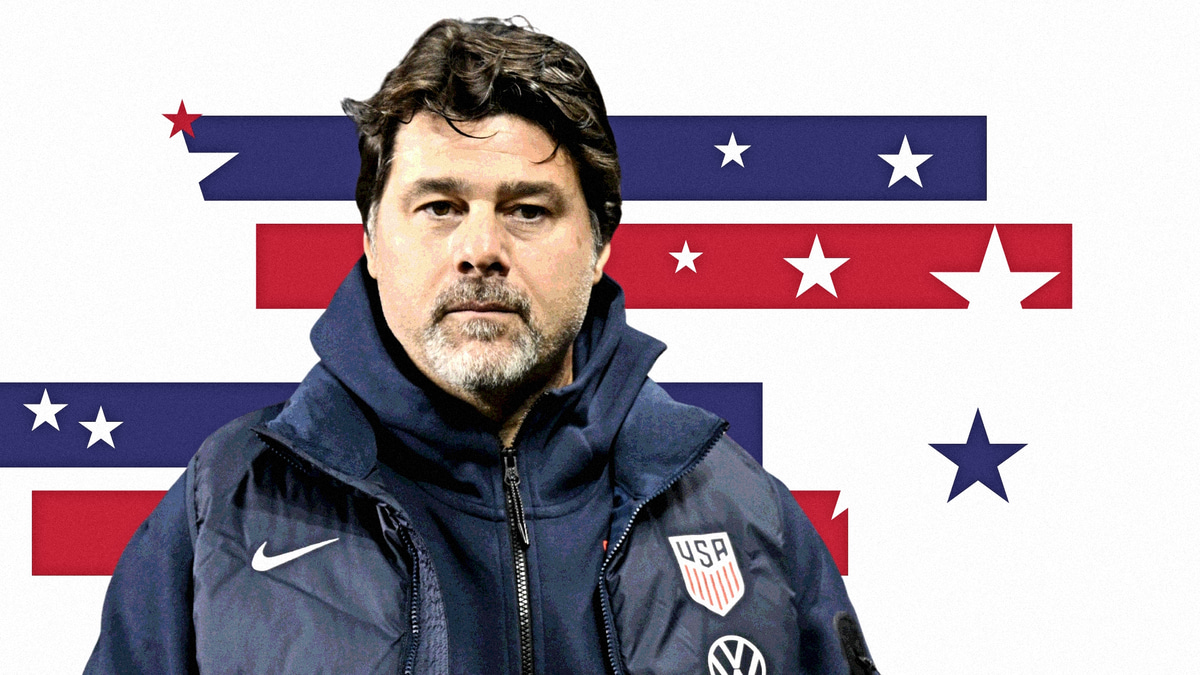
In Christian Pulisic, the USA have a player who is likely to go down as the best the country has ever produced. They appointed a manager, Mauricio Pochettino, whom they believe has the pedigree to utilise this talent and take the team to a place where hopes and expectations become a reality. There is a feeling that it’s about time things came together for their men’s team in the way it has so often for their four-time World Cup-winning women’s side. No better time than a tournament on home soil.
Mauricio Pochettino's view
After years in club management, what is it like to manage the USMNT?
It’s a massive challenge. It’s a bigger challenge than we thought before we started here, for different reasons, but we are a coaching staff that loves this type of challenge. It’s never easy when you need to change things, and that is why the project of the US men’s national team and US Soccer is amazing. The new training ground is amazing. It’s going to be one of the best in the world. The motivation is to work with an organisation that has a vision to build something special. The potential here is massive and, with the legacy of the World Cup and the way that soccer is growing here, and the way our youth teams are growing and competing, the future is very exciting. But now is not the time to talk, now is the time to be focused on the World Cup.
Did the pre-World Cup friendly defeats to Belgium and Portugal dent preparations?
Football is about the details, and sometimes you get what you want and sometimes you get things you don’t like. We need to learn from these types of results, and there are some good things we need to take. It’s not all negative when you lose – from there, build for the next game and for how we want to arrive at the World Cup. The team has fire, they never give up and they want to try and try. I think that is important. We are seeing many positive things in the dressing room that we can build upon. It’s better that these types of results happen now, because it means we now know what we are going to face in the next games.
Was it important to have this type of opposition in March to help maintain your intensity and competitive edge?
We needed competitive games to arrive at the World Cup at our best. We can arrive with the wrong idea, that we are so good, and it’s good to feel like that, but if we want to win the World Cup, and to go to the next stage, and we want to beat Paraguay in the group, do you think we are not going to fight? I was listening to some comments after different games, and when we win it’s because we fight, we were aggressive, we were intense, but when we drop our intensity, we saw today [5-2 loss to Belgium] what happens. To keep our intensity, we need to create a habit. We need 26 players who believe in that and have the capacity to be intense in everything, not just in one action and then with one minute to recover.
What are your team’s ambitions at this World Cup, particularly as it’s taking place on home soil?
The plan for us was to arrive before the World Cup with the possibility that we really believe we can beat any team, and that we can win the World Cup, because our objective is to win the World Cup, but with the basic fundamentals and principles and values in place that can take us close to winning.
Tactics
Since taking the job in autumn 2024, Pochettino’s line-ups have settled into a system that adapts to players’ strengths and, though there can be tweaks here and there, the underlying ideas remain consistent. A 4-4-2 has been noticeable in some line-ups when defending and pressing, but once in possession the shape will change to match players’ profiles in a few key positions.
Defensive and attacking full-backs, and attackers who prefer to play as a No.10 rather than a winger, can all be accommodated, with 4-2-3-1 and back-three formations the most evident. The changes in shape take place naturally in transition on the back of a desire to press the opposition. There have been centre-backs drifting wide and full-backs moving into various positions, from the centre of defence to out-and-out wingers.
In a relatively short time, Pochettino has created roles for numerous depth players who know exactly what they need to do should they be called upon. Watch out for in-game positional movement down the right and how the midfield and left flank balance that out. If the US decide to counter-attack in certain games, the distribution of goalkeeper Matt Freese, specifically his long throws out from the back, could play a part.
The View From the USA
“The USMNT will be desperate to erase memories of their woeful 2024 Copa America showing. Pulisic has embraced leading man status at Milan, and Balogun and McKennie arrive in fine form. Group D could be thorny, but reaching the last 16 is mandatory for a successful tournament.” - Jeff Rueter, Guardian US soccer correspondent
“2026 kicks off the most important era of soccer in North America, and the USMNT enter the World Cup with lofty expectations. With a talented player pool boasting loads of overseas experience, and a favourable draw, anything short of the quarter-finals would be seen as a missed opportunity.” - Susannah Fuller, Kickback Soccer Media host
The Coach
As in 1994, when Serbian coach Bora Milutinovic took charge of the team, the United States have looked abroad for a manager to steer them at a home World Cup. A search for one of the best in the world, capable of leading a team in this most important of tournaments, led them to the meticulous Pochettino and his team of trusty assistants.
US Soccer hope that the Argentine’s tactical acumen and previous record, especially at Spurs, of helping young players reach their potential translates from club to international football and helps them reach the next level.
Read more about:
World Cup U20