

-
Analysis
Morgan Rogers - can Chelsea do this?
4 min read

News

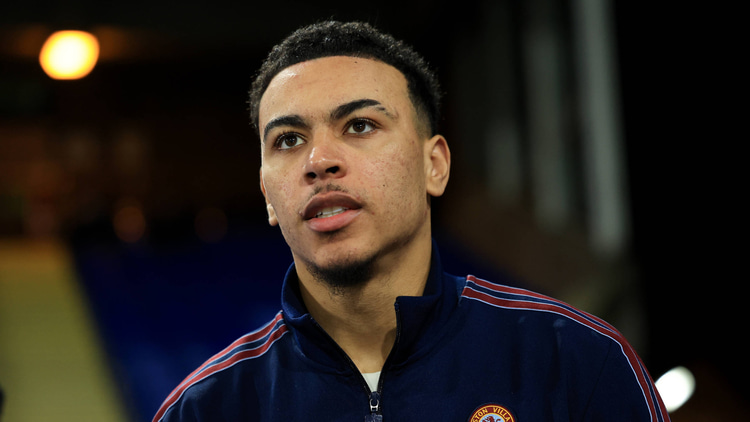
On Saturday, the surprise announcement dropped that Aston Villa had accepted a €138m offer from Chelsea for the purchase of Morgan Rogers.
Rogers was, at the time, getting ready to start for England in their final World Cup 2026 third-place match against France, but journalist David Ornstein was quick to report that personal terms had been agreed and that the deal was pretty much done.
This was surprising to two main groups of people - the first being Mikel Arteta and Arsenal, known long-term admirers of Rogers and clearly a target this summer as the Gunners looked to further build from their position of superiority as Premier League champions.
The second group is everyone with even the slightest insight into the dysfunctional, straight-up contemptuous spending of Chelsea and by extension, BlueCo. The Rogers deal will take Chelsea’s transfer outlay since the acquisition of Todd Boehly to over €2 billion, a lavish, stupid sum that has already led to significant UEFA sanctions.
But, so far, not much from the Premier League, who have only just agreed a settlement with the club over their last egregious bending of the regulations (that €12m fine, related to financial reporting, third-party investment and youth development, was deemed by some to be so lenient as to be a dereliction of duty from the league).
How can Chelsea sign Morgan Rogers?
The fact is Chelsea challenge so many rules that it’s almost hard to keep up, but in this case financial analysts are simply shaking their heads. How can they get away with this?
The answer, somewhat depressingly, is that they will probably find a way. Aston Villa and Chelsea’s transfer relationship over the past few years has been one of mutually beneficial circumventing of Profit and Sustainability Rules (PSR). In 2024, Chelsea paid Villa €22.5m for Omari Kellyman, a young talent with just two Premier League appearances under his belt (Kellyman spent 25/26 on loan at League One side Cardiff City).
In the same window, Villa paid €44.5m to Chelsea for Ian Maatsen, roughly three times his Estimated Transfer Value (ETV). There is no suggestion that anything illegal took place here, but it is a loophole, specifically around the commoditisation of young talent, that the Premier League has been keen to close and have told the clubs that such deals would, going forward, be punished as a ‘breach of good faith.’
The Premier League were also forced to close other loopholes involving Chelsea, whether it be selling assets to another business entity such as their hotels, or the women’s club for an eye-watering, above market value fee of €230m. Again, neither of these were deemed to be illegal and were cleared by the PL. Anyway, Chelsea are good at this - too good for the PL to keep up with.
Indeed, the shift to Squad Cost Ratio (SCR) rules from 2026/27 is in part driven by Chelsea’s innate ability to simply work things out financially (in the eyes of the Premier League at least), and this Rogers deal could, unfortunately, be treated no differently. It’s worth noting that by not qualifying for Europe for 26/27, Chelsea need to prove to UEFA that they are doing everything possible to address their historic financial misadventures, but they can’t further breach in sporting terms because they aren’t participating under UEFA’s rules. Until they qualify for Europe again.
Villa have worked hard to improve their own SCR with a season in the Champions League ahead and if a deal were to happen in the other direction - for, say, Nicolas Jackson, who has worked with Unai Emery in the past, is on a gigantic deal with Chelsea (seven years still remaining) and as such would have a perceived expensive market value, it would go quite a long way to helping both clubs solve a few financial problems.
There is a caveat. UEFA’s rules on player exchanges - i.e. two clubs from the same league doing business in the same window - have been amended in this window to mean that it is accounted for differently under UEFA’s SCR rules. If there’s a 45-day window between both deals - this is crazy, I know - then you can bank the profit and amortise the signing as we know now to be normal. But, quite frankly, there are ways around these regarding dates, loans and other mechanisms that Chelsea’s lawyers will be able to navigate.
As most will know by now, transferred players can be booked as 100% revenue, while transfers coming in can be amortised over the length of the player contract. So the fee that Villa have banked for Rogers (somewhere close to €110m after Middlesbrough collect their 20% sell-on fee, wisely included), they could sign a player like Jackson for €70-80m and assuming a five-year deal - the maximum now allowed under PL rules courtesy of the machinations of yet another Chelsea loophole - that fee becomes €14-16m per season, therefore handing Villa a very tidy profit. Again, UEFA’s rules might be a little different - but Chelsea have a year to work that out.
It’s all just a matter of timings, and numbers on a spreadsheet. Chelsea have already sold €134m worth of players this summer - Andrey Santos to Manchester United, Marc Cucurella to Real Madrid and Tyrique George to Everton. They have signed €110m worth, too - Marco Palestra (Atalanta) and Geovany Quenda (Sporting CP) the main two - but, again, the amortization rules work here too. That is, probably, €22m worth of book value incomings against €110m of outgoings.
What we can expect is that Chelsea will sell at least one more. But there is no club better at staying ahead of the negotiations than them; you wouldn’t bet against them finding a way, and answering the questions later.