
-
Analysis
- 9 hours ago
How AI could impact football over the next 10 years
25 Mar 2026 12:03 CDT |
Updated: 15 Sep 2026 04:16 CDT |
8 min read
News

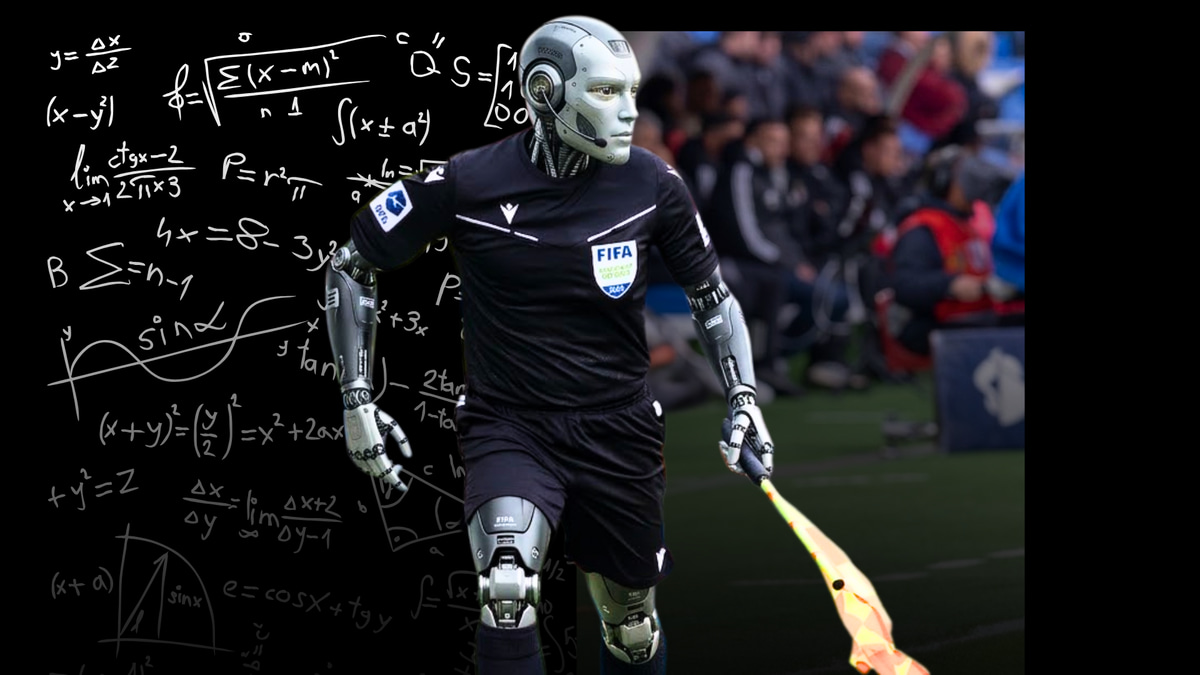
With the rapid advancements in technology, what will football look like in 2036?
Even a decade ago, it would have been unfathomable to predict just how much technology plays a part in the game now, with VAR interventions commonplace in every elite competition in the world.
Artificial Intelligence is already a big part of the game. Clubs are using AI to improve performance, scouting and decision-making. AI can analyse huge amounts of match data to identify patterns, such as where a team is losing possession or which areas of the pitch an opponent is likely to attack.
Clubs also use AI for scouting and recruitment. It can compare thousands of players using statistics such as goals, assists, passing, defensive actions and physical data. This helps clubs find players who fit their style of play and could be good transfer targets.
AI is also being used for injury prevention and player development. By analysing training loads, movement and fitness data, clubs can identify when a player may be at increased risk of injury. Coaches can then adjust training and use the information to help players improve.
But how will AI have changed the game 10 years from now? In a discussion on the BBC, presenter Jacqui Oatley, former player Nedum Onuoha and journalists Rory Smith and Hugh Ferris talked about what football will look like in 2036, with a focus on AI.
"If you think about the last 15 years being a philosophical development of the game, Jacqui mentioned it: data, AI. There's not so much room for philosophies if you are distilling down to numbers," Ferris began.
"Do you think there's a point where, you know, like now if the club's having a difficult time it's like the issues are the manager or the recruitment staff... do you think it'll be soon it'll be like, 'Well, Manchester United have got a new algorithm, they've got their new agent is going to sort out every problem at Manchester United'?" Smith asked.
Ferris: "Well, we'll talk about AI and recruitment because Brighton and now Hearts do have an algorithm thanks to Tony Bloom and Grimsby too. But just quickly on the data, because we will try and make it sexy but we will probably fail... but AI modeling—if you think about the control that managers and coaches have over set pieces for example, it's a very Americanized thing.
"There's a play in the NFL you can design it, there are methodologies that allow you to distill the NBA down to these little moments where they can—it's a pick play that we're seeing a lot more in corners in the Premier League and beyond. So there is a way of being able to control football along those lines and it will all be dictated, will it, by AI?"
AI in recruitment
Smith: "Yeah, the reason they like set pieces is because they can design the plays. It's your chance to have the game set as you want it to be and to control what happens. And now like Jackie says about Declan Rice, you can drop a ball into an exact area, you can make things happen, and managers want that control.
"One of the problems with AI in football is that I think there are things happening already that we would probably now call AI, we just didn't used to call them AI. So they've got these reams of data, they are using algorithms to work through that data to find stuff... is that AI or is that just kind of what we had before? I don't know.
"The big thing—it's always been recruitment-centric data. Most data in football is used in recruitment, that is where you make the decisions that cost the most money, that's where you get your bang for your buck. And mistakes—if you can cut down on the mistakes then the data is kind of paying for itself."
"I think what the more advanced AI models might do in terms of on-pitch stuff is that there has always been a drive to try and figure out if there are certain decisions that players should make in certain situations, if there's ways that you can kind of position your players around the pitch at certain times to have the most effect.
"I think a lot of it will be stuff we don't see as fans. We won't be able to say, 'Well, their algorithm is doing that so that's why the right-back's standing there.' It won't be that detailed, but it might be a case of in certain counter-attacking situations your right-back has to stand five yards further forward or further back and that's where you get the best results.

"As the technology pushes on, that has that impact. I think the risk is, and we've seen a little bit of this already this season, the more teams know, you're kind of reducing, you're racing to zero. So if teams know everything about each other they can shut each other down. So whether we want teams to get that level of intelligence, I don't know."
Ferris: "Surely you can AI model your opponents just as much as you can AI model yourself?"
Oatley: "Something I've been told is happening or close to happening is in terms of recruitment: say you wanted to buy a new right-winger to replace your current right-winger. There's an AI model that's coming into clubs—not for our wider usage—that means you can take that player and their attributes and what they tend to do with the ball... and you can put them in your team, take out your current right-wing and put him in there."
"And then you can use actual match footage to assimilate his characteristics and what he tends to do with the ball, whether it's dribble and get to the byline, whether it's always cuts in on his left foot, whatever it might be, his positioning etc., and then put him into your team and see what the outcome is with him playing in your current team. Which blew my mind when I was told that by a current Premier League CEO."
Onuoha: "So all this stuff is really, really interesting, and I think the point you've made there about inputting somebody into like this system to see what the tendencies are—this is why in some ways I have more hope as opposed to this doomsday scenario for AI. I think the skill is really turning data into information, but to do that you need the human side as well."
Smith: "Sam Allardyce is not like an easy man to praise necessarily in a lot of ways, but he was incredibly ahead of his time. So at Bolton they worked out where the ball would be cleared to most often from corners and they put players there to lift the ball back in, which to us now they'll be like, people in their teens and 20s watching this thinking, 'Well, obviously that's what you do,' but at the time that was an incredibly bold, daring advance."
"But Nedum's right. They have all the data, they will continue to push forward in the next 10 years to get more data, they will get cleaner data... and I'm not being anti-AI, if we weren't in this kind of AI moment we wouldn't be saying they're using AI, it's just that everything is now called AI if it does any kind of algorithmic machine learning."
"They're already doing that to look for the best fit, the platforms will get better, they'll get more sophisticated, but I think fundamentally in recruitment you need it—it's such a human thing. Like what it comes down to is so human: does the player settle in that team? How do they bed in with their teammates not just in terms of their actual attributes, but psychologically?"
"Has Florian Wirtz had a good season? Probably, individually, Yeah. Does anyone think of it that way, no, because Liverpool have been terrible. So it's all so kind of dependent on the person and fundamentally deep down, I just don't think there's a way that you can ever get like a 100% like even with the smartest AI in the world... I just don't think you can develop one that can take all that stuff into account."
The beauty of football
Oatley: "Isn't that the beauty of football? We all enjoy American sports as well, but it is so much more data-driven because of the types of sports they are that they lend themselves to it. But don't we kind of love football more because you still have those moments of individual skill, of human failings, and the fact that the game flows so much more than other sports means that there is a lot more scope for brilliance, for drama, for a dreadful scenario happening, for Wolves beating Liverpool? For the random beauty, the stuff that cannot be AI predicted is what I'm saying."
Ferris: "The discussion about AI is to remind ourselves of the limits of AI. In 2036 we may well be looking very quaintly back on a conversation about the limits of AI."
Smith: "I think that human side of it is really important to remember, that you can't guess. At some point you have to gamble—is this player going to work in terms of recruitment? Like you can't, there's no model for that. But what's interesting on the pitch is the way that this style of play, I think, has to be related to data."
"It has to be related to how much teams know. They are trying to work out how they control each individual instant, and that lends itself to a style of play that is—and Jackie and Nam have both mentioned it—more Americanized. It's more isolated events, more atomized, more 'this is an individual action' rather than that fluid game state because you can control those moments."
"You can educate your players for those moments, you can prepare for them. So I think if I had to take a guess, I'd say in 10 years time football will feel much more like 90 minutes—if it is still 90 minutes—of preparing for individual moments."
Ferris: "Yeah, just different elements of control and marginal gains which is a phrase that we've heard for lots of different sports."
The FootballTransfers app
Check out FootballTransfers' new app for all of football's big storylines, transfer rumours and exclusive news in one convenient place directly on your mobile device.
The FootballTransfers app is available in the Apple App Store. Download here:
Read more about:
Premier League