
-
News
- 19 hours ago
Johan Cruyff moves to Barcelona and football is never the same again
Updated: 31 Mar 2026 07:07 CDT |
4 min read
Analysis

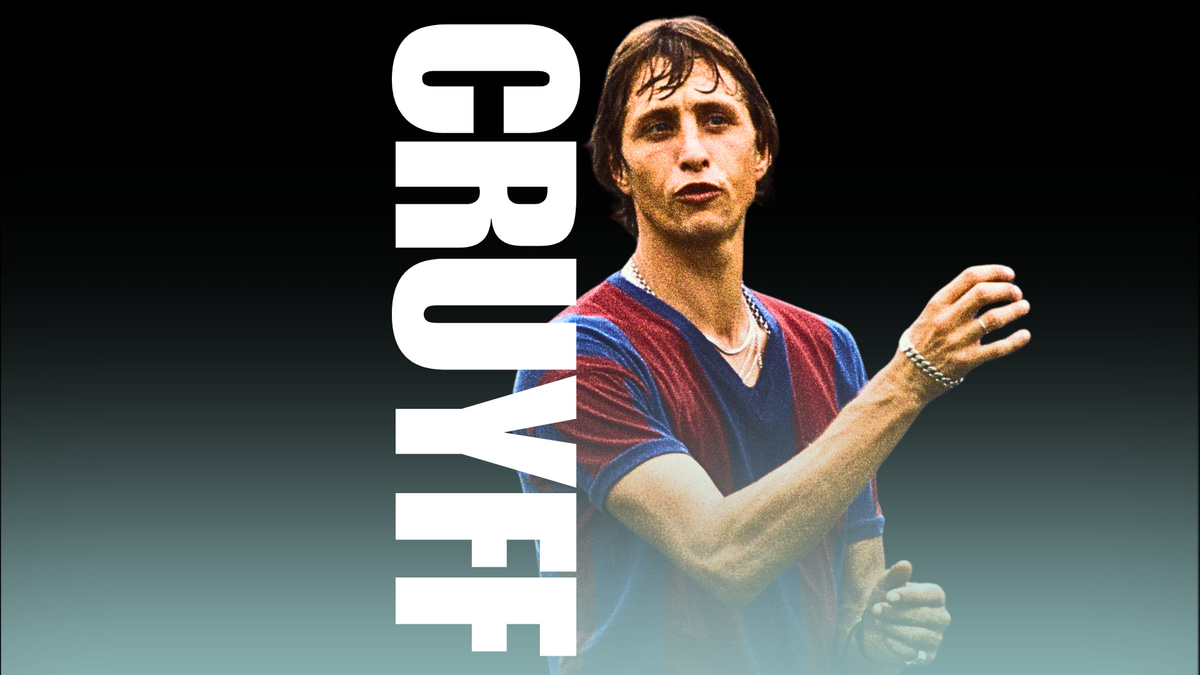
In the history of football there simply is no single individual responsible for shaping the direction and destiny of a club - and indeed the wider game - than Johan Cruyff.
Cruyff is woven into the fabric of Barcelona to this very day. We’ve just passed the 10th anniversary of his death and yet he’s still there, in every move that’s made tactically, every philosophical decision, in every nod to the past. He’s a giant, an icon, simply untouchable as the man who made Barcelona great.
And it all started in 1973. Make no mistake, the Barca Cruyff joins then is not the Barca we know today - not even close. It was a side that hadn’t won the domestic league title in 13 years and were completely left behind by Real Madrid’s European Cup dominance of the 1960s.
The transfer
And yet a world-record $2m fee was agreed with Ajax - eventually. Rules on foreign players in La Liga had only just been relaxed to allow the deal to happen, and boss Rinus Michels - who had been wary of the impact such a personality would have on the team - eventually sanctioned the deal. Cruyff had effectively walked out on Ajax in order to secure the transfer and, at the time, the move was a distinctly economic one for the Dutchman. He knew he would earn far more than he ever could in the Netherlands and was largely untroubled by the fascist, Francoist environment in Spain - though that would change with time.
Did the transfer work out?
Barca had signed the current Ballon d’Or holder, a huge statement. Cruyff was at Camp Nou, and the result was immediate dividends. Barca won the league in 1973/74, finishing a huge 10 points ahead of Atletico Madrid, and in many ways invented El Clasico. The 5-0 destruction of Real Madrid led to an increased importance on that fixture, as the social and political divide between Catalunya and Franco’s Spain began to crystallise in sporting terms as well as economically. Cruyff was promoted as the poster boy of Catalonian separatism whether he wanted to be, or not.
As a player, that was as good as it got. He stayed for another four seasons but Real Madrid collected the title in three of those, with Barca finishing second three times. Cruyff’s impact lessened with each season before deciding to move to the burgeoning NASL in the United States. But it largely didn’t matter - an unbridled connection between player, club and fanbase had been created.
If Cruyff never makes the move to Barcelona, he very likely never becomes coach in May 1988. He took charge amidst another barren spell where Barca had won just one league title since he left in the first place. Much of the elements that he had created with Michels at the Dutch national side, which formed the bedrock of Total Football, were now repurposed for the modern Barca. The team pressed high, utilised a false nine in the form of Michael Laudrup, and rotated positions to give the man in possession numerous options.
Laudrup, alongside other greats Romario, Ronald Koeman, Hristo Stoichkov and Pep Guardiola formed what became known as the Dream Team, winning four titles in row from 1990-1994, as well as the much-coveted European Cup for the first time in 1992. It’s important to stress just how Cruyff built Barca to their position as one of the biggest clubs in the world today. From 1960 until 1990, they won just two league titles, and by 1994 they had tripled that total.
Legacy
Cruyff stayed in charge until 1996 but his impact never left; his weekly column in Periodico de Catalunya became required reading not just for fans but for gauging the impact of his philosophy on the current team; were it to veer too far from what he built, Cruyff would know it, and tell everyone in withering terms.
But it wasn’t until Pep Guardiola took over in 2008 that Cruyff saw someone take his template and modernise it with perfection. As Barca stumbled to one point from their opening two matches in La Liga, Cruyff famously backed Pep and declared that he was delighted with what he was seeing. Barca won the treble - clearly it paid off. That Pep was a disciple who had watched him in action during the Dream Team era helped to execute the Cruyffian vision to perfection.
Since 2008 Barcelona have won La Liga 10 times and the Champions League three times. To say that Cruyff, via Guardiola, orchestrated the success of this team is an understatement. His underlying philosophy that ‘the goalkeeper is the first attacker, and the striker the first defender’ has become so unilaterally applied by tacticians that, in the modern era, it’s rare to see other ways of playing.
Therefore this transfer, more than any other, doesn’t merely shape Barcelona’s future, but the future of tactics themselves, how the game has developed and how each position is considered. Goalkeepers who are also passers. Full-backs who can play as 10s. Centre-backs that can break the lines. Forwards that drop off the play to create chances. It all begins with Cruyff, and everyone else that comes after owes him a gigantic debt.