
-
News
Alfredo Di Stefano to Real Madrid: The transfer that made El Clasico
3 min read
Analysis

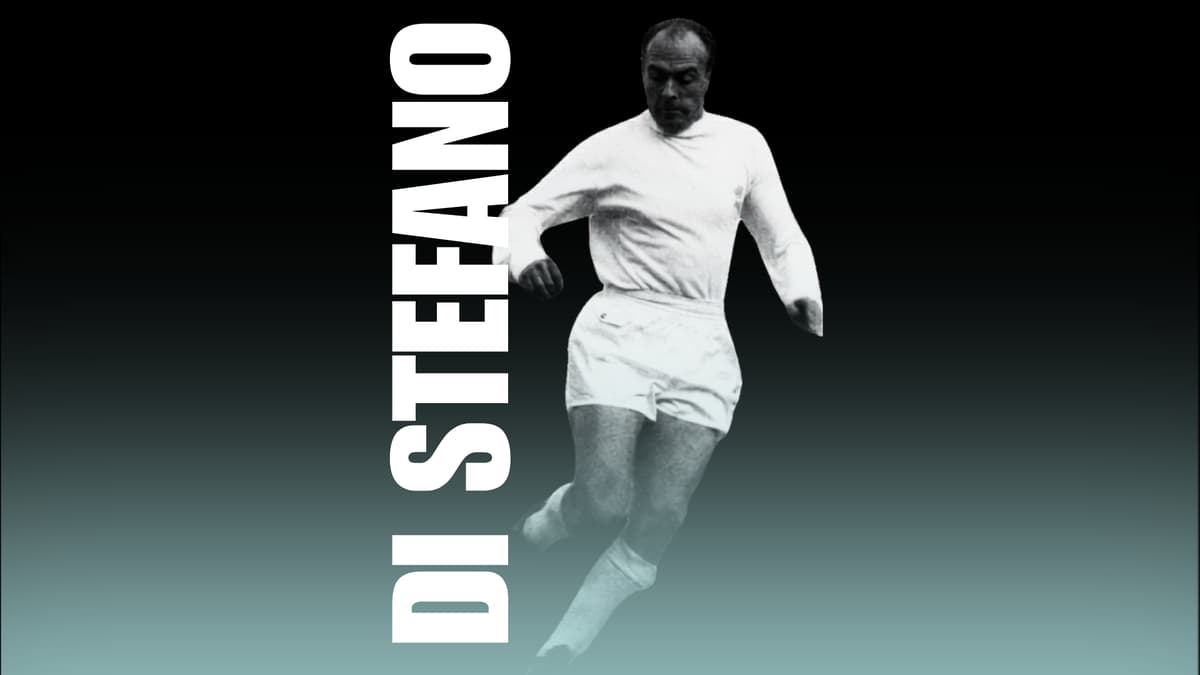
Before Cristiano Ronaldo rewrote the record books, Alfredo Di Stefano was widely regarded as Real Madrid’s greatest player. Many will argue that he retains such a status more than 70 years after joining the Bernabeu side.
Over the course of 11 years in Spain’s capital, Di Stefano defined a critical era of European football, with his goals laying the foundation for Los Blancos to become one of the biggest sides in the world.
History, however, could easily have taken a different course. Barcelona also wanted to sign De Stefano and in December 1952 the player himself was considering quitting the game altogether and going into business amid a feud over his future.
How Di Stefano to Real Madrid intensified El Clasico
The transfer that took Di Stefano, who was born in 1926, to Spain is one of the most disputed in the history of the game. As El Pais explained in 2017, it is a deal that remains “shrouded in mystery” due to the ungainly and confusing manner in which it was conducted.
A tangle of paperwork and red tape helped may Di Stefano’s move one of football’s most confusing transfers. Barcelona believed they had signed him from River Plate while Real Madrid stuck a separate deal with Millonarios in Colombia, where the forward had last played.
It has often been claimed that General Franco intervened on behalf of Real Madrid via a Spanish government ban on foreign players. Jimmy Burns claims in his book ‘Barca: A People’s Passion’ this would exclude Di Stefano only if he signed for Los Blancos.
There is no doubt, too, that Real Madrid were ruthlessly opportunistic. While Barca had agreed a deal with River Plate and even paid a downpayment on his transfer, Di Stefano was still registered to Millonarios and had the final year of his contract bought out by the side from the Spanish capital.
Armando Munoz Calero, a former president of the Spanish Football Federation, was appointed by FIFA as a mediator to try and fix the mess. He decided that Di Stefano would be allowed to play for Real Madrid and Barcelona in alternate seasons until 1957, with each club getting two campaigns.
Barca agreed to this compromise, but it was a decision that caused internal strife. President Marti Carreto was forced to resign a matter of weeks later and Barcelona sold their 50% share of Di Stefano to their rivals. The Blaugrana claim they were pressed into the sale by Franco’s regime but Madrid insist the deal was voluntary.
Whatever the background, the transfer is one that continues to echo through footballing history as it intensified the rivalry between the two clubs that has become today’s El Clasico.
Had Di Stefano not been such a roaring success at Real Madrid after the bitter transfer dispute, leading them to European dominance for five years, things may have played out differently.
The immediate aftermath
In a modern context, the deal appears a battle between two superpowers, yet Real Madrid were a shadow of themselves in that era. Barcelona were the dominant side in La Liga with Los Blancos in a cycle of renewal under the guidance of president Santiago Bernabeu. A key part of his plans was the building of the Nuevo Estadio Chamartin, the ground that would ultimately bear his name.
The coup of signing Di Stefano kickstarted Real Madrid’s rise to dominance.
Di Stefano was 27 and had not played football for seven months by the time he made his debut for Real Madrid in a friendly against French side Nancy in September 1953, yet he was quick to make an impression at his new club.
Less than a month after arriving in Spain and a matter of days after Barcelona sold their rights to Di Stefano for a sum of 5.5 million Pesetas, he scored his first two official goals for the club in a 5-0 win. This was just the start.
Di Stefano’s legend
By the time Di Stefano left Real Madrid in 1964 aged 38, after being offered a place on the coaching staff rather than having his deal as a player renewed, he had written himself into club legend.
With 308 goals in 396 appearances, he stood clear at the top of Real Madrid’s all-time scoring charts. It would be a position he would hold for 46 years until Raúl beat his mark. Even now he still lies fourth in this regard, behind Cristiano Ronaldo (450) and Karim Benzema (354).
These goals helped Real Madrid to five European Cup trophies in succession, the titles that helped forge the club’s worldwide reputation. And all this from one of the most controversial transfers in history.