
-
News
- 9 hours ago
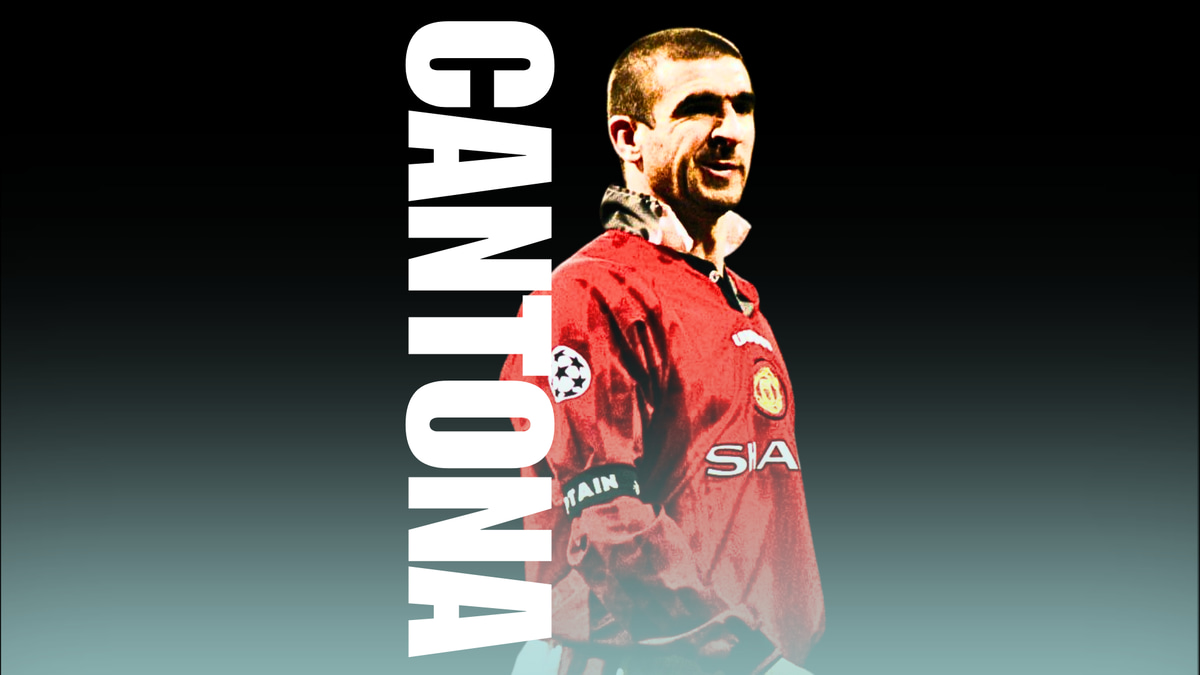
Sir Alex Ferguson buys Eric Cantona and Manchester United's fortunes change forever
6 Apr 2026 01:01 CDT |
7 min read
News

Manchester United are one of the biggest clubs on the planet and even though they haven't won the Premier League since the days of Sir Alex Ferguson, they are still viewed as a juggernaut entity within the world of sport. But it wasn't always like that.
The Red Devils had enjoyed massive success in the 1950s and 1960s under Sir Matt Busby, but a barren couple of decades followed and Ferguson was brought in from Aberdeen to resurrect the sleeping giant in 1986.
It would take him until the very first year of the newly revamped Premier League to win the league title in 1992/93. The intervening six years had brought many false dawns, and even left the Scot appearing close to the sack during the dark early days of 1990.
It is generally considered that Ferguson's greatest acquisition in his tenure at Man Utd was one Éric Cantona - he would be the final piece in a jigsaw which had been unfinished for 26 long years.
His controversial switch from rivals Leeds United, the reigning champions, shifted the landscape of English football firmly in Man Utd's favour. In Cantona's first season at Old Trafford, the Red Devils would claim their first title since 1967.
The transfer
Cantona left Leeds United in late 1992 because his relationship with manager Howard Wilkinson had broken down following a series of disciplinary issues and disagreements over his role in the team, with the manager sometimes favouring a more direct approach. This did not suit the flamboyant Frenchman.
Although he had just helped Leeds snatch the First Division title away from right under the nose of Ferguson's team, Cantona was seen as unpredictable, and incidents like his suspension for throwing a ball at a referee and a spitting incident in a friendly made the club more willing to move him on.
United needed a striker after recent signing Dion Dublin suffered a terrible injury and Alan Shearer turned down the club in favour of a move to Blackburn Rovers.
Ferguson hunted high and low for the right man - with other targets including the likes of Inter Milan flop Darko Pancev and Sheffield United's Brian Deane.
Sheffield Wednesday prodigy David Hirst was the biggest target though and Ferguson actually faxed a British record bid of £3.5m to Sheffield Wednesday for him. Furious Owls boss Trevor Francis though told Ferguson to 'fax off', and the course of English football history was changed.
Instead of finding his talisman through a long and forensic search, Ferguson eventually struck gold purely by chance. The moment arrived when Leeds chairman Bill Fotherby called his Old Trafford counterpart Martin Edwards to enquire about the availability of Denis Irwin.
Ferguson swiftly rebuffed any idea of selling his Irish full-back, but encouraged Edwards to ask Leeds about their strikers. Legend has it that Lee Chapman was the first request - imagine that - but Fotherby said no dice.
Ferguson would not be dissuaded though, and he suggested that Edwards should ask about the potential for a Cantona move across the Pennines. Incredibly the answer was affirmative, and the price was even more shocking. Just £1.2million for a player who would truly take over English football.
That price tag was smaller than the one reported at the time (around £1.6million) - a favour to Leeds as their fanbase digested the bitter pill of selling their best player to their most hated rivals.
Now Ferguson had his missing piece, and Cantona could perform on the biggest stage of all. It was a match made in footballing heaven.
A Man Utd icon
In 1992/93, United were struggling until Cantona's arrival in November, without a win in seven matches. Remarkably, after he settled into the team, the club only lost two more games and went on to claim the league by 10 points as Ferguson brought the glory days back to Old Trafford.
United won the league again the next season and Cantona was electric, scoring 25 goals. However, his first couple of years were not without controversy as he was fined for spitting at a Leeds fan who taunted him, and later sent off in key matches against Galatasaray in the Champions League and then successive games against Swindon and Arsenal.
The biggest controversy of his career was yet to come though, when in January of 1995 he received an eight-month ban from football for his infamous 'kung-fu' kick to the chest of a Crystal Palace fan.
After being sent off for a tackle, Cantona was trudging off the field when Palace supporter Matthew Simmons allegedly shouted: "F*** off back to France, you French b**tard."
At a press conference not long after the incident, the player famously told reporters:
"When the seagulls follow the trawler, it's because they think sardines will be thrown into the sea. Thank you very much."
The season in which Cantona was banned, Blackburn won the league. It was the only time during his stay in England that his team did not win the title - perhaps the greatest testament to his influence and talent.
Many expected the mercurial Cantona - who had initially received a jail sentence for his assault on Simmons before it was removed on appeal - to now leave English football. But Ferguson travelled to Paris to persuade him to return to Manchester once again.
Cantona made his triumphant return to football early in the 1995-96 season and although it took him a few months to regain fitness - he had not even allowed to play in friendly matches due to his ban - he eventually became the Eric of old.
That team, led by Cantona with the youthful 'Class of 1992' now very much on the scene, would win the Double immediately despite Alan Hansen's 'you'll never win anything with kids' claim.
Another title in 1996-97 would follow before Cantona stunned the football world by announcing his retirement. He was only 30 years old, but then he always did things differently and it was just part of the aura.
Overall, he won a raft of medals at United, including four Premier League titles and two FA Cups.
If ever there was one player that was made for Manchester United, it was Cantona.
- Sir Alex FergusonCantona's best moments
Though he was a controversial figure off the pitch, on it, he was a genius and there is no other word for it.
The critics can question his record, especially in European competition, but a goal every other game and an assist every three stands up against the very best. That being said, it’s almost criminal to define Cantona’s contribution by numbers. United fans remember the moments, the good and the bad, that set him apart from his peers.
The retreating shot from the edge of the box to win the 1996 FA Cup final against Liverpool and, even better, the lob in a gale at Sheffield United serve to embody Cantona’s magic.
In terms of technique, he was the best Old Trafford had seen for some time, and in terms of charisma, perhaps the greatest ever.
Legacy
Man Utd went from not winning the league in over 30 years to winning four out of five when Cantona first joined. That enabled the Red Devils to keep a strangehold over the Premier League and to this date, nobody has won the Premier League on more occasions than United.
With the money pouring into the division, United were able to maintain their status as title winners or title challengers for years and that was due to the management of Ferguson, the charisma of Cantona and the leadership of Roy Keane.
With his collar up, Cantona would stride onto the pitch at a time when English football played an old-fashioned 4-4-2, with two burly strikers up front. The Frenchman bucked this trend, drifting between the lines, and suddenly it all clicked for Ferguson’s team.
Unfortunately, there is now a generation of supporters who missed out on the spectacle of watching Cantona first-hand, and no amount of video highlights can make them feel what Eric made United fans feel in the 1990s. Ooh, Aah Cantona!
Read more about:
Premier League
Man Utd