
-
News
- 9 hours ago
Patrice Evra’s Transfers That Shaped His Career
14 Dec 2025 05:01 GMT |
8 min read
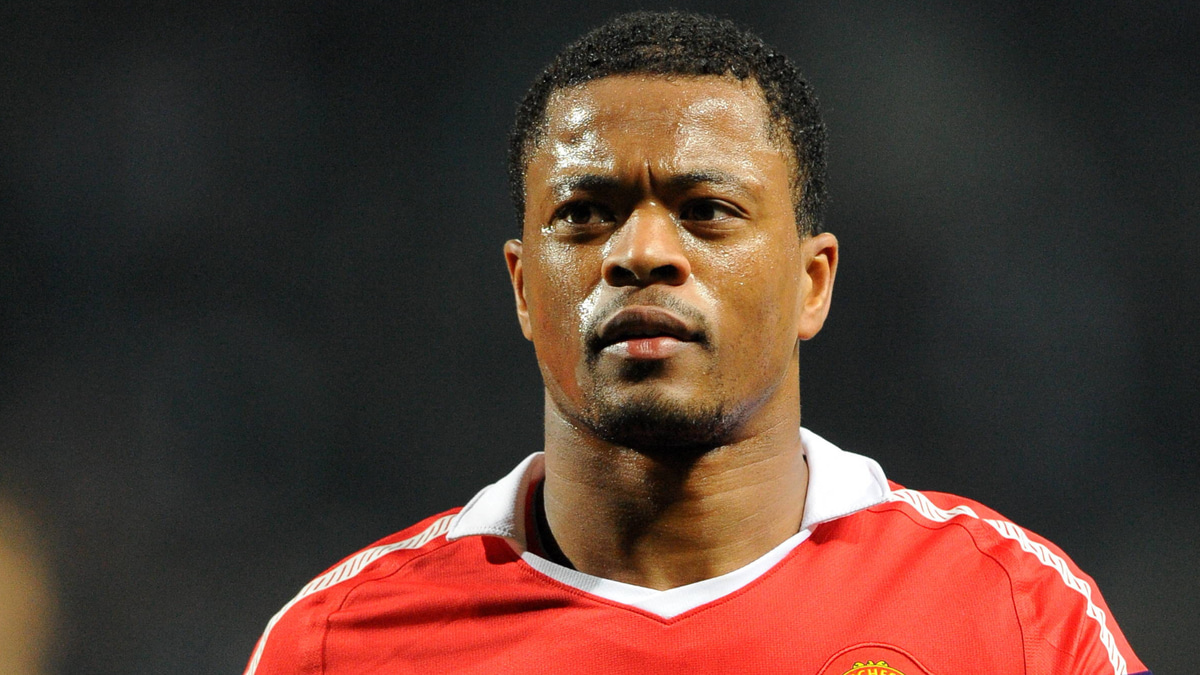

Patrice Evra’s career is full of unpredictable twists and turns, reading like a series of jumps into the unknown where each club he went to wanted him to become a new version of himself. It is not only where he played. It is the story of how he went from a teenage attacker looking for any contract at all, to one of the defining left backs of the modern Premier League, and then into a late career phase where experience and personality became part of identity.
Even today when he speaks about his nontraditional career path, Evra stays true to his convictions of detesting the idea of empty performances that look good on social media but do not win matches. He’s still supporting the players who “bleed for the shirt” instead of acting like celebrities who lack hard work and discipline.
That mindset helps explain why Evra often moved toward challenge, pressure, and big expectations instead of comfort.
From the Paris suburbs to Italy and a first real contract at Marsala
Before the trophies, Evra was simply trying to become a professional. He came through youth football in France, but the first serious door that opened for him was not glamorous. It was Italy, and it was Marsala, a club that gave him the one thing he needed most at 17: a professional contract and real minutes.
This first move is important because it sets a tone. Evra did not “arrive” by being carefully guided into a top academy pipeline. He took a risk. He went abroad. He learned to survive in a new culture, and he got the kind of football education you only get when you are far from home and nobody is waiting to save you.
Marsala to Monza and the first reminder that football can be cruel
After a season in Sicily, Evra moved up a level in Italy by joining Monza. The same career sources note that the Monza move involved a fee reported around €250,000, and that the step up did not immediately bring the playing time he wanted.
This is the first “hard” transfer in his story, because it is not a celebration. It is a lesson. Evra barely played there, and he left frustrated due to the lack of minutes in the matches and the missed chances where he could’ve shone. When people talk about him as a leader at Manchester United, it is easy to imagine him as someone who always belonged at the top, but in reality he already went through a rough patch feeling ignored and unwanted which shaped the kind of person he is today.
So, when he demands discipline from his teammates, it comes from experience.
Monza to Nice and a return to France with something to prove
Evra’s next move was a return to France with OGC Nice. The story here is not just that he transferred. He had to restart his reputation, spending time with the reserve side and appearing in different attacking roles before his path began to settle.
Nice was the bridge between “Evra the teenager trying to make it” and “Evra the top level defender”. The club also put him back in a familiar country and language, but it did not hand him a guaranteed status. He still had to earn his place.
That grind is part of why he later became the kind of player who demands effort. In an exclusive Stake.com interview with Patrice Evra we could still hear the familiar theme that followed him throughout his career that talent is not enough without mentality and consistency.
Nice to Monaco and the Deschamps switch that changed everything
If you want the turning point transfer of Evra’s career, it is Monaco. Nice’s local rivals signed him, and at Monaco his role changed in a way that shaped the rest of his football life. The record of his club career describes how Didier Deschamps told him he would only play as a left back. Evra did not love that idea at first, but he later credited it as a major reason he became a better defender.
This is where Evra’s story becomes more than a list of clubs. Monaco was not just a new badge. It was a new identity. He went from being a player who wanted to attack, to a player who could control a whole match, defend aggressively, and still contribute as a forward. Monaco also placed him on a stage where top European clubs could see him, especially during the club’s Champions League run in the mid 2000s. UEFA coverage from January 2006 praised him as an “attack minded defender” and noted the way he had established himself at Monaco after moving there in 2002.
Monaco to Manchester United and a January move that defined a legacy
In January 2006, Evra made the transfer that most fans think defined his career, Monaco to Manchester United. Contemporary reporting and later summaries consistently tie the deal to a fee of around £5.5 million.
This transfer is often remembered as a “smart business”, but for Evra it was also a psychological step. He moved into a dressing room where expectations are not gentle. And it is interesting to read his modern comments through that old context. Talking to Stake.com, he says United can still “shock people” if they get back the fighting spirit and stop chasing “Instagram moments”.
That sounds like an older player talking about a current squad, but it also sounds like the mindset he entered Old Trafford with: you come here to compete, not to pose. Harsh truth.
At United, the transfer paid off in the biggest way possible. His Stake ambassador page highlights the scale of what he achieved there, including five Premier League titles and the 2008 Champions League, and it frames him as a cornerstone of an elite defensive unit.
Those achievements are not separate from the transfer story. They are the reason the transfer became legendary. The move did not just change his club. It turned him into the player people refer to when they talk about that era of Manchester United.
Manchester United to Juventus and the veteran move that kept him elite
After eight years at United, Evra moved to Juventus in July 2014. The widely reported figure for the deal was around £1.2 million, rising with conditions.
On paper, it looked like a quiet, sensible transfer: an experienced defender leaves England and joins Italy’s dominant team. But emotionally, it was not a small choice. United was not just a club for Evra. It was the stage where he became “Evra”. So, leaving meant accepting a new challenge, a new league, and a new football culture. Juventus gave him a different kind of pressure: the expectation that you will win, always, and that you do it with discipline.
It’s his winning mentality that carried into his time at Juventus, where he added Serie A titles. In other words, the transfer was not a retirement tour. It was a continuation of being a serious competitor.
Juventus to Marseille and choosing the complicated option
In January 2017, Evra left Juventus and joined Marseille. This one was a free transfer, and the move came with an 18 month contract.
It was also a move loaded with emotion because it brought him back to France late in his career. Marseille has a special kind of mood within the club that for most players feels intense and unforgiving. However, for Evra this was a perfect match. He has always presented himself as someone who does not run away from difficult environments, high expectations, drama and criticism, so going to Marseille fits right in with his personality.
This transfer ended in chaos. After an incident where Evra kicked a fan before a Europa League match, UEFA banned him from European club competitions for seven months. Marseille terminated his contract soon after.
This is still a painful topic for the veteran superstar, which just goes to show how a heat of the moment can change the path of a professional athlete.
Marseille to West Ham and the short return to the Premier League
After leaving Marseille, Evra returned to the Premier League with West Ham United in February 2018.
This transfer was not about building a long term project. It was about opportunity, timing, and a club needing cover and experience. West Ham were not buying “prime Evra”. They were bringing in a personality, a leader, and a player who knew the league well and the pressure away from the football field. It was also a fitting final Premier League chapter, because it underlined something that stayed true throughout his career: managers trusted him, especially managers who valued mentality.
The last stop and the end of the professional journey
West Ham became the last club of his playing career, and Evra later retired from professional football, with his playing timeline ending in that period and his formal retirement noted after his final club spell.
In a pure transfer sense, there were no more moves after that. But the story did not stop, because Evra’s football identity is bigger than contracts. Stake’s ambassador page frames his post playing life around personality, media presence, and his famous “I love this game” energy. And when he speaks in Stake interviews, he still sounds like a competitor. He still judges football through intensity, bravery, and standards, not just talent.
From dressing rooms to mic drops
If you read Evra’s transfers like a timeline, you can miss the thread connecting them. The Stake interviews help reveal that thread, even when he is talking about modern teams rather than his own past. He keeps returning to the idea that winning requires fighters and consistency, and that big clubs do not have the patience for excuses. He’s talking like he’s still in the game and some scout might be watching, proof that a football player can retire but his passion for the game never stops.
That mindset matches the choices he made by leaving comfort for bigger stages, accepting role changes, and repeatedly stepping into affairs where pressure is guaranteed. Even in Stake’s December 2025 interview, when he talks about France playing Senegal and describes the emotions of being tied to both places, you get a reminder of how much identity matters to him.
That identity is part of why his early transfers were so bold. A player who grows up between worlds often adapts faster, and Evra’s career is basically a long story of adaptation: France to Italy, Italy back to France, France to Monaco’s big European stage, Monaco to Manchester, then Italy again, then back to France, then back to England one last time.
A complete list
So, when you ask for all of Patrice Evra’s transfers, the answer is not just the order of clubs. It is the meaning of each move. Evra was always brave and bold, even when everyone else was warning him about his next move. To some he might appear reckless or unstable, but he’s actually one of the most fearless and high spirited players European football has ever had.
- He began by taking an unlikely route into professional football with Marsala, then tried to climb quickly at Monza and learned what it feels like to be stuck.
- He returned to France at Nice to rebuild his path and then moved to Monaco where Deschamps pushed him into the left back role that made him famous.
- Monaco’s European exposure set up the January 2006 move to Manchester United and the move that turned him into a trophy winning icon of that era.
- He then left United for Juventus in 2014, still proving he could win in another country.
- He moved from Juventus to Marseille on a free in 2017, but that gig ended early after disciplinary fallout and a European ban.
- At last, he signed for West Ham on a short term deal in 2018, a last Premier League chapter.
This is Patrice Evra’s phenomenal journey and if you listen closely to the way he speaks in his Stake interviews, it still sounds like the same man who made those moves in the first place. He does not talk like someone who drifted through clubs, but rather like someone who chose pressure on purpose.
Read more about:
Premier League