
-
News
Balogun breaks silence over Trump World Cup controversy
3 min read
News

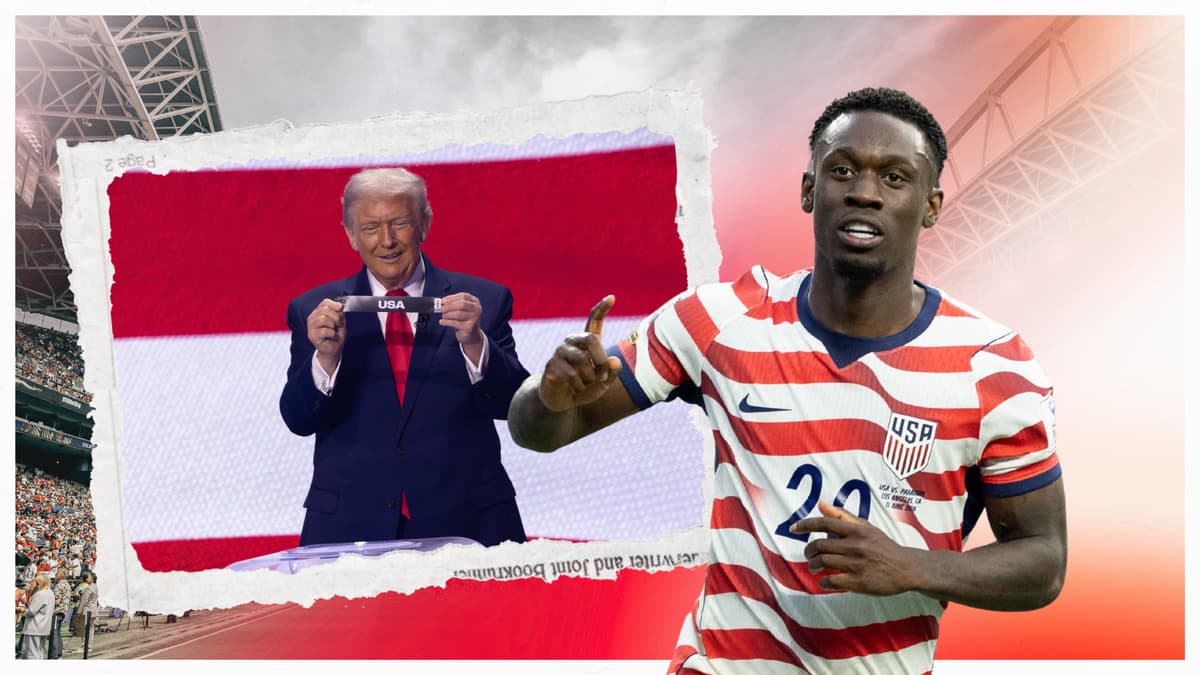
Folarin Balogun has spoken publicly for the first time since being embroiled in one of the most controversial affairs of the 2026 World Cup.
During the USMNT's match against Bosnia & Herzegovina in the Round of 32, the Monaco striker was shown a straight red card after catching Tarik Muharemovic with his studs in a challenge that ran down the defender's leg and ankle.
Even though many observers felt the dismissal was overly severe, tournament suspension laws meant the player was set to miss the United States' next match against Belgium.
In a highly unusual development over the following weekend, reports surfaced claiming that Balogun's suspension had been rescinded, which has never happened in the history of the World Cup. FIFA later confirmed the decision, citing Article 27 of its disciplinary code, which permits the governing body to fully or partially suspend the implementation of a disciplinary measure.
Folarin Balogun on Donald Trump’s intervention in getting his World Cup ban suspended on @CBSMornings: “I knew it was gonna cause a lot of controversy. I could almost see within my teammates a bit of nerves… I tried to just focus as best as I could, but it was difficult with a… pic.twitter.com/ZHzYD7Z6u4
— Melissa Reddy (@MelissaReddy_) July 14, 2026
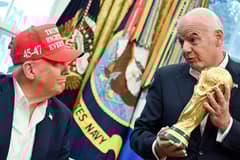
No detailed reasoning accompanied the ruling initially, but it was later confirmed that President Donald Trump had personally contacted FIFA President Gianni Infantino to request that Balogun be cleared to play.
The decision drew a swift and intense reaction from the football world. The Belgian Football Association released a statement saying it was "astonished" by the outcome, while FIFA was roundly criticised by pundits, fans, and other major governing bodies, including UEFA
There is a possibility that Infantino could be investigated by a European court due to his relationship with Trump, with FIFA expected to be an apolitical organisation.
Balogun found himself in the middle of the mess, and following the USA's eventual loss to Belgium in the Round of 16, Belgium boss Rudi Garcia confirmed that the USA forward came into the opposition dressing room and apologised for the fiasco.
The player himself soon realised after his suspension was lifted that controversy would follow.
“My initial reaction was I was happy to be back in the team, but when I kind of started to reflect, I knew it was going to cause a lot of controversy, and I could almost see within my teammates a bit of nerves, because it’s something that is so unique," he said in an interview with CBS.
“But the closer we got to the game I tried to just focus as best as I could, but it was difficult. A lot of outside noise, and that’s hard to avoid.”
Despite recognising the consequences of FIFA's decision to lift the suspension, he does believe there is an element of slight justice as he insists the red card was given in error.
“I was in shock. It wasn’t even a tackle," Balogun said.
"I was totally in shock, I think you could see my reaction, but I just had to accept the decision and just try to be there for my team.
“When something’s not intentional it should never be a red card, so it was just an unfortunate situation, and I think it put a lot more pressure on us than we needed.”
Infantino has received most of the ire from fans over the controversy, but it wasn't ultimately his decision.
That's because the decision was made alone by FIFA disciplinary chair Mohammad al-Kamali and, crucially, without the input of 17 other members of the disciplinary committee, as confirmed by The Times.
Before this case, The Times reported that numerous FIFA disciplinary rulings had indeed been handled by a single committee member, most often deputy chairman Jorge Palacio of Colombia. However, according to the a review of more than 100 previous published decisions, committee member Kamali, from the United Arab Emirates, had never previously acted as the sole decision-maker in a FIFA disciplinary case.
For higher profile discipline cases, a group is usually used instead of a single individual.
Read more about:
World Cup U20
Folarin Balogun