
-
News
From national hero to pariah: Is Hong Myung-bo really to blame for South Korea's World Cup?
5 min read
Analysis

South Korea's 2026 World Cup campaign has come to an unceremonious end, and the entire country has gone nuclear.
The Taegeuk Warriors headed into the tournament fully expecting to advance out of what was billed as the easiest group in the national team's World Cup history.
South Korea were up against co-hosts Mexico, Czechia and South Africa, all winnable games for a team with the depth and quality of the Asian powerhouse.
In the end, they only won once - against the Czechs - and suffered chastening defeats to El Tri and Bafana Bafana. Unsurprisingly, their sojourn to North America ended in the group stage.
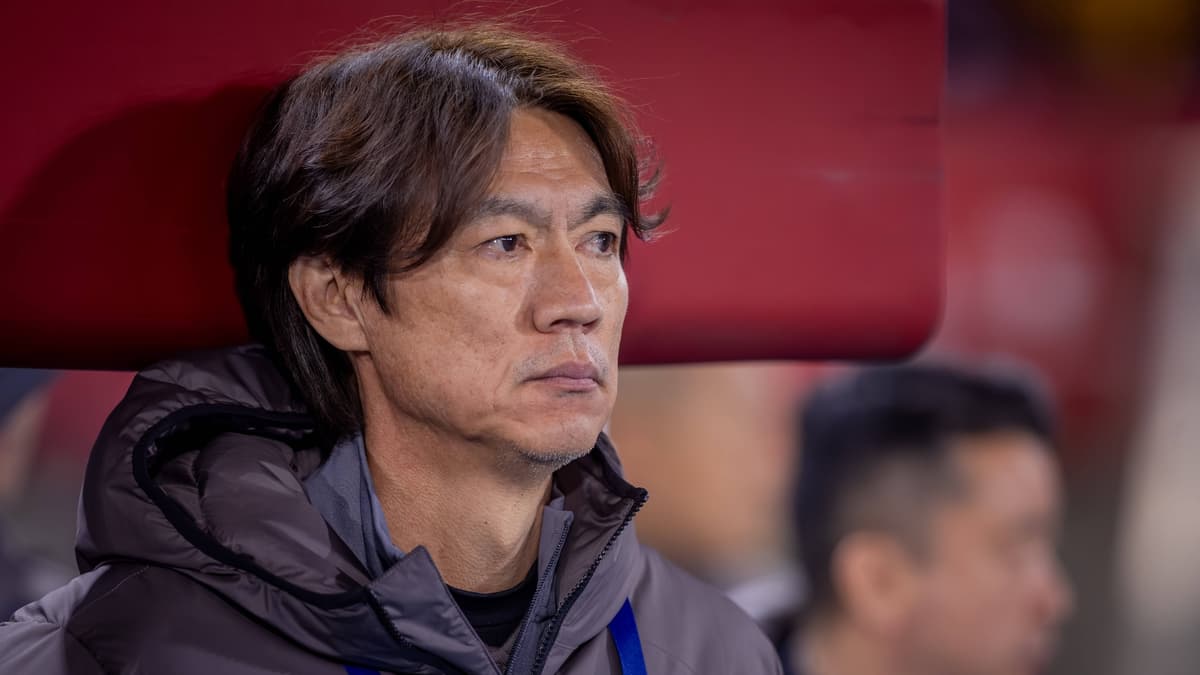
Even less surprising is that head coach Hong Myung-bo has resigned after overseeing what is being viewed as a national humiliation back home. He is facing the brunt of the ire from, well, everyone - but is it really all his fault?
From hero to pariah
It is difficult to wrap one's head around the fact that just short of three weeks ago, Hong was still one of South Korea's favourite sons. A defender in his playing days, he was one of Asia's finest exports.
Hong made the FIFA World XI in 1997 and twice finished in the top 25 of FIFA's World Player of the Year ranking. He came away from the 2002 World Cup, which co-hosts South Korea miraculously finished in fourth, with the Bronze Ball - a remarkable feat for a defender.
A convenience store owner in Korea put up a sign saying that Hong Myung-bo 🇰🇷 is banned from the shop.
It’s getting bad in the homeland 😂
[H/T: @ksm7405_] pic.twitter.com/br2eGaAU2q— BibimBallers (@BibimBallers) June 25, 2026
Even as a coach, the 57-year-old is no slouch. Prior to being appointed South Korea boss in 2024, Hong was in charge of Ulsan Hyundai, now known as Ulsan HD, and he ended their 17-year wait for a K League title in 2022.
What's more, he successfully defended that title the following season and then set them on the path to do so again in 2024 before leaving. Now, though, this beloved former player has become a pariah.
Readers will have seen the pictures and videos making the rounds on social media. South Korean establishments have hung up signs barring Hong from entering, while a news channel allegedly blurred out his face at a press conference - a treatment usually reserved for criminals - but that did not actually happen; the clip was fake.
Hong has received death threats and had to keep his departure time from North America a secret "due to safety reasons." There is a legitimate concern for his well-being, and South Korean police are on alert to make sure that nothing happens to him after his return to the country.
Such has been the fallout from the Reds' group stage exit. But how did it come to this? Well, Hong has to shoulder a lot of the blame - and he claims that he accepts full responsibility.
"I deeply apologise to the Korean public who supported our team," he said. "Today, I am stepping down. Taking this job was never an easy choice, but from the moment I accepted it, my only focus was to fulfil my duties responsibly until the end.
"I can't say all my decisions were right, but for the past two years, the standard for every choice was always Korean football. A manager's role is one where no explanation suffices before results. I am here not to excuse myself, but to take responsibility.
"I failed to deliver what you expected, and all blame lies with me. I thank the players, staff, and everyone who stood by me. I leave my post today, but my heart stays with Korean football. I truly pray this team grows to receive your trust and love."
Hong is solely responsible for South Korea's failings on the pitch. There is no doubt about it. There was a complacency in the way he approached the tournament. Indeed, he drank his own Kool-Aid after beating the Czechs.
Speaking after the game, he frankly admitted that he wasn't planning to change his tactics for the upcoming fixtures. This lacklustre attitude came back to bite him.
Some of his personnel decisions were also controversial. He didn't start superstar forward Son Heung-min against South Africa. The optics of this were terrible, even if the decision was actually merited - Son has been a shadow of his former self all year, even at club level for LAFC.
Stop spreading fake news.
Yes, people are pissed, but no, Korean media did not blur Hong's face.
The clip was edited.
Full, original video on KBS: https://t.co/q5JqeGIqn4 https://t.co/J7dCeSmZMB pic.twitter.com/d5DGhIrsuh— Raphael Rashid (@koryodynasty) June 29, 2026
The World Cup coach who didn't want to be there
But the fact that it even came to this is not really on Hong. He did not actually want to be in charge of the team, and he alluded to this when he announced his resignation: "Taking this job was never an easy choice." That's a very diplomatic way of putting it.
Hong was strong-armed into the position. He rejected the Korean FA's initial proposal to take charge of the Reds because he knew - perhaps better than anyone - that the national team job was and remains a poisoned chalice.
This wasn't his first rodeo, after all. He had been in charge of the Taegeuk Warriors for the 2014 World Cup in Brazil. Winless, they crashed out in the group stage, and he resigned after the tournament. History has now repeated itself.
After a spell at Hangzhou Greentown in China, Hong worked for the Korean FA in some administrative roles. He had ample first-hand experience of the systemic problems plaguing South Korean football.
He rebuffed the first approach from the panicking FA when they needed a replacement for Jurgen Klinsmann, whose spell in charge was predictably disastrous. He didn't want the job.
He had a great thing going for him at Ulsan and wasn't keen to leave it behind. In fact, following the first offer, he publicly criticised the FA for its inability to find a coach and reassured Ulsan fans that he was going nowhere.
However, he was ultimately faced with little choice. Candidate after candidate, including current Canada boss Jesse Marsch, had turned down the South Korea job, and the FA was getting increasingly desperate. Who knows what went down behind the scenes that made Hong change his mind.
What is clear, though, is that Hong is in no way the sole culprit for this disaster. Of course, he is not free from sin - and a lot of South Korean fans believe that he wasn't as hesitant to take the job as has been reported - but he is being scapegoated when the Korean FA is really at fault here.
Lee Jae Myung, the president of South Korea, has called for a formal investigation into the matter. The Ministry of Culture, Sports and Tourism later confirmed that the Korean FA will be audited.
Don't be surprised if more of the shady dealings that have historically plagued South Korean football come to light in the coming weeks and months.
Read more about:
World Cup U20
FIFA Club World Cup