
-
News
- 14 hours ago
Every World Cup - ranked
Updated: 20 Mar 2026 08:46 CDT |
19 min read
Analysis

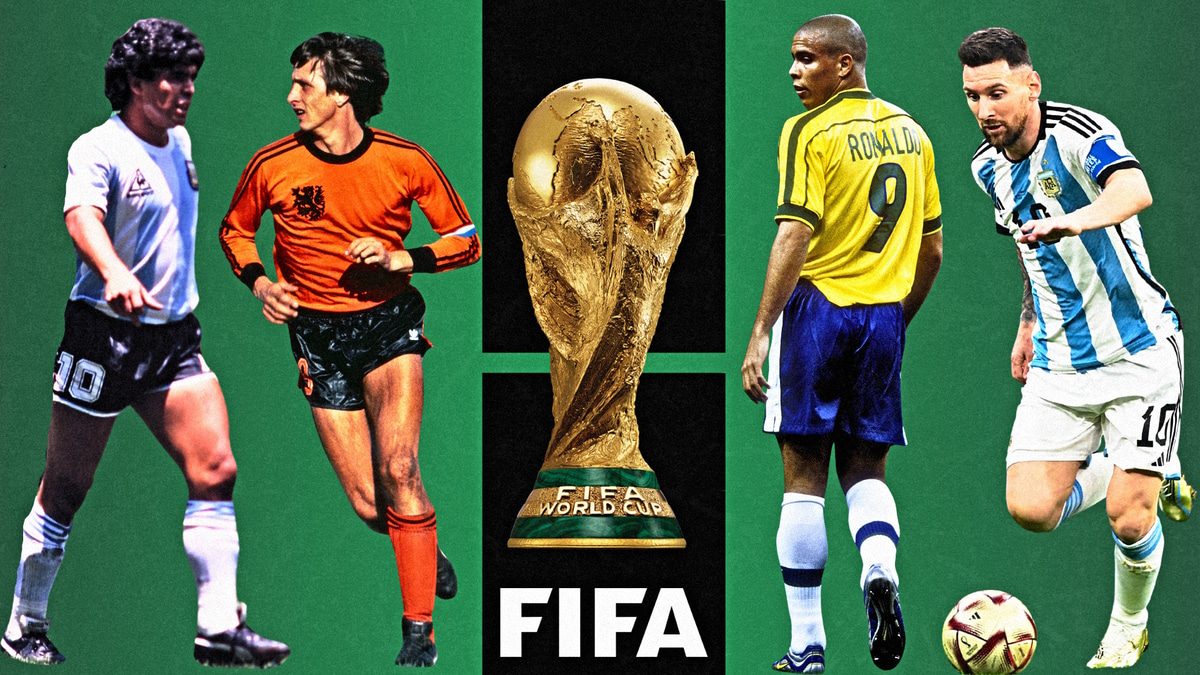
Nothing captures the imagination of football fans quite like the FIFA World Cup, a tournament where drama unfolds on the grandest stage of sport.
Across its long history of nearly a century, some editions have stood far above the rest—defined by iconic matches, legendary players, shocking upsets, and moments that transcended sport itself.
In order to rank the best World Cup tournaments, you must look not only at the winners, but the stories that unfolded and the players that became heroes.
22. 1930 (Uruguay)
Whenever new sporting events happen these days, remember that the first iteration never goes smoothly and the only way from there is, usually, up.
That’s certainly the case for the World Cup, which came into form in the most troubled way. Most nations, certainly in Europe, simply didn’t take it seriously and as such refused to travel; just four opted to take the trip which, in those days, took nearly three weeks by boat.
Not only is this the only World Cup without qualifiers, they aimed for 16 teams via invite but in the end could only muster 13, with Egypt even somehow contriving to miss the boat, quite literally, down to Uruguay.
As such, events were hugely in favour of the South Americans, and that’s how it proved, Uruguay defeating Argentina 4-2 in the final to set the ball in motion. Members of the Romanian squad contracted dysentery on the way home and one family even held a funeral for a player who, like the World Cup, was very much alive.
21. 1934 (Italy)
Italy, as hosts, claimed the first of their four titles in the second incarnation of the event, the first in Europe. They defeated Czechoslovakia 2-1 in the final but the entire event was overshadowed by corruption.
Dictator Benito Mussolini held a strong grip over the tournament, allegedly selecting referees for Azzurri matches, and bribing officials became commonplace; a brutal quarter-final with Spain went to a replay and they were injury-ridden as Italy won 1-0.
The World Cup’s unfortunate by-product has been to act as a piece of serious propaganda for the hosting nation; Argentina (1978), Russia (2018) and Qatar (2022) are other most prominent examples. But in Italy in 34, it appeared to be fascism first, football second, and for that reason the validity of the event has already been called into question.
20. 1938 (France)
The spectre of World War II hung ominously over the event in France, and there were still many teething problems; they opted for a straight knockout format, rather than groups, while the South American duo of Uruguay and Argentina, the original finalists, refused to attend in protest at the event not being rotated back to their continent as they believed was due to be the case.
As such a shine was removed, as the true best sides weren’t all there to compete. Much of it feels irrelevant now given what was around the corner, and it was the opportunistic Italians who were able to retain their trophy, with the rise of Mussolini offering similar vibes as Hitler had done at the 1936 Olympic Games.
The Italians defeated Hungary 4-2 in an entertaining final, and in the main the tournament was packed with exciting matches. This event also represents the rise of Brazil as a power, who in Leonidas had their first true World Cup star. But it was the Italians who prevailed and held the title for 12 years, courtesy of the breakout of the war.
19. 1962 (Chile)
Chile were put forward as a legitimate alternative to Argentina in hosting 1962, but events would prove that to be ill-founded and ultimately led to a disjointed, difficult tournament.
Chile had somewhat overpromised on the quality of their venues and infrastructure, and this was made doubly worse due to the seismic Valdivia earthquake which left 50,000 injured just a month before the event was due to begin.
On the pitch, there was one undoubted side of purpose. Brazil, arriving as holders, even survived an early injury to Pele to somewhat cruise to the title, being troubled little in the process. The genius of Garrincha came to the fore, proving himself to be a winger of unmatched talent. He struck brilliant goals against England and in the semi-final against the hosts, where he was ably supported by the likes of Vava, Didi and Amarildo.
The 3-1 win in the final solidified Brazil’s positioning as the world’s pre-eminent side after the dominance of the Hungarians in the decade prior, but in the pantheon of World Cup teams this incarnation of the Selecao sits modestly in the list.
18. 1978 (Argentina)
Like 1934, it seemed clear from the outset that the 1978 World Cup would go to the hosts, Argentina, no matter what was to happen on the pitch. This belies their undoubted quality, with world-class talent such as Mario Kempes and Daniel Passarella being masterminded by the chain-smoking old genius, Cesar Luis Menotti.
But the brutal military rule which gripped the country throughout, one which saw protestors thrown from helicopters and protestors detained in cells for the totality of the event created an overwhelmingly unpleasant vibe.
The football itself, too, was cautious and lacked true quality; only the Dutch, who ultimately lost their second final in a row in Buenos Aires, thrilled and played progressively. Even though Johan Cruyff had failed to travel (it was alleged it was in protest to the Argentine political system), they still possessed the highest concentration of top players.
They were simply brilliant in wins over Austria and Italy in the revamped second group stage, but ran into an Argentina side in the final which simply would not be denied. Needing a four-goal win over Peru in their final group stage match to reach the showpiece, they won at a canter, 6-0, leading to rumours that the Peruvians had been paid off beforehand.
And amidst the ticker-tape Kempes did prove his class, scoring twice in a 3-1 win to hand Argentina the first of their three titles.
17. 1990 (Italy)
The 1990 World Cup has aged better in the highlights reels than it did as a spectacle at the time; matches were often turgid, 0-0 draws were commonplace and there was a dearth of truly great sides as football reached a new frontier.
This event is the end of the old style; after this, backpasses were outlawed, the offside rule was modified, and referees were given additional means to protect talented players from incessant cynicism.
But some of the highlights were high. Cameroon’s defeat of Argentina in the opening match and general tournament display, reaching the quarter-final, was a thing of joy. West Germany against the Netherlands had everything. David Platt’s volley in extra-time against Belgium was arguably the tournament’s best goal and England’s semi against the Germans created a myriad of memorable moments.
And the hosts, with tenor Luciano Pavarotti providing the soundtrack, probably should have gone all the way to the final but were bested by a contemptuous Argentina side led by a waning Diego Maradona in the semi-final, a result no-one really wanted.
West Germany were the superior side, Lothar Matthaus ruthless, Jurgen Klinsmann multi-talented, Andreas Brehme the coolest man in Rome to slot home the winning penalty.
16. 2010 (South Africa)
It’s often said that your favourite World Cup is your first one, but if your memory formation involves Vuvuzelas, the worst event ball in history, and a tournament largely devoid of thrilling matches, you’ve landed pretty unlucky if South Africa is yours.
The now infamous Jabulani, a swerving, dipping goalkeeper’s nightmare, led to goals that simply wouldn’t have been possible with a normal design. Some, such as Uruguay’s Diego Forlan, got to grips with it and scored four times from outside the area simply by putting the swerve to the test.
But the tournament will largely be remembered for two things; the first, a clinical, tika-taka Spain side who won every knockout match by a single goal and passed the opposition to death in every encounter. The side was led by David Villa, joint top scorer and the one adding the finishing touches to the relentless passing carousel.
The second, Frank Lampard’s ghost goal against Germany; with the score at 2-1 Lampard’s shot bounced clearly over the line but was missed by all the officials, leading to outrage that there wasn’t a technological solution to the problem. Therefore, we can judge this moment as one of the precursors to VAR.
The hosts were welcoming and vibrant - even if the team gave them very little to cheer - but the legacy is of white elephant stadia, some of which were never used again, and the seep into FIFA’s policy making becoming increasingly pervasive.
15. 1950 (Brazil)
What should have been Brazil’s coronation turned into a mass psychosis, one that impacts the Selecao to this very day. Expected to win on home soil, they only needed a draw in the final match against Uruguay to reach their destiny. And yet, Uruguay contrived to steal the title from them in a 2-1 win in front of 200,000 stunned locals in the Maracana.
How might international football have changed had Brazil won here? Would they have still become the force that dominated in 1958, 1962 and 1970? It’s impossible to know but in a tournament packed with goals and attacking football, Brazil stood apart.
The tournament was set up to have a final group stage of four; Brazil, Spain, Sweden and Uruguay. The hosts had Ademir, their latest World Cup hero, who battered in four in a 7-1 defeat of Sweden and another two as Spain were humbled 6-1. By comparison, Uruguay had been fortunate to draw with the Spanish and needed a late goal to beat the Swedes.
Hence the feeling that this was a foregone conclusion. And yet as Alcides Ghiggia’s low shot skidded under the body of Moacia Barbosa, the silence was palpable. The Maracanazo, the event by which Brazil sought to avenge in every World Cup afterwards, was born.
14. 1966 (England)
England’s finest achievement came in 1966, winning their only World Cup on home soil in an event that had its moments but lacked a certain magical element that the best events have.
Brazil arrived as hot favourites but found opposition players ruthless and referees lenient; this was reflected in Pele’s mistreatment, being fouled to the extent he was effectively kicked out of the tournament. But in the end Hungary and Portugal had been too good for them in the groups, the latter reaching the semi-finals thanks to the brilliance of Golden Shoe winner Eusebio, who struck nine times.
England, as most hosts do; had things their own way. While they stayed at Wembley other sides were forced to travel at short notice, not least Portugal ahead of their semi-final. But Alf Ramsey’s wingless wonders - dubbed for the set-up of three predominantly central midfielders plus the peerless Bobby Charlton - started slow and came good later, defeating West Germany 4-2 in a tense final, marked by Geoff Hurst’s hat-trick.
However, the teams were learning, tactically, particularly on the defensive side, and the matches were low-scoring, with a desire to not lose usurping attacking prowess.
13. 2022 (Qatar)
The Qatar tournament was overshadowed by all manner of logistical reasons that should have excluded it from consideration; a tiny country, no hotels, blistering heat, and an regressive attitude towards societal changes that left many feeling unwanted.
But as has so often been the case, money talks, and in a bribery-ridden selection process FIFA detonated any reputation it had in the attempt to appease its wealthy collaborators.
The tournament itself was functional but not spectacular, that is until the greatest final the event has ever hosted; Lionel Messi and Kylian Mbappe traded blows for 120 incredible minutes in a 3-3 draw decided on penalties.
It allowed Messi to take his rightful place as the greatest of all time, adding the biggest title of them all at 35. Throughout the event he had taken control of games in all the right moments, providing seven goals but two simply improbable assists, one to Nahuel Molina in the quarter-final against Netherlands, the other to Julian Alvarez in the 3-0 win over Croatia in the semi-final.
But a horrible fan experience - alcohol was banned before the opening match despite promises that it would be made available - shipping containers passing for accommodation, and a generally unwelcoming atmosphere means the tournament leaves a bitter taste and showed that the spectators were low on the list of FIFA considerations.
12. 1954 (Switzerland)
1954 in Switzerland averaged 5.38 goals per game, by some distance the record for any single World Cup tournament, and it led to one of the most open and enjoyable hostings of the event.
Hungary were in the middle of their Magic Magyars period and were roundly expected to win - especially at 2-0 up in the final against West Germany. And yet in a manner that would eventually prove to be so typically German, they turned the match around in a 3-2 win, frustrating a Hungary side which had scored 25 goals on the way to the final.
Hosted in the largely neutral Switzerland, it meant that this event was largely unlaboured with the politics that blighted other events, and it was reflected in the flowing football. South Korean contrived to lose their group matches 9-0 and 7-0 respectively, while the hosts and Austria played out a record 7-5 match in Lausanne, before the West Germans then dispatched the Austrians 6-1 in the semi-final.
And despite having the likes of Ferenc Puskas and Sander Kocsis (scorer of 11 goals) in their ranks, the Magyars failed to get over the line, with conspiracy theories of drugs illegally administered at half-time eventually merely adding to the folklore of a bonkers but brilliant event.
11. 1986 (Mexico)
Mexico stepped in as last-minute hosts in 1986 after Colombia admitted to FIFA late in the day that they neither had the resources or the money to host the event. And what an event it was, perhaps the most dominant performance by any single player ever.
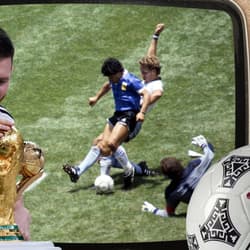
That player is, of course, Diego Maradona, able to produce majestic moments with little referee protection and on pitches unacceptable today. What is more famous, his hand of God goal or the one that followed, beating six English men to score the best individual goal of all time.
He didn’t stop there. Two more moments of quality defeated Belgium in the semi-finals and against the West Germans in the final - inevitably there again for the second of their three finals in a row - Maradona provided the perfect through ball to Jorge Burruchaga to settle the match in Argentina’s favour, 3-2.
Other stars were here - not least Michel Platini, whose France side won a mesmerising quarter-final with Brazil before succumbing to the Germans. But this was Maradona’s event.
10. 2014 (Brazil)
The World Cup returned to Brazil for the first time since 1950, and instead of offering redemption, handed the hosts another match they will regret for the next 100 years.
Their 7-1 demolition at the hands of Germany goes down as one of the most remarkable contests in the history of the tournament, the stadium stunned into silence by a German side that started slowly but ultimately defeated France, Brazil and, in the final, Argentina to claim the title for the fourth time.
In truth it was not a vintage Brazil side and Neymar - their only bona-fide superstar - picked up an injury in the quarter-final and effectively took Brazil’s chances with him. Elsewhere, it wasn’t to be for Lionel Messi, dragging an average Argentina side to the final on his back, but the supporting cast picked up injury after injury and they couldn’t see it through.
But it was a tournament filled with great moments and great goals. The Dutch thrilled, particularly with their spectacular 5-1 defeat of holders Spain, Robin van Persie’s header one of the best ever in the tournament. Costa Rica and Uruguay contrived to eliminate Italy and England at the group stage in one of the most gripping groups the World Cup has seen.
Germany, however - having completely rebooted their talent development following a dismal Euro 2000 - saw the fruits of their labour in Mesut Ozil, Toni Kroos, Thomas Muller and the winning goalscorer, Mario Gotze.
9. 1974 (Germany)
West Germany would triumph on home soil, playing the villains to the beloved Dutch side of Johan Cruyff in a tournament where football seemed noticeably advanced in comparison to the idylls of Mexico in 1970.
The Germans were an exceptional side and probably worthy winners, in a rare event where the best two sides most certainly reached the final. With England failing to even qualify, the South American challenge was weak, with Brazil a pale imitation of the team from four years prior.
Germany by comparison had Gerd Muller, Franz Beckenbauer and Uli Hoeness in a side packed with generational talent, and they breezed through the second group stage, winning all three matches to face the Dutch who had done the same, marked by a 2-0 destruction of Brazil in which Cruyff and Johan Neeskens taught their opposition what modern attacking prowess looked like.
In the final, Müller’s quick turn and finish - a goal absolutely typical of the many hundreds he netted in his career - settled things and left the Dutch as bridesmaids, a role they have taken up twice since, in 1978 and 2010.
8. 2002 (Japan and South Korea)
A tournament which produced less in the way of thrilling individual matches and more moments of immense drama, 2002 saw the tournament expand to Asia for the first time.
And it was the joint-hosts South Korea who created the abiding memories, their army of red-kitted fans watching them somehow knock out Portugal, Italy and Spain on the way to the semi-final. Japan fared less well, losing to Turkey, who were the surprise European package and pushed Brazil all the way in the semi-final. The Italy match in particular was controversial, the referee Byron Moreno accused afterwards of giving Korea favourable decisions.
Senegal’s arrival on the world stage - defeating France in a result that reminded of Cameroon doing the same to Argentina in 1990 - created heroes for a team making their debut in the tournament.
But Brazil, with Rivaldo, Ronaldinho and a rejuvenated Ronaldo, were by some distance the best side in the event. Ronaldo, who had been injured for effectively three years in the build-up, scored eight times, including two in the final against a Germany side led stoically by Michael Ballack and Oliver Kahn. His moment of redemption - he had suffered a seizure prior to the final against France four years previously - was well deserved, as the trophy headed to Brazil for a record fifth time.
7. 2018 (Russia)
FIFA’s corruption train had gone into overdrive with the award of the tournament to Russia, one that led to FBI arrests and a complete dismantling of the corporate structure of the governing body - one that some may argue didn’t actually achieve all that much.
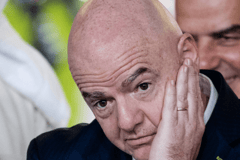
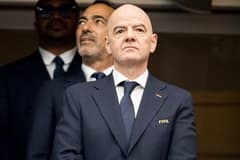
The pictures of Gianni Infantino schmoozing with Vladimir Putin - the FIFA president very much enjoys cosying up to strongmen - left a bitter taste but the event itself did have moments of quality.
Spain and Portugal’s 3-3 draw - Cristiano Ronaldo netting a hat-trick - is a bona-fide World Cup classic. Germany, as holders, crashing out at the group stage to South Korea was iconic, while Croatia’s annihilation of Argentina showed that this was a generational team masterminded by Luka Modric.
And in the knockout stages France defeating Argentina was immense fun, while Belgium’s comeback against Japan, Russia’s victory over Spain and England’s breathless penalty win over Colombia were fantastically watchable contests.
In the end France - the best team with the best player, no question - overcame Croatia 4-2 and welcomed Mbappe to a watching audience as one of the players of his generation.
6. 1994 (USA)
USA hosted for the first time in 1994 and despite concerns that the Americans wouldn’t take to ‘soccer’, it broke all attendance records and was, in the main, a progenitor to the revamped MLS which still operates today.
On the pitch a functional Brazil team led by a singular genius, Romario, were able to defeat an Italy team led by a mercurial talent of their own in Roberto Baggio. Both men had virtually single-handedly shaped the tournament for their nations though neither would shine in the first final to ever be decided on penalty kicks after a 0-0 draw in the dense heat of Los Angeles.
Elsewhere the hosts improved upon expectations as did Bulgaria and Sweden, both reaching the semi-finals and deservedly so. Romania and Ireland rounded out a very solid European display despite the conditions, and helped to create the kind of eclectic and high-quality tournament that also saw great moments from Nigeria and Saudi Arabia.
The event was however overshadowed by two seismic events; the senseless murder of Andres Escobar, the Colombian having scored an own goal which allegedly had mafia implications, and the demise of Diego Maradona. The wonderful #10 had started so well but was banned after failing a drugs test and took Argentina’s hopes with him.
5. 1958 (Sweden)
The arrival of Pele on the world stage, the single most significant tournament performance of all time, he was just 17 when he and Brazil arrived in Sweden in 1958 and changed everything.
The structure of Brazil’s ultra-attacking 4-2-4 looked like a different sport compared to some of their European counterparts, but it wasn’t until Pele was given the platform did their tournament truly come to life.
Working in tandem with the pacy Vava, Pele netted the only goal in a win over Wales and then took centre-stage, netting a quite stunning hat-trick in a 5-2 win over France - for whom Just Fontaine took the Golden Shoe with 13 goals - then another two in the final against the host nation.
The tournament overall had been packed with goals and France were a particular standout until Pele had his way. The image of the Brazilian team carrying the Swedish flag around the pitch after the final was a fitting piece of sportsmanship for a tournament where football had emerged stronger for it.
4. 1982 (Spain)
Watching Brazil in 1982 was a life-affirming moment for many fans; the touted ‘best team never to win it’ were stacked with an array of superlative players such as Zico, Socrates, Junior and Eder. And yet they didn’t even come close to triumphing, Paolo Rossi’s Italy putting paid to them in the second-group format.
This team scored goals in this tournament alone which would be an impressive highlight reel for any other nation, but defensive frailties showed that the game had long progressed away from simply having talented attackers.
Indeed eventual winners Italy had what represented the old and new, with the veteran hatchet man Claudio Gentile playing alongside the more elegant Giuseppe Bergomi. But Rossi, fresh from a ban after becoming embroiled in an Italian betting scandal, came to life with a wonderful hat-trick against Brazil, before striking twice against Poland in the semi-final and once more in the final.
Marco Tardelli’s iconic celebration, wheeling away after he struck the sealing second goal, stands the test of time, as does the breathless semi-final between France and West Germany, finishing 3-3 and bookmarked by Harald Schumacher’s brainless assault of Patrick Battiston.
But this was a tournament filled with good sides, good football, and a thrilling setting in the stadiums of Spain - even if the hosts proved to be a damp squib.
3. 2006 (Germany)
Germany hosted for the first time since 1974 and its modern incarnation was made for the World Cup; first-class infrastructure, perfect stadia, and a centralised location convenient for the majority of the competing nations.
And while the hosts restored some of their reputation it was the Italians who, despite lacking an individual attacking display worthy of previous efforts, leaned into the collective, and their inspirational captain Fabio Cannavaro who would win the Ballon d’Or off the back of his inspirational leadership.
Brazil had talent all peaking at the wrong time and would be undone by a France side who, in Zinedine Zidane, had a leader looking for one more shot at glory. The tournament would be defined by him, both in the good - his displays against Spain, Brazil and in the final - and the bad, his unacceptable lunging headbutt of Marco Materazzi just before the penalty shoot-out, forcing him to watch Italy’s winning kick from Fabio Grosso from the sidelines.
But two of the most exciting teams failed to go deep; Spain, led by Cesc Fabregas, David Villa and Fernando Torres, fell to France, while Argentina, despite one of the most stacked forward lines ever, played conservatively and ultimately failed on penalties to the Germans.
It was a tournament that moved forward in terms of attacking intent but ultimately it was the obdurate Italians who saw it to the end - but it would be their last hurrah at a World Cup to date.
2. 1970 (Mexico)
Perhaps because it was the first full tournament televised in colour, but the standard of football at Mexico in 1970 seemed to move from the dark to the light and the yellow shirts of Brazil were integral to taking football into a different era.
Rivelino, Gerson, Tostao, Carlos Alberto and Jairzinho were superstars in their own right but the fact that they remained in thrall to the great Pele is testament to his lasting impact and technique.
He impacted every match in some manner or another, whether a perfect assist, like to Jairzinho against England, or some of the greatest near misses ever (from halfway against Czechoslovakia or unfeasible dummy against Uruguay.
His incredible downward header in the final to open the scoring against the Italians is iconic enough but his simple slide-rule pass to create the greatest goal in history of Carlos Alberto, even more so.
Add to this that Italy’s 4-3 win over West Germany in the semi-final was once voted by FIFA as the greatest match in history, and you have yourself one hell of a tournament.
1. 1998 (France)
Perhaps the best World Cup of the modern era, France were the victors on home soil in a tournament that arguably contained more world class teams than any other in history.
Pre-tournament Italy, France, Brazil, Argentina, Netherlands and England could be considered, while as the tournament progressed Croatia also proved themselves to be a welcome addition, as well as Germany, Spain and Yugoslavia. This was a stacked event that lived up to the billing.
Ultimately the hosts started slow but built strongly, taking advantage of the fact that the tournament’s best player, Ronaldo, had suffered a seizure before the final and although he played, he was a shadow of the player that had been so incredible to watch.
England v Argentina, Netherlands v Argentina and Netherlands v Brazil are fantastic encounters, two of which featured all-time favourites in the form of Michael Owen’s mesmeric run and Dennis Bergkamp’s piece of pure artistry.
But the hosts had their own genius, although he left it late; Zidane was suspended for a red card early on, but his two bullet headers past Claudio Taffarel set Les Bleus on the road to victory, before Emmanuel Petit’s fitting finish rounded off a tournament that, finally, belonged to France.
Read more about:
FIFA Club World Cup