-
News
The truth about PSG that everyone’s refusing to acknowledge
3 min read
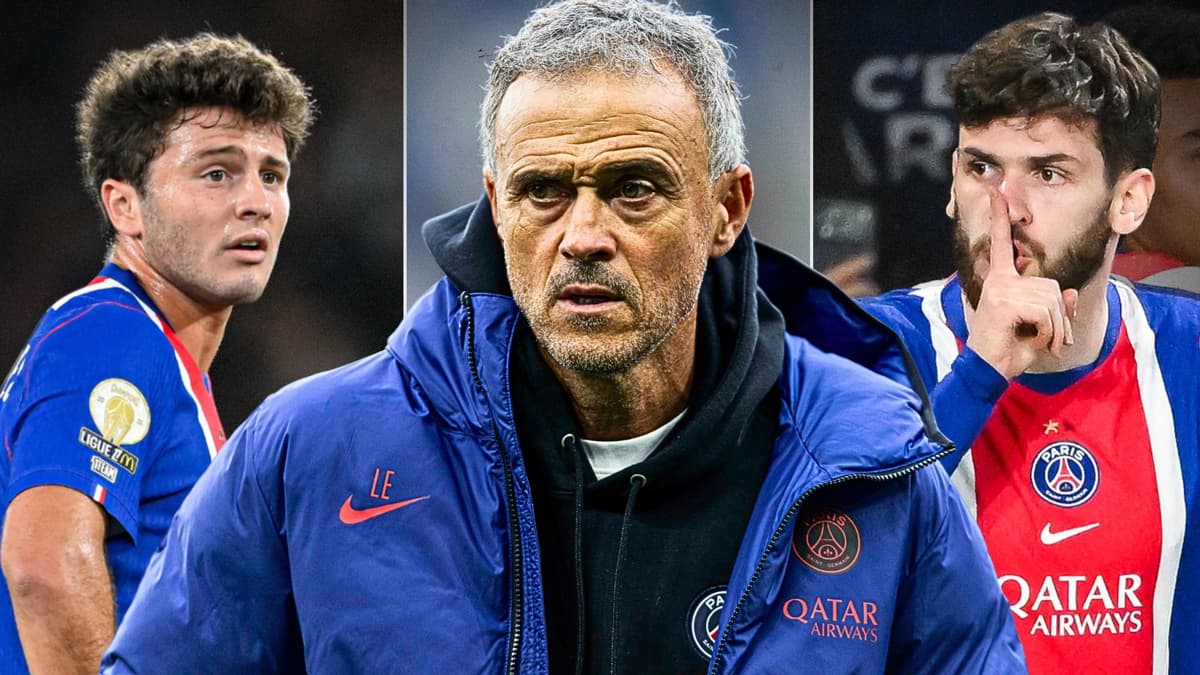
News

Fresh from sweeping aside Manchester City last week, two-time Champions League winners PSG are braced for their biggest challenge of the season to date when they host Barcelona at Parc des Princes on Tuesday.
Luis Enrique’s side were breathtaking for 45 minutes against City, sweeping into a three-goal lead that rendered the improvement of their hosts in the second half of the match meaningless. Ultimately, they ran out 4-2 winners, sending a clear message to their European rivals that they will not surrender the title they have won in each of the last two seasons easily.
Yet, for some critics, this excellence is tarnished by their propensity to rotate in Ligue 1.
PSG made eight changes to the side that beat Man City for their weekend match against Strasbourg, in which they struggled to a 3-1 victory away from home. Prior to that, they rested Ousmane Dembele and Nuno Mendes entirely for a clash against Le Mans.
But complaints about the Parisians’ ability to change their personnel fundamentally underestimate the strength in depth of the squad that has been built at the Parc des Princes.
The PSG ‘weakness’ that is actually their greatest strength
PSG are not rotating because their squad lacks quality. They are rotating because they have built a squad deep enough to make it possible.
While the departure of flashy, big-money superstars has caught the headlines in the English-speaking media, what has flown under the radar has been PSG’s ability to construct a small core of high-quality individuals, each capable of stepping in and replacing another.
PSG sporting director Luis Campos and head coach Luis Enrique have made a conscious choice of quality over quantity, and in turn, this is one of the reasons that they have been able to rotate so freely.
This solution suits PSG’s circumstances, which are favourable in comparison to their Premier League counterparts because they will play four fewer league matches and do not have a League Cup to throw in the mix. This, rather than the quality of their typical weekend opponent, is the biggest structural advantage that they have.
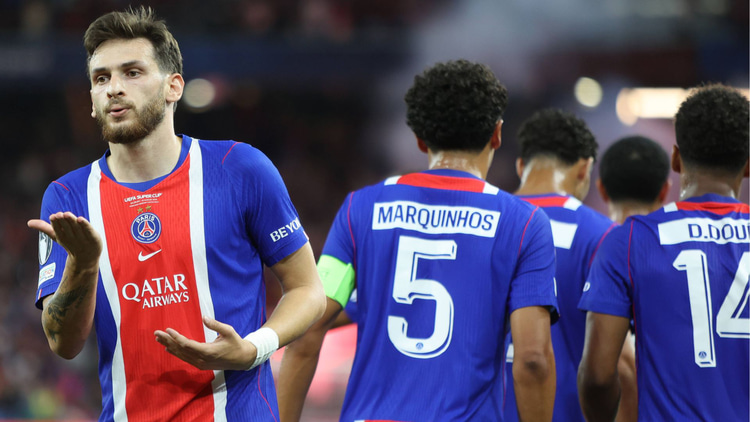
PSG, meanwhile, have built formidable strength in depth – and this is something that is almost entirely overlooked from a Premier League perspective.
Of the eight players who came into Luis Enrique’s starting XI on Saturday, three are among the 30-man Ballon d’Or shortlist – Ferran Torres, Khvicha Kvaratskhelia, Joao Neves – and four others are full internationals for France, Brazil and Ukraine. It's no exaggeration to suggest that these players would be starters in the vast majority of teams.
PSG are replacing elite-quality players with elite-quality players.
PSG’s knife-edge strategy
But there is a calculated risk behind this. The small squad places a premium on keeping everyone fit – or at least having no more than a handful of injuries at any given time.
Rotation is not only a tool to keep the club’s stars fresh, but also a necessity to allow the whole system to function. Three or four medium-term muscular injuries at any given time, and the foundation around which PSG have been carefully constructed over the past three years could quickly crumble and leave Luis Enrique’s side looking suddenly average.
And PSG have hit a brick wall physically previously. The FIFA Club World Cup of 2025 proved a step too far for them in the intense heat of the USA as they were steamrollered by a fresher Chelsea side in the final.
This is the delicate balance that the construction of PSG’s squad is constantly battling.
With a small squad and an emphasis on the collective rather than the individual – ‘the team is the star’, is a cliché now regularly peddled by pundits to describe the Parisians – rotation ceases to be a choice and becomes fundamental to the success of the team. It’s a model that carries a high degree of risk, but for PSG the rewards have been spectacular.