
-
News
- 49 minutes ago
How football has now became 'survival of the fittest'
30 Sep 2026 05:30 CDT |
3 min read
News

In the current international break, we have seen a raft of injuries to elite-level players.
Kylian Mbappe, Kai Havertz, Amine Gouiri, Derek Cornelius, Jamal Musiala, Alexander Isak, Brian Brobbey, Ibrahima Konate, Raphinha and Bruno Fernandes are just some of the names that have picked up issues while playing for their countries over the past week.
Even before the break, there was a high number of pullouts from squads. England manager Thomas Tuchel had to deal with withdrawals by Declan Rice, Cole Palmer, Tino Livramento, Kobbie Mainoo and Marcus Rashford, for example.
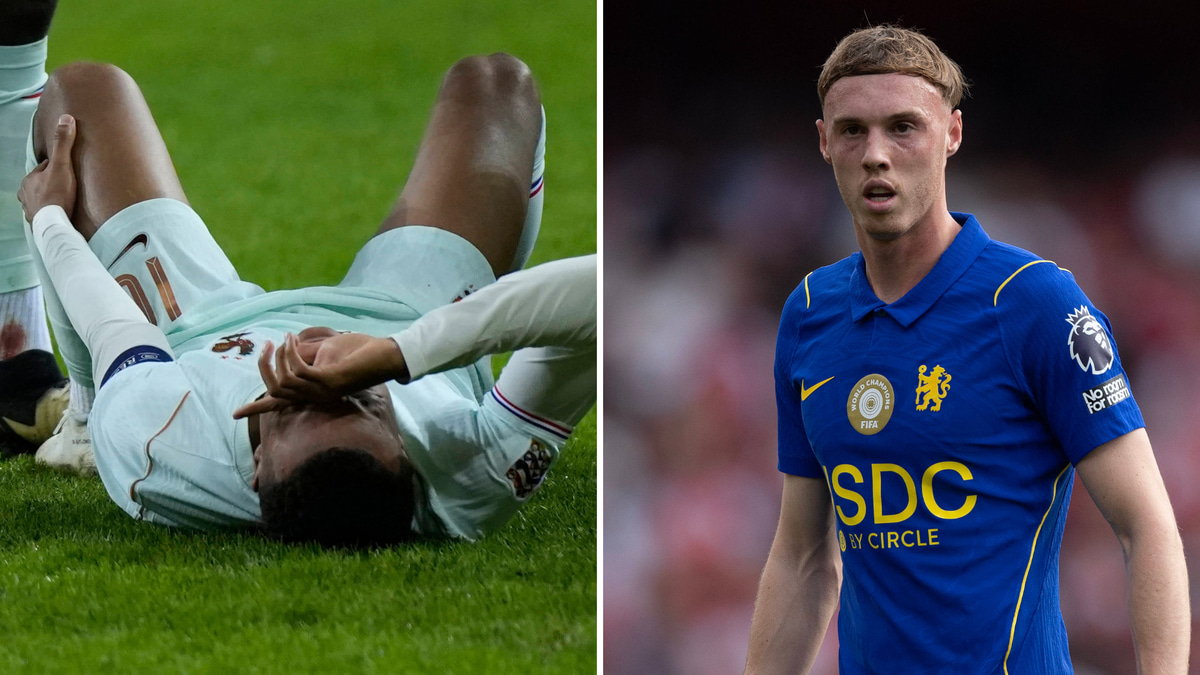
In the case of Palmer, he missed a lot of last season due to injury after playing football consistently without a break for years.
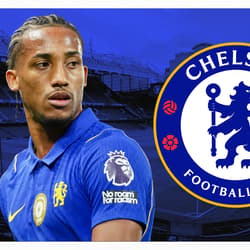
According to Professional Footballers' Association chief executive Maheta Molango, the Chelsea player is a "victim" of a "sick" football schedule taking a toll on players around the world.
"When England see five players who need to withdraw when the single most proud moment a player has is to be called up for the national team, you just ask yourself, what's wrong about the industry?" Molango said at the FIFPRO Performance Summit in London.
"You see people like Cole Palmer, someone who would have played four consecutive summers in a row had he gone to the World Cup, and you wonder why is he missing?
"He's missing because he's a victim of the calendar and that's something that needs to absolutely trigger the alarm bells."
When Palmer pulled out of the England squad, Tuchel told reporters the player had "missed too many opportunities" to play for the Three Lions but Molango doesn't agree with that assessment.
"They [England players] love to play for England," he said.
"They love to play for their national team. But unfortunately your body puts a limit to it. You cannot cheat biology."
Molango believes that football is simply becoming "survival of the fittest" due to the high number of matches that players are expected to feature in, in the modern game.
"Is that really the football that we want?" the PFA CEO asked.
"Is it the football where the people who make us dream just cannot perform? For me it's very worrying.
"What we've seen over the last few years is a system that's sick, that's ill, because it ultimately revolves around obtaining votes and power consolidation."
For many top level players, they have gone straight from the World Cup into the new season with their respective clubs and now into this international break without a meaningful break away from the game.
"Indeed, the link is direct," physiotherapist Farman Bhatti told Foot Mercato.
"The players had only three to four weeks of break after the 2026 World Cup. Physically, it is insufficient to regenerate tissues and repair muscle micro-lesions. Starting the season without a real phase of athletic preparation condemns the body to compensate with risky postures.
"This is a classic phenomenon and unfortunately very frequent after every major international event. The players arrive worn out and in addition are in the acceleration phase of the beginning of the season. The break in rhythm can be brutal."
This international break is longer than usual, with each national team scheduled to play four matches rather than the typical two fixtures seen during this period.
The growing number of matches in the football calendar has led to increasing concerns over player fatigue and burnout. With competitions continuing to expand, players are being asked to play more games across both club and international football.
Over the past decade, several major changes have added to the number of fixtures. The UEFA Nations League was introduced, the Club World Cup returned as an expanded summer tournament, the Champions League introduced a league phase with additional matches, and the World Cup was increased from 32 to 48 teams.
Read more about:
Premier League