
-
News
- 6 minutes ago
'Culture of fear, disrespect and shame' - Ex-Premier League ref slams media 'thirst' for blame
13 Aug 2026 09:30 CDT |
4 min read
News

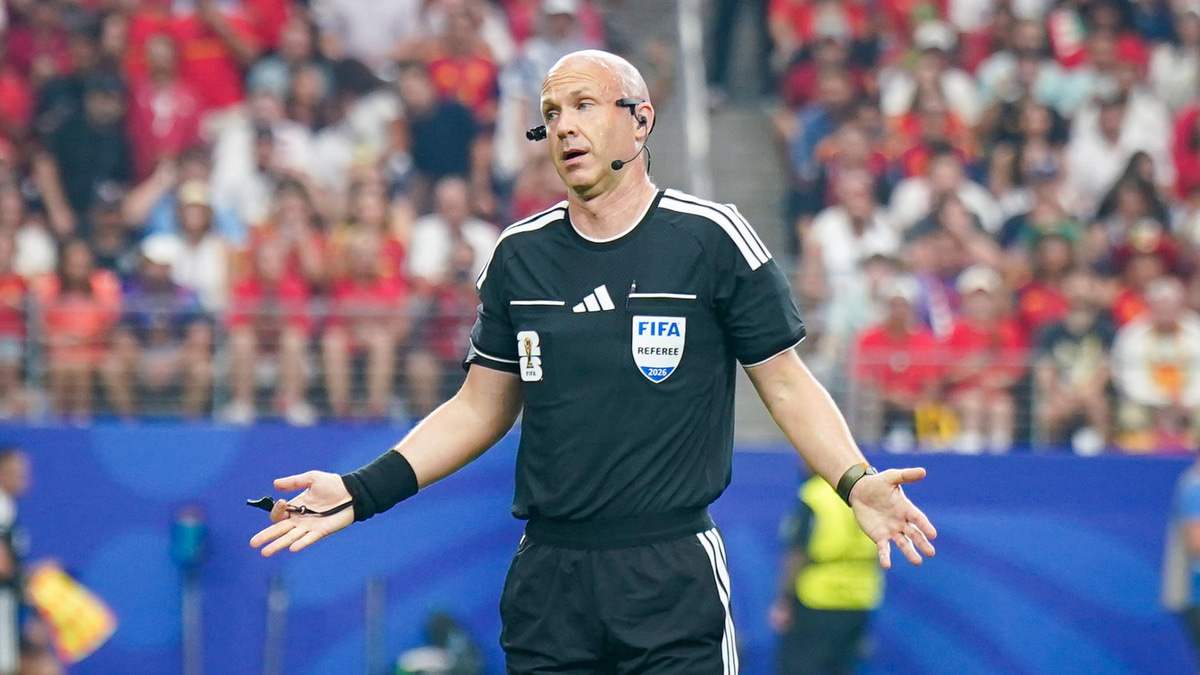
Former Premier League referee Anthony Taylor believes ex-colleagues in the media are partly at fault for the culture of abuse aimed at officials in England.
The emergence of social media means that individuals, in this case match officials, are more vulnerable to abuse from football fans disgruntled about particular decisions that have gone against their team.
Referees have always been abused inside stadiums but the overall abuse has ramped up over the last 10 years due to social media and the intense scrutiny of decisions from official media channels.
Sky Sports, for example, airs a 'Ref Watch' show after every round of Premier League fixtures that features former referee Dermot Gallagher.
Taylor, who retired from refereeing at the conclusion of the 2026 World Cup, has criticised former referees for being involved in such broadcasts.
When asked by the BBC if it bothers him that former colleagues are now in the media criticising referee decisions, he said:
"Yes, it does personally, because it doesn't have any balance to it a lot of the time.
"It's just part of the focus that comes with football. When we're dealing with supposedly objective analysis of matches, whether that be an expert ex-player in a studio or an ex-referee, that should be balanced and fair.
"If it's all one-sided criticism, that creates a culture of fear, disrespect, shame.
"There's a thirst for people to be told: 'Is the decision right or wrong?' And the reality in football is there's a lot of subjectivity and opinion in the middle of right and wrong. But that's not acceptable a lot of the time now."
He was asked whether he would ever consider a post-refereeing career in the media and he replied: "I would never feel like I would be wanting to be in a place where I want to criticise somebody, because I'd like to think I've got a very good understanding of why somebody's made a decision that they've made.
"Of course, a wrong decision can be made. Nobody really chooses to understand the reasoning why.
"I feel my skills and my passion are better suited to trying to pass on that knowledge and experience I've been lucky enough to accumulate over the years."
After 20 years in the game, Taylor will now take up a new role in Turkish football after being employed as the director of elite refereeing for the country's football federation.
He admits that two decades of scrutiny and abuse were partly behind his decision to give up refereeing on the pitch.
"It was part of it," he said.
"Any referee will be lying to you if they said that pressure or that scrutiny did not bother them, because that's a natural human reaction.
"One of the challenges that referees face at every level is actually understanding the challenges that we face.
"Fear of making mistakes, external opinion, spectators, managers, parents, media, colleagues. All these things feed into creating self-doubt, lacking confidence, and then things can spiral out of control and you lose the ability to actually have any confidence in what you're doing on the field.
"Everybody will experience times where dealing with that environment for a long period of time, your energy levels would dip.
"That then starts to impact on motivation and your actual confidence. It goes back to the confidence again of, 'I've got to go again, make sure I don't make a mistake, still want to get to this tournament or have this match'. It's a very real feeling that everybody would go through.
"I was very confident in my own coping mechanisms on how I dealt with that.
"The decision to retire is purely based on my body and my mind coming to its natural course in that current role - and it's ready to go on a new journey."
It got to the point when Taylor had to tell his family to stop attending matches due to the amount of abuse he received from the stands.
"Undoubtedly one of the things that you are considering are the serious sacrifices that both your family and your friends have made over the years for you to do what you do," Taylor explained.
"Family life takes a back seat… so, for sure, that was a big part of why I decided to step back.
"It was in combination with... the scrutiny and the demands placed on referees at the very top level. And that doesn't necessarily mean that you're struggling to cope with those demands, but it comes to a point where it feels that your body and your mind needs to take a break from those kind of pressures."
The most controversial technological advancement in football over the last two decades has been the introduction of VAR, which is designed to interfere in decisions that are deemed wrong by officials watching on monitors. It remains unpopular among a lot of football fans as it can ruin the flow of matches, while it is often criticised for intervening when not required.
What does Taylor, as a former ref, think of VAR?
"Anything to do with VAR is good when we're talking about increasing the overall accuracy of decision-making," he said.
"But we also need to remember that VAR is there to create a sense of justice, so [for] the big clear errors, and it's not there for microscopic, long-detail checks. And that's probably where everybody's trying to work even harder to get to, particularly this coming season.
"I think if we continue to focus on not being microscopic and not being too long in checking situations, where we're only using really clear evidence of an error being made, then... yeah, I think people will start to accept and trust the process more.
"I think most people agree that does happen on occasions, so it's very sensible for us to say that and acknowledge that sometimes things are taking too long, and we're being too microscopic.
"We don't need to take too long looking at stuff, and we need to act on really clear visual evidence to intervene and change the decision."
Read more about:
Premier League