
-
News
- 10 minutes ago
Lionel Messi or Cristiano Ronaldo? What your answer says about you
19 Jun 2026 13:45 CDT |
5 min read
Analysis

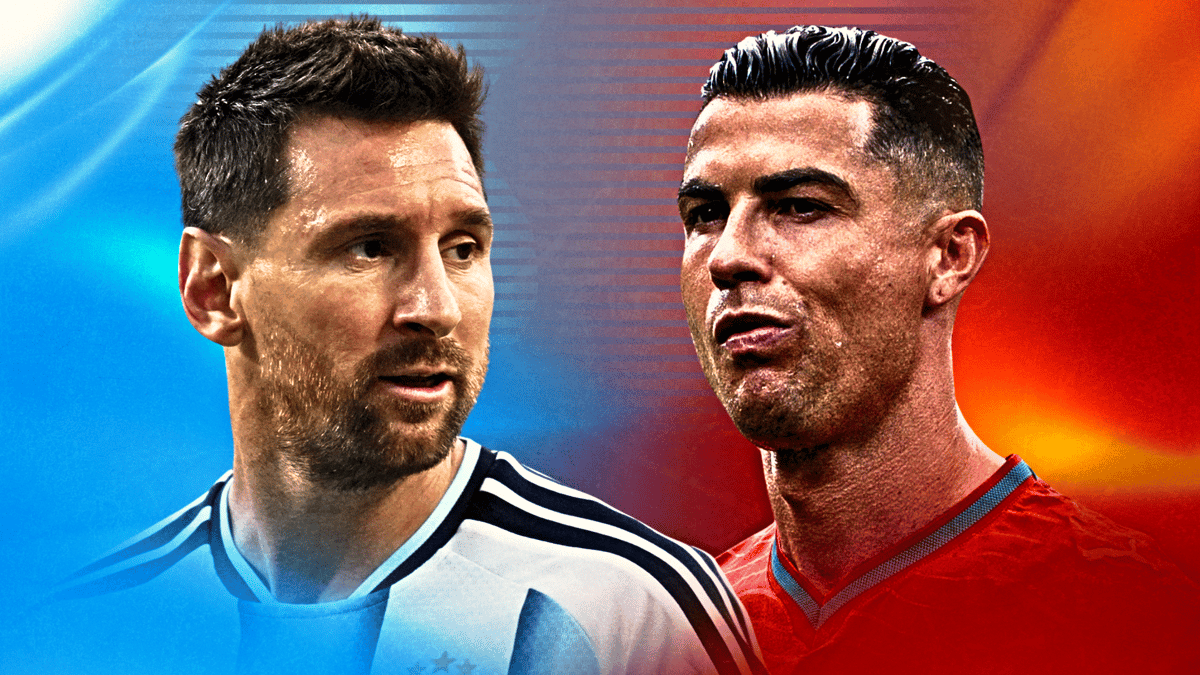
The rivalry between Lionel Messi and Cristiano Ronaldo has defined football for almost 20 years, and a study now suggests that whichever side of the fence you sit on says a lot about you as a person, not just as a fan.
Messi and Ronaldo are two of the undisputed greats of the sport, with supporters spending much of the past 10-15 years debating which of the two is the best player of all time. Some suggest that it is an easy choice.
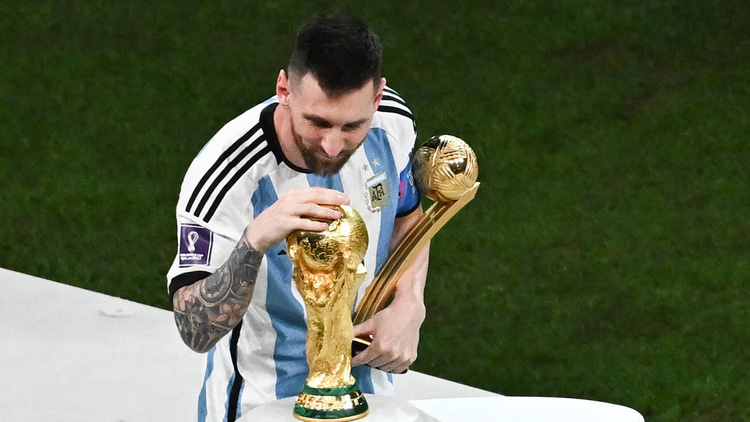
Messi has won a record-setting eight Ballons d'Or (and a World Cup) to Ronaldo's five, suggesting that he is by far the best individual to grace the sport. Others, however, point to the fact that Ronaldo is closing in on 1,000 career goals as clear proof of his "GOAT" status.
The discussion goes beyond merely statistics and awards. Some say that no player has ever had as much pure god-given talent as Messi, while Ronaldo fans would argue that no player has ever displayed as much determination and hard work to reach the top as the Portuguese.
But what if the question Messi or Ronaldo was not simply one of footballing preference but perhaps even one of personality and politics? A recent study from Catalunya argues that exactly this is the case.
Messi v Ronaldo: A question of politics?
The paper "Messi or Cristiano Ronaldo? The choice is also political" claims that your personal preference for Messi or Ronaldo reflects your political and ideological tendencies.
The results of "more than 10,000 surveys" that were carried out "across 26 countries" suggest that those who favour Messi fall more on the left side of the political spectrum, while Ronaldo supporters are more right-wing.
This particular rivalry was chosen because "it is an almost unique case: two athletes of comparable success, known all over the planet and with two opposing public images," the study explains.
The results show that while Ronaldo is generally more popular across the 26 countries (winning in 11 nations to Messi's eight, while seven have no discernible preference), the Argentine received a significantly higher percentage of votes in certain countries (most notably Argentina and South Korea) than Ronaldo did in any of his 11.
Messi versus Ronaldo results
| Favours Messi | Favours Ronaldo | No preference |
| Argentina | China | Australia |
| Canada | Egypt | Brazil |
| Finland | France | Germany |
| Norway | India | Japan |
| South Korea | Indonesia | Netherlands |
| Spain | Malaysia | Philippines |
| United Kingdom | Mexico | South Africa |
| United States | Nigeria | |
| Portugal | ||
| Singapore | ||
| Turkey |
Crucially, the study argues that the preference transcends the extant political systems in the respective countries. It reflects a personal choice of the person questioned regardless of whether they live in "full two-party and multi-party democracies [or] more authoritarian systems."
"Why should ideology make us prefer one or another sports star? Behind each preference, the authors detect two clearly differentiated value profiles that each striker projects, and both fit better with progressives or conservatives," the study explains.
These values are: "Quiet and respectful," "family oriented" and "the team before the individual" for Messi and "dominant and competitive," "overtly self-promotional" and "personal excellence above all else" for Ronaldo.
However, the study emphasises that political beliefs are not the only deciding factor, with age also playing an outsized role. "In young people, the correlation between political positioning and football preference is very pronounced and, as age increases, the effect flattens out," the authors point out.
"Putting numbers into perspective, when a person is about eleven years older than the average age of their state, ideology practically ceases to predict their choice: progressives and conservatives no longer systematically rate Messi or Cristiano Ronaldo higher."
Why is this the case? "According to the authors, this suggests that younger generations have been socialized in more polarized environments where political identity influences many aspects of life, such as football or the appreciation of idols who fit more with their values."
Most of the 14 variables chosen by the authors do not have a significant influence on the results, but "ideology is by far the strongest predictor of preference between Messi and Ronaldo."
The study adds: "People with an authoritarian orientation, with higher self-esteem and who get their information from short videos on networks (like TikTok), tend to value Ronaldo more. In turn, those who are more analytical slightly prefer Messi."
This research on "identity alignment" in football lends credence to the theory "that different social and political identities tend to converge and, therefore, ideology is increasingly associated with other seemingly unrelated traits and preferences."
The authors conclude that this study helps "measure how far politics has come in our way of looking at the world." The Messi versus Ronaldo debate "is no longer just a matter of football (nor is it entirely a matter of politics)."