
-
News
- 19 Sep 2026
More than gambling, more than alcohol: Viewers faced 'bombardment' of junk food ads during the 2026 World Cup
22 Sep 2026 10:01 CDT |
3 min read
News

A new study has found that viewers of the 2026 World Cup were constantly bombarded with ads for junk food during matches over the summer.
A team of researchers from the Universities of Bristol and Oxford used an AI-based system to track the advertising shown on television throughout the tournament’s 104 live matches. Much of this advertising appeared on digital boards beside the pitch and in other areas surrounding stadiums in the United States, Canada and Mexico.
The study revealed that advertisements featuring brands and products classed as junk food and drinks appeared 65,722 times during the broadcasts. The researchers used the UK government’s definition of junk food, which includes products that are high in fat, salt or sugar.
In total, those adverts were visible for 28.1 hours across the tournament.
As these were advertising boards visible during live play, they were seen by every country that had broadcast rights to the tournament. Depending on which country someone watched the broadcast, they would have been exposed to even more junk food ads on television pre-match, at half-time and afterwards.
On average, there were 576 visible ads for junk food and drink shown during each individual match.
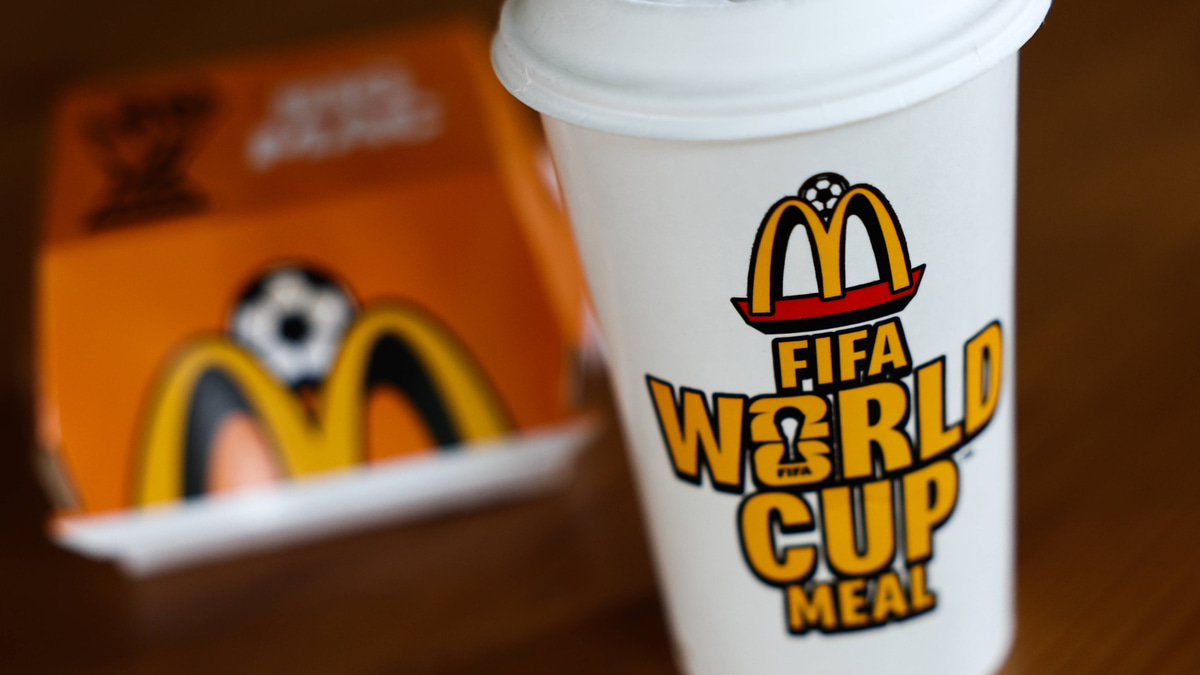
Among the brands recorded, Coca-Cola appeared most frequently, with 21,893 appearances. It was followed by McDonald’s, which appeared 13,915 times, Powerade with 12,777, and Lay’s with 12,087. Lay’s is known as Walkers in the UK. All of the top three most shown brands are official partners of FIFA or a subsidiary of an official partner.
In response to the findings, FIFA said that the money gained from such partnerships was being used in part for healthy eating initiatives.
A FIFA spokesperson said: "FIFA works with a broad, global portfolio of partners, all of which are subject to its governance and compliance frameworks.
"FIFA's social impact campaigns, including Be Active, delivered messages of unity, inclusion, health and friendship to audiences on an unprecedented scale throughout the World Cup".
Gambling and alcohol have long been seen as problematic focuses of advertising but they appeared much less than junk food during the tournament.
"Repeatedly connecting unhealthy food and drink brands with football, excitement and national identity can make these brands familiar and normalise their consumption," the researchers argue.
In the United Kingdom, it is illegal to advertise junk food on television before 9pm, but the advertising boards during games are on international broadcasts and so can't be regulated in the same fashion.
"It is definitely a loophole," Greg Fell, president of the Association of Directors of Public Health, told BBC Sport.
"There is acres of evidence demonstrating that governments around the world are legislating very hard at the moment to limit advertising of junk food.
"It requires worldwide collaboration because obesity is a problem everywhere. Advertising is one of the key mechanisms by which harm from obesity happens.
"Obesity is almost the new tobacco - there isn't much difference with the methods the tobacco industry used before they were excluded from advertising.
"A lot of this is targeted at children, because these companies want to grow their markets, and children are the future market."
According to the NHS, data from 2024 showed that 15% of children in the UK were obese, and 26% were overweight.
"We are facing a global crisis of childhood obesity and diet-related disease, yet the world's biggest sporting event is saturated with marketing for unhealthy food and drinks", said Dr Elisa Becker, one of the report's co-authors.
"Sport should be part of the solution to poor health – not one of the world's most powerful advertising platforms for the products driving it."
There is set to be major changes to school dinners around the UK, with the government seeking to place more fruit and vegetables in schools rather than the likes of fried food or foods filled with sugar.
Read more about:
World Cup U20