
-
News
- 14 Sep 2026
World Cup scandal: How Infantino went from untouchable to untenable
Updated: 31 Jul 2026 07:04 CDT |
11 min read
Analysis

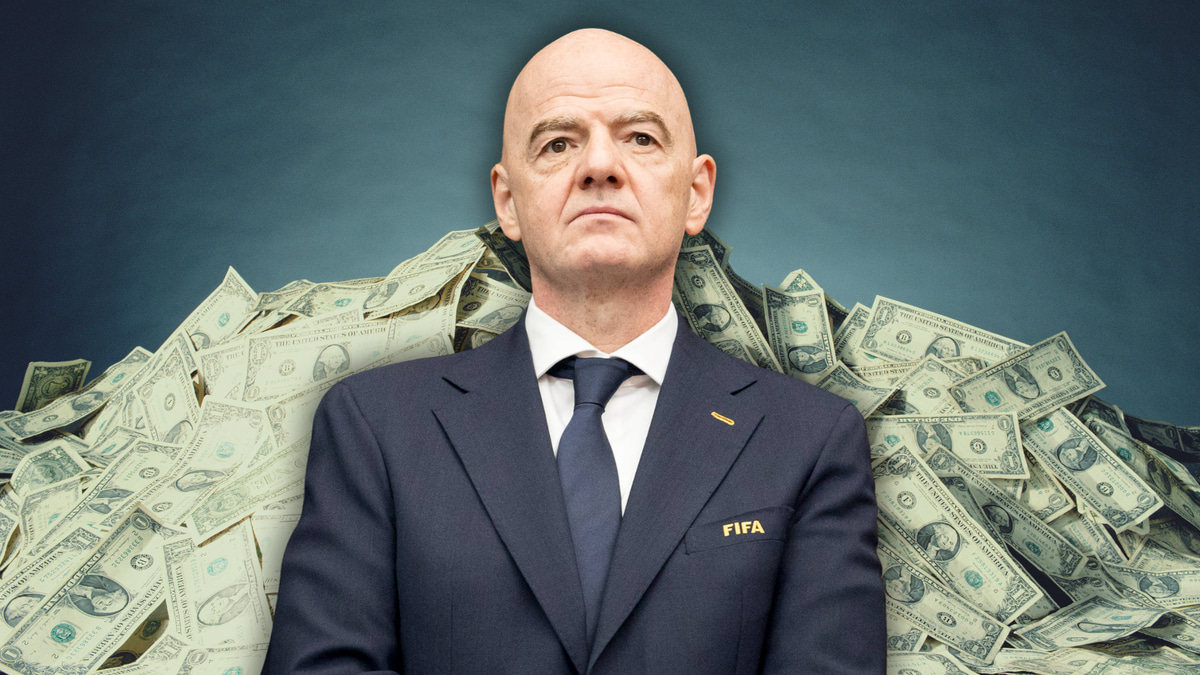
Less than two weeks ago, following Spain’s victory over Argentina on 19 July, Gianni Infantino was riding a high after the most lucrative World Cup in history. Now, his position as FIFA President has firmly reached breaking point.
From wielding complete power over world football, the 56-year-old is rapidly losing the support of countries across the globe and his plan to sell the World Cup to private investors has been greeted with rank disdain from around the globe.
Infantino is now facing a barrage of pleas to resign as FIFA president and with the Italian standing for re-election in March, he faces an uphill battle to regain the faith of the watching world.
Before this week, he had looked set to stand unopposed at the election, but UEFA are pushing Nasser Al-Khelaifi to rival the 56-year-old and it appears increasingly likely that Infantino’s time in charge of world football’s governing body could soon be over.
From his public courtship of Donald Trump, the introduction of mandatory hydration breaks at this summer’s tournament and now his radical World Cup plan, Infantino’s position as the head of FIFA has quickly become untenable, but how did we get here?
What’s happened?
When Infantino replaced Sepp Blatter as the head of FIFA in 2016, after the long-standing president resigned amid an ongoing corruption scandal, he arrived with a burgeoning reputation following his work at UEFA.
However, the introduction of a 48-team World Cup for 2026 was an early indication of what was to come and the controversies haven’t stopped since, including last summer’s Club World Cup.
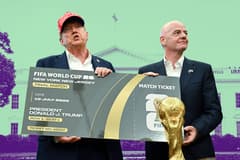
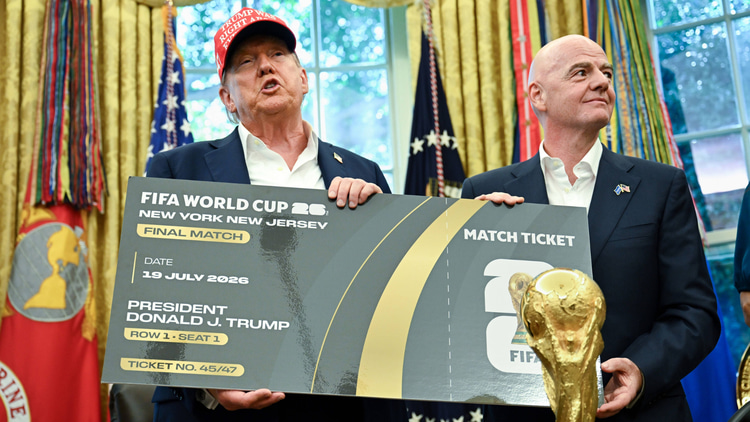
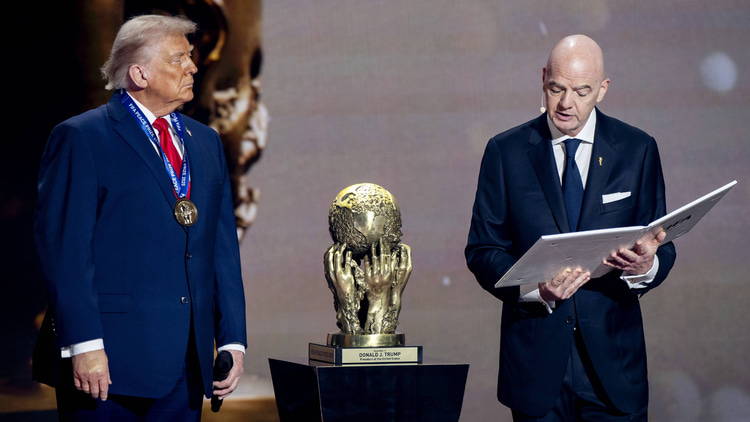
Infantino subsequently courted Trump by awarding him the inaugural ‘FIFA Peace Prize’ just months before the U.S. President sanctioned an attack on Iran, and while the Italian claimed that FIFA didn’t benefit financially from the introduction of mandatory hydration breaks at the 2026 World Cup, they certainly will when they sell the broadcast rights for 2030.
Meanwhile, the reversal of Folarin Balogun’s red card at the World Cup was a highly controversial decision that threw competitive balance out of the window. It was the utmost example of Infantino conforming to the wishes of others, namely Trump and the USA, in the hope of benefitting down the line.
Following the conclusion of this summer’s tournament, Infantino’s attention has quickly turned to 2030 and a radical plan to sell shares in the World Cup to private investors.
Led by Infantino, FIFA plans to create a separate $20bn company to run its competitions, with 20% of this project set to be owned by private investors. The lead investor in the subsidiary - which is to be called FIFA Forward Enterprise (FFE) - is Joshua Kushner, the brother of Trump's son-in-law Jared Kushner.
All 211 member associations of FIFA have been told they will receive $40 million if they back Infantino’s proposal, although they have been given a deadline of 19 September to agree to the terms if they wish to access an initial $20m.
A source told The Times that Infantino's approach is “pure bribery,” with FIFA’s member associations informed they will only receive the proposed $40m payment if they agree with the World Cup proposal, while they will be handed just $10m if they disagree.
However, FIFA needs at least 106 of their 211 members to agree in order for the proposal to succeed and following the events of the last few days, Infantino’s dream already appears dead in the water.
UEFA set firm stance
Getting UEFA nations onside was always going to be Infantino’s greatest, and most important, hurdle to climb. Three of the four 2026 World Cup semi-finalists were from Europe, UEFA nations have won five of the last six tournaments and the vast majority of players ply their trade on the continent.
However, all 55 nations in the confederation have categorically hit out at Infantino’s bid to sell the World Cup to private investors.
In a statement released on 30 July, Europe’s governing body confirmed each of its member states will boycott all FIFA competitions until Infantino’s proposal is withdrawn.
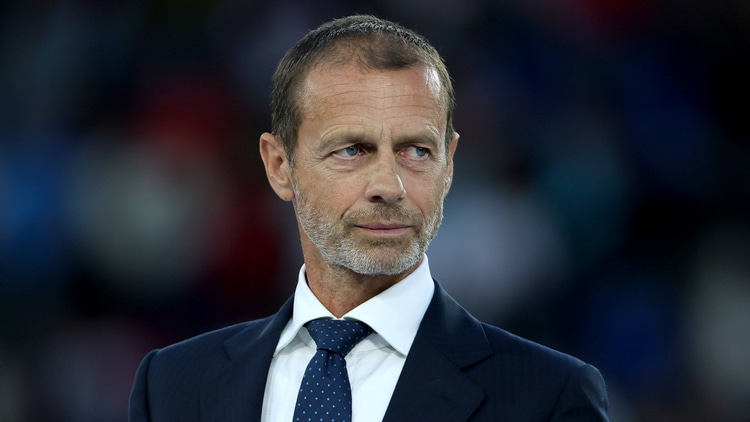
“UEFA and its 55 member associations stand as one,” the statement read. “We unanimously and unequivocally reject FIFA’s proposal to transfer ownership interests in the World Cup and other FIFA competitions to private investors.
“The World Cup cannot be treated as an investment product. It is one of football’s greatest sporting legacies. It has been built over generations by players, national teams and supporters across every continent. No part of it should ever be surrendered to private investors. The World Cup is not for sale.
“It is both irresponsible and indefensible that a proposal of such significance for football was conceived in secret and brought to the brink of approval without any meaningful consultation with those entrusted with stewarding the game. This is not merely a profound failure of leadership, but an abdication of FIFA’s duty as the custodian of world football.
“National associations around the world are now presented with an ultimatum: accept the irreversible capture of football’s greatest competitions or bear the consequences. This is not a “democratic decision”, but governance by intimidation – an act of coercion unworthy of an institution entrusted with the stewardship of the global game. But our opposition goes far beyond process.
“The moment external investors acquire ownership interests in FIFA competitions, football changes forever. Commercial return becomes a permanent obligation. Investor expectations become a daily pressure. From that moment onwards, every decision on the international calendar, every decision on competition formats and every decision shaping the future of football is no longer driven by what best serves the game, but by what best serves shareholders.
“This model has no place in world football. Football’s future cannot be dictated by the expectations of those whose first duty is to maximise financial return. Nor can the interests of national associations, leagues, clubs, players and supporters become subordinate to investor returns. Football cannot mortgage its future for financial gain.
“Europe’s position is clear. We will never lend this model our legitimacy. No one has the moral authority to sell what they merely hold in trust for the next generation.
“As a result of today’s discussion, no UEFA national teams will participate in any FIFA competition for so long as these proposals remain alive, unless this proposal has been abandoned in its entirety and binding assurances have been given that FIFA will never again open its governance or competitions to private ownership.
“Nobody should be in any doubt: UEFA and its national associations will oppose these plans with absolute determination.
“There are moments when institutions are judged not by what they are prepared to accept, but by what they refuse to compromise. This is one of those moments.
“Some things are simply too important to sell. The FIFA World Cup belongs to football. It always will. And so long as Europe has a voice, it will never be for sale.”
CONCACAF and AFC follow suit as Senior Advisor quits
While UEFA became the first confederation to condemn Infantino’s plan for the World Cup, both CONCACAF and the AFC have now followed in their footsteps.
A statement released by CONCACAF read: “During the meeting, the membership expressed deep concerns about the lack of due process surrounding the proposal, the artificially short deadline imposed, and the absence of any review or approval by the relevant FIFA governance bodies. In addition, the need for private equity investment to fund new and existing FIFA Forward programs following the most profitable FIFA World Cup in history was questioned.
“The discussion reinforced the need for greater transparency and proper governance.
“For these reasons, Concacaf and its 41 Member Associations have:
- Rejected the proposal.
- Tasked their FIFA Council Members with engaging FIFA to determine how existing FIFA reserves could be used to increase FIFA Forward funding for football development across our region.
- And tasked their FIFA Council Members with instructing the FIFA President to ensure that any matter follows the proper governance processes via staff and FIFA Council, in accordance with the FIFA Statutes.”
Meanwhile, the AFC subsequently published a damning statement that read: “The AFC stands in solidarity with UEFA and CONCACAF in expressing serious concerns over FIFA's proposal to introduce private investment into FIFA's flagship competitions and the decision-making process around FFE.
"The fact that the situation has reached the point where the real possibility of a FIFA World Cup boycott has entered public discourse should concern everyone who cares about the future of our game. Football should never have been placed in such a position.
"While the immediate debate centres on FFE, the AFC considers this issue extends far beyond a single proposal. Rather, it has exposed fundamental weaknesses in FIFA's consultation and decision-making processes that must now be addressed. While the AFC notes FIFA's latest clarification on the proposal, the central concerns surrounding governance, institutional process and meaningful consultation remain unanswered.”
Senior Gianni Infantino adviser Carlos Cordeiro has resigned.
The announcement came hours after a third confederation opposed the FIFA president's plan to sell stakes in competitions to private investors. pic.twitter.com/jxPNEVhGQY— Match of the Day (@BBCMOTD) July 31, 2026
The latest dagger to Infantino’s bid to revolutionise the World Cup was officially announced on 31 July when his Senior Advisor - Carlos Cordeiro - quit his role at FIFA.
In a post on LinkedIn, Cordeiro wrote: “As a Senior Advisor to the FIFA President, a former banker, and a lifelong football fan, I cannot stand by while FIFA considers selling a stake in the World Cup.
“Let me be clear: I had no involvement in this proposal, and I oppose it unequivocally. It is a bad deal for FIFA's Member Associations, a bad deal for football, and a bad deal for the long-term future of the game.
“Football has been central to my life, and after more than 35 years in banking, I understand both the value of this asset and the consequences of giving part of it away. That is why this proposal should be rejected.
“FIFA already has access to extraordinary financial resources. The organization sits on billions of dollars in reserves and no debt. The FIFA President himself has highlighted the $15 billion in revenue generated between 2022 and 2026. If Member Associations believe additional investment is needed to develop the game, FIFA already has the financial capacity to provide that support from its existing resources. Against that backdrop, selling a permanent stake in football's most valuable asset to raise $4.2 billion makes little sense. It is mortgaging football's future without any compelling justification.”
He continued: “Such economic success was not accidental. It was delivered by experienced football professionals who shattered FIFA's commercial records. Yet despite those achievements, FIFA is now being asked to believe that outside investors are needed to unlock greater value. I do not accept that proposition. The people who built this success have already demonstrated that FIFA possesses the expertise to continue growing both the game and its commercial future.
“Most troubling of all is the absence of answers to fundamental questions. Why this deal? Why now? What oversight exists? Who benefits? Was there a competitive process? What governance will be in place? What will investors ultimately gain, and at what cost to football?
“These questions remain largely unanswered, and yet Member Associations are being asked to make a decision of enormous consequence in barely 50 days or risk being left behind. That is not a responsible way to determine the future of the world's game.
“This proposal has become a defining question for FIFA’s future. After careful consideration, I can no longer continue in my role as Senior Advisor to the FIFA President. I have therefore resigned with immediate effect.”
Cordeiro concluded: “FIFA's responsibility is not to maximize commercial returns at any cost. It is to protect and strengthen football for future generations. When those principles come into conflict, football must come first.
“It has been the privilege of a lifetime to serve FIFA for more than five years and to work alongside dedicated, principled people who care deeply about the game. I hope they, too, will speak up, because decisions of this magnitude should be made in the interests of football, not those who stand to profit from it.”
What has FIFA said?
In response to UEFA’s bold statement and various media reports, FIFA took action by confirming the exact nature of its World Cup proposal in a lengthy social media post on X.
“We have heard the feedback provided by the respective confederations in relation to the proposed establishment of FIFA Forward Enterprise (FFE) and would like to address the issues that have surfaced since the initial media reporting on Tuesday," FIFA wrote.
“We respect the feedback and concern aired in public and reaffirm our commitment to an open and democratic consultation.
”Our planned consultation process was disrupted by incorrect media reports. We will proceed with this consultation process to ensure that each MA has the ability to express its vote based on facts.
“FFE has been proposed solely to ensure that all FIFA Member Associations (MAs) have the opportunity to take meaningful ownership of the commercial opportunity of football in their respective countries, and that this does not come at the cost of either the spirit or the governance of FIFA or football itself.
“Nobody is selling football. This is not something FIFA would ever entertain.”
What’s next?
The very future of FIFA seemed at stake when news of Infantino’s proposal broke, yet the united front that confederations have put up against the governing body seems to have quelled that nuclear threat.
Instead, the departure of Infantino, who has firmly backed his horse in this race, now appears inevitable.
How and when this happens decides on the course of action that the Italian administrator chooses to take. Resignation is a possibility, but there is no guarantee he will go down this route. The other possibility is that he stands at March’s election, though he faces a seemingly impossible task to win back the trust of the footballing world.
Read more about:
World Cup U20
FIFA Club World Cup