
-
News
How footballs could be completely redesigned to combat brain damage concerns
Updated:
4 min read
News

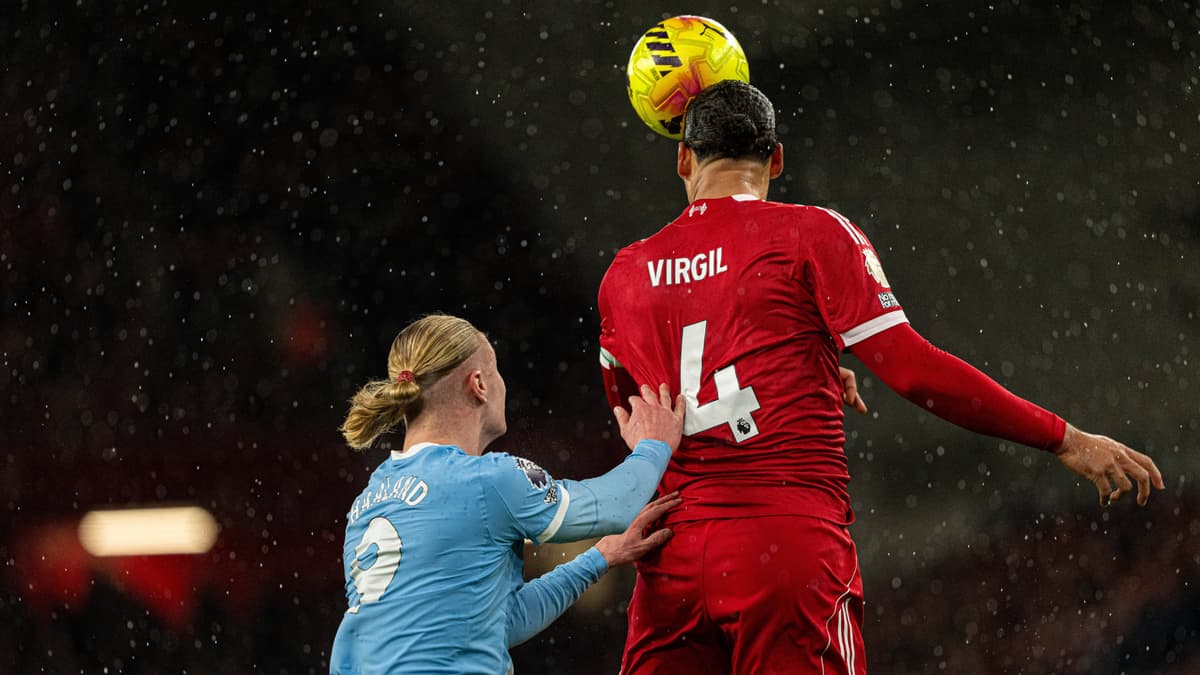
Scientists have determined that a complete redesign of footballs could minimise the impact on players when they head the ball.
For over a century, heading the ball in football has been a major part of the game. Whether it's a player clearing a cross from their own box, two players in an aerial duel or even a striker firing home a last-minute winner from the air, heading is as much a part of football as passing or shooting.
However, over the last 10 years there has been more of a focus put on the well being of players as a career spent heading the football has been proven to have a lasting impact on the brain.
It is actually the frequency that players of all levels head the ball that has led to discussions over safety, particularly with regard to children.
Twenty years ago and beyond, it was the norm for players of all ages and levels to head the ball not only during matches, but during training as well. In modern times, youth coaches have been warned to minimise heading in matches, where possible, and completely ban heading from training altogether.
The subject of heading in football/soccer has come to the forefront due to the increased knowledge of CTE (chronic traumatic encephalopathy).
In January, an inquest determined that Gordon McQueen's brain disease and subsequent death in 2023 has been linked to repeatedly heading balls as a professional footballer.
The former Manchester United and Leeds United defender was diagnosed with vascular dementia in January of 2021 and passed away in June of 2023 at the age of 70.
An inquest into his death was held in North Yorkshire and senior coroner John Heath told the court:
"I have found that Mr McQueen suffered repetitive head impacts during his career.
"I am satisfied that on the balance of probability that repeatedly heading footballs contributed to his developing chronic traumatic encephalopathy (CTE).
"The combination of CTE and vascular dementia led to pneumonia. I find the cause of death pneumonia, vascular dementia and CTE. It is likely that repetitive head impacts, sustained by heading the ball while playing football, contributed to the CTE."
A new ball for the future?
Loughborough University, backed by the Football Association, conducted new research assessing the design of footballs, the speed it was travelling and whether it was wet or dry, to determine the impact on the head.
"There are examples of balls that transfer high or low energy through all eras of play", said Andy Harland, professor of sports technology at Loughborough University.
"There is no trend that suggests the magnitude of energy transfer is increasing or decreasing over time.
"Our evidence suggests that high energy pressure wave transfer was not limited to leather balls, so, if this energy is associated with neurodegenerative disease, it is not a problem that has gone away with modern balls."
In 2019, the 'Field' by the Professional Footballers' Association, found that footballers were 3.5 times more likely to suffer from neurodegenerative disorders later in life due to heading footballs.
Dr Ieuan Phillips, lead researcher at Loughborough University, said: "These findings provide opportunities to work towards ball designs and testing specifications that minimise energy transfer into the brain.
"We're hoping that this discovery provides some valuable information that could look more specifically at the potential causes of the disease that we're seeing in retired players.
"At the moment, we see correlations and statistical observations about them and their careers in the game.
"As yet, it's unexplained as to what exactly it is about the collision with a football in a header that is causing damage to the brain, and it may well be many years until we can reach that point. But I think this discovery allows us to focus specifically on something which we've never measured before.
"Most excitingly, it gives us the opportunity to make changes to the ball. This energy transfer that we've measured is separate from the big picture of the ball hitting the head and the player's head recoiling. It is over at the very beginning of the collision and represents a very discreet pulse of energy that passes into the brain."
What is CTE?
The concept of CTE was thrust into public consciousness by concussion expert Dr Bennet Omalu, who published findings on an autopsy he did on former NFL player Mike Webster back in 2002.
Webster, who was a Hall of Fame Pittsburgh Steelers star, suffered amnesia, depression and dementia before his death at the age of 50.
Prior to Omalu's findings, CTE had only really been discussed as a threat to the lives of boxers who naturally receive numerous blows to the head.
The NFL did not truly embrace and acknowledge the link between the vigours of playing American Football and CTE until 2016 when the NFL's senior vice president for health and safety policy, Jeff Miller, testified before Congress, recognising that changes had to be made.
Football/soccer must change
Omalu believes that football/soccer is going down the same route as the NFL as heading the ball really does present danger to players, particularly in later life.
"Science has shown over the centuries that whenever the human head is exposed to repeated blows, there is a 100 per cent risk of brain damage," the professor told GOAL in 2017.
"Knowing what we know today, there is no reason why a child today should be jumping up and slamming his head to try to stop a ball travelling at a high velocity. That is silly. No matter how much we may be in love with soccer, the question we need to ask ourselves is: which is more important, the life of a child or the excitement of soccer?
"Which do we value more? Life or the fleeting moments of ecstasy? Obviously there is no question about it: life comes first.
"Children under the age of 18 should not be heading the ball. Children under the ages of 12 to 14 should not be playing soccer as we play it today because their brains are not sufficiently developed to handle soccer. They should play a new type of soccer that should be developed by the soccer leagues where there is less contact, less dribbling, less players and a bigger and lighter ball.
"If we refuse to acknowledge the truth of science, the long-term sustainability of soccer as an industry would be in doubt."
Read more about:
Premier League