
-
News
- 24 Aug 2026
FIFA won the battle over World Cup ticket prices - expert explains how
Updated: 13 Jul 2026 10:15 CDT |
13 min read
News

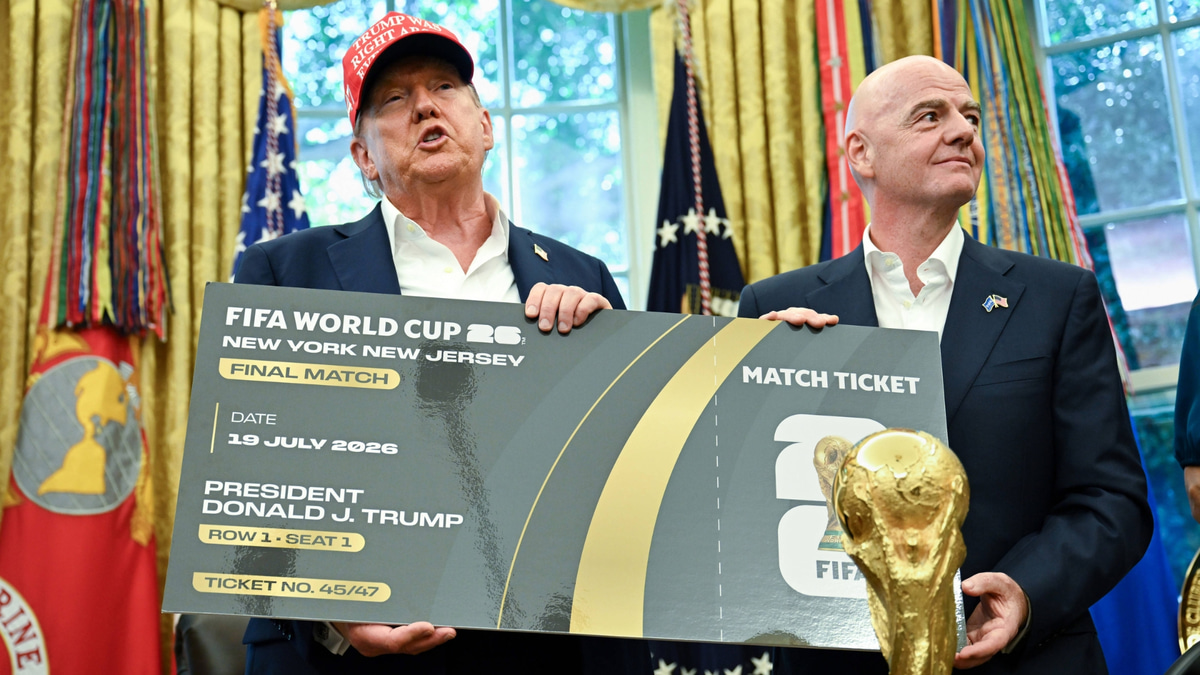
Although the build-up to the 2026 World Cup was dominated by issues like the United States' conflict with Iran and ongoing visa complications affecting both supporters and players, ticket prices have become the one controversy that has touched virtually everyone attending the tournament.
With the competition spread across North America, travelling fans were already preparing for high costs, from long-haul flights and accommodation to food and transport. However, match tickets were one expense that could have been more consistent. Instead, FIFA has faced widespread criticism after setting prices that many supporters consider excessively high.
The increase was stark during the group stage, where tickets cost, on average, around three times more than they did at the 2022 World Cup in Qatar. Prices rose even further as the tournament progressed.
A major factor behind the soaring costs is FIFA's use of dynamic pricing, allowing ticket prices to increase in line with demand. Many tickets were purchased directly from FIFA before appearing on secondary markets, where sellers sought to capitalise on the demand by charging significantly higher prices.
Even on FIFA's own official resale platform, the governing body takes a 15% commission on every individual ticket sold, further adding to the revenue generated from the tournament's ticketing system
And yet, the discourse surrounding the price of World Cup match tickets certainly lessened after the first ball was kicked between Canada and Mexico in the tournament opener.
It does seem to be the case that football fans simply bit the bullet and paid what FIFA demand to simply experience the aura of a World Cup game.
To try and make sense of it all, FootballTransfers again sat down for an exclusive interview with ticketing expert Jim McCarthy, the owner of Impresario, a company that aims to help organisations maximise revenue by ensuring as many tickets as possible are sold for events. This includes work with football clubs.
You can find his full bio at the bottom of the page.
FootballTransfers: Now that the U.S. national team has been eliminated, how would you gauge American interest for the remainder of the World Cup? Do you think it could have any impact on ticket sales for the semi-finals?
I don't think it will. I think the semi-finals and everything beyond that are untouchable. There's going to be overwhelming demand for those matches. I've said from the beginning that demand would be exceptionally high from around the Round of 16 onwards, and certainly for the quarter-finals and later.
I think people probably expected the U.S. men's team to win at least one more game. There was hope they might progress beyond the early knockout stages. If they had reached the quarter-finals or semi-finals, demand for those particular matches would have been even greater, but I don't think many people realistically expected them to go much further than the quarter-finals.
More importantly, ticket prices for the remainder of the tournament aren't dependent on casual American fans attending. At this stage, demand comes from home supporters, travelling fans, and football supporters from around the world. Those tickets are going to sell at very high prices regardless.
I noticed that discussion around ticket prices seemed to lessen almost as soon as the tournament began. Why do you think that happened? Do you think that's an accurate observation?
I don't think the discussion completely halted, but two things happened.
First, we suddenly had actual football to talk about. Ultimately, we were reminded how much we love this tournament. People may dislike FIFA, question its decision-making, or disagree with many of its actions, but the World Cup itself is irresistible for football fans. Once the tournament started, we were all just reminded of that.
Secondly, I do think the conversation about ticket pricing continued, particularly on the social media platforms I follow. During the group stage, there were still plenty of discussions about which matches were selling well, where prices were rising or falling, and whether people should wait before buying tickets. Fans were constantly trying to work out how prices would develop as the tournament progressed.
So the conversation never really stopped - it was simply overshadowed by the football itself. Before the tournament started, ticketing was the biggest story because there wasn't any football to discuss. Once the matches began, football naturally became the far more interesting topic.
Do you think fans have accepted their fate in terms of these ticket prices because of how much they've actually paid? And do you think that could impact future tournaments?
I think that's a good way of putting it—accepted their fate. I know a lot of people who were very resistant to these prices and said, "Well, I'm going to go. I want to have the experience. I just want to experience it."
I think the story is that, over the few months leading up to the tournament, prices on the secondary market were steadily coming down. Then, as the tournament started, they came back up a little. Clearly, the prices found their market level, which was lower than the original price list for most games. It was still definitely high, but people really wanted to see these matches.
What happens at future tournaments could be very different. The next World Cup is spread across three continents and very different markets compared with the United States, Canada and Mexico, particularly in terms of the existence of secondary markets. FIFA definitely relied on those secondary markets to help make this work.
So, how much of this will carry over? I'm not sure. I think FIFA has learned that it can charge an awful lot for these games and still probably get it. However, I think they'll have to adjust those prices downward in other markets outside the U.S. and Canada. I don't think this model can be copied over directly, but we'll see.
The other thing is that the next major men's tournament is Euro 2028. Obviously, the Women's World Cup next year is a major tournament as well, but UEFA has already said it's not going to follow this model. As we discussed last time, UEFA has really staked out a different approach, and it'll be very interesting to see what happens with that.
Do you think UEFA are still happy with the choice they made to announce Euro 2028 ticket prices, lower ticket prices than the World Cup, two years before the tournament to take advantage of the poor PR FIFA received?
I think they'll be glad that they staked out that competitive territory for themselves. The question I've been thinking about over the last week or two is whether they'll stick with it all the way through. Will UEFA keep its nerve? Have they set expectations that they ultimately can't meet?
There's nothing in what UEFA has announced that says they can't charge really high prices. They've simply committed to greater transparency and no dynamic pricing. That doesn't mean it's going to be cheap. They have said there will be some accessibility, but I'd still expect prices to be high, or even higher, because they may have learned from this tournament that there's potential for that.
If they stick to the process they've committed to, I think it'll further define them in opposition to FIFA, which is probably good for them.
There is a difference between FIFA and UEFA when it comes to fans. UEFA lives in Europe, so there's an ongoing accountability to supporters. They can't simply move to another market and stage the event somewhere else. They have to continue operating in the same environment.
It's the same comparison I make with football clubs and the kind of price-maximising approach FIFA is taking. Clubs generally wouldn't be advised to maximise prices absolutely because they have an ongoing relationship with their fans.
It's like game theory. There are one-time games and repeated games. If I buy something at an airport, my opinion of that restaurant doesn't matter much to them because I'm probably never going to buy from them again. But if I buy from a restaurant in my hometown, and it's too expensive, they treat me poorly, or they have a bad reputation, they'll suffer over time because the same people keep talking about them and deciding whether to go back.
UEFA is more like that, and so are clubs. FIFA is different. The circus comes to town maybe every 20 or 30 years in a particular market. If you pay the price and you're unhappy about it, they're gone. As far as you, as a ticket buyer, are concerned, you may not have another opportunity to buy tickets from them in your home country for decades.
The broader reputational issues are still valid, but when it comes to extracting maximum value from ticket buyers, FIFA doesn't really face much of a reputational cost because of how infrequently it returns to the same market.
That's a big difference. UEFA is more like a club because it has a permanent location. It has to live with its reputation on an ongoing basis. It's playing that repeated game in Europe and nowhere else. There's nowhere for it to escape to, so it has to be much more intelligent about managing its reputation with ticket buyers.
So in what way can fans combat these prices if they just go out and buy them anyway? Have they shot themselves in the foot? Because the only way to do that was simply not to buy the tickets, and they did, so...?
I don't know. The market has a voice, and people have said with their dollars—with their feet—that they're willing to pay these prices.
So what can they do about it? I don't know. This is a classic problem. You could try things like boycotts, but they're not typically very effective because if the market is genuinely priced at the market level, people will still buy the tickets.
What I've found interesting over the last few months is what we've seen not only with the World Cup, but also with the New York Knicks' NBA Finals run. The prices people paid - and were happy to pay - to attend the NBA Finals, especially in New York, were incredible.
The perceived value of a truly special live event has gone through the roof. People see these as once-in-a-lifetime experiences. New York basketball fans had been waiting 50 or 60 years to see their team win. If they had $50,000 to spend on a ticket, they did, because they felt they were witnessing something extraordinary.
We've always known that when people get excited enough about an event, they'll pay almost anything. But "almost anything" has taken on a new meaning. It used to mean paying $2,000 for a Taylor Swift ticket or perhaps $5,000 for a hospitality or meet-and-greet package with Madonna. Now those kinds of prices are becoming routine. I saw front-row tickets for Bruno Mars at SoFi Stadium selling for around $5,000, just for the ticket.
When people see a live event as something truly special, they're willing to spend whatever it takes to be there. We've heard for years that people are placing more value on experiences than on possessions. This is what that looks like.
It really comes down to what makes someone feel that an experience is so special that they have to be there, regardless of the cost. That's difficult to define, but when you capture that kind of magic, things can get pretty crazy.
In what way could this possibly impact football clubs?
I will say that, as long as people are prepared to buy, any fan group doesn't have a great deal of power.
If you don't have somebody inside the club who's thinking, "We need to worry about what our fan base looks like in 10 or 20 years, and how today's decisions will affect that," then you could easily have someone who doesn't give those issues much thought at all.
Having said that, if you're an owner, or someone who plans to be around the club for a long time, you should care about those things because there is damage being done.
Once you've achieved success, built a large fan base, and established a strong brand and reputation, you can live off that for a long time. Even if you're not managing it responsibly, you can continue drawing on that goodwill for years.
That's just a fact. Even if you're not handling things well now, or you're not treating people well now, the strength of what you've built previously can carry you for quite some time.
It's almost like living off an inheritance. You can keep spending it for a long time before you're actually bankrupt.
I think that can happen.
Using the Premier League as an example, do you think this 'event match' mentality that has surrounded the World Cup could make its way to just regular top-flight matches?
It's possible. It certainly could.
You could imagine a derby reaching that level, depending on the circumstances. It's really all in the mind of the fan. If people feel that, for some reason, a match is truly special, then it could happen.
Will clubs actually do it? I don't know. In my experience, European football clubs are at least a little worried about the reaction of their fan bases to dramatic price increases. So do they have the courage—for better or worse—to introduce a really significant increase for the biggest games? I'm not sure.
Generally speaking, the market teaches itself what people are willing to pay. When you see it happen in another geography or another industry—whether it's sport or concerts—you start asking the question. People are willing to pay that much for Taylor Swift. Interesting. What would they pay for this?
Sometimes the answer is yes. There are definitely people who would pay £1,000 for a great seat.
The question isn't whether those people exist. It's whether there are 20 of them, 200 of them, or even more. Is the right price £500, £1,000 or £2,000? There are definitely people who would pay it, and there are definitely clubs having exactly that conversation about how they could potentially introduce that kind of pricing.
The other thing that's worth noting is that when someone pays £2,000—or $2,000—for a ticket, they're often not even that upset about it. The amount they've paid actually influences their perception of the event. They come away thinking, "That was great." And maybe it was.
That's something I say to people all the time. These experiences really are valuable. This is why I'm in this business - we believe in the value of live experiences.
On the one hand, we're trying to manage issues like access and affordability. On the other hand, we genuinely believe that these experiences are worth more than material.
You know, it's not easy—or cheap, by the way—to put on professional football, or any of these major events. It takes a huge amount of effort from a lot of people to deliver them at a high level.
So there's a really interesting balance there. Most people who went to the World Cup didn't walk away angry about the prices they paid. They walked away feeling that they'd had an incredible experience.
That's the challenge. We want these events to be accessible and affordable, but we also have to recognise that creating them at this level is expensive, and that people genuinely place a very high value on being there. That's what makes finding the right balance so difficult.
I think you made a really good point there. I can't think of anyone who's come away from one of these experiences feeling like they'd been ripped off when they actually had the event to look forward to - unless something actually went wrong, like the match ended 0–0, it was abandoned because of the weather, or something similar. They felt lucky to get the tickets in the first place and enjoy the experience.
One of the biggest issues was the opacity of the process. It was hard to see what was actually going on. There was very little transparency about what ticket inventory was available and what wasn't.
It felt like a shell game—constantly moving things around so you couldn't really tell what inventory was actually for sale. We know that prices came down fairly dramatically from about March until roughly a week before the tournament on the secondary market.
I have a pretty good idea that FIFA was working directly with secondary marketplaces. That's not necessarily wrong, but it wasn't done openly. Inventory appeared to go straight onto the secondary market, and while that's a regular practice in the U.S., it's much less common in Europe.
When you come down to it, people have been talking for a long time about the increasing value they place on experiences rather than physical possessions. This is what that looks like.
If you have $1,000, you can buy a big television, a new iPhone, or you can go to the World Cup—or an NBA Finals game. Increasingly, people are saying it's a no-brainer. They're choosing the experience they'll remember for the rest of their lives over something they'll own.
A $1,000 television is probably going to be obsolete in four years. At the end of the day, it's still just a television. But you may never have another opportunity to experience something like the World Cup.
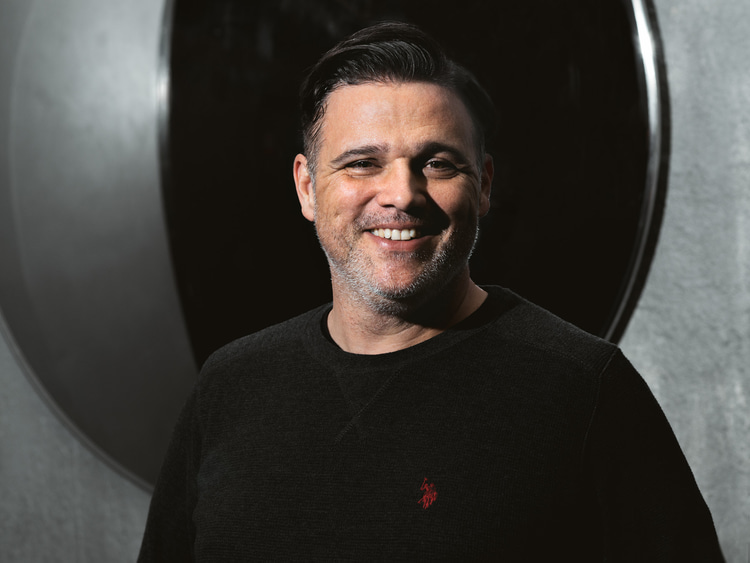
Jim McCarthy is the founder of Impresario Strategic Growth Service. The co-founder and former CEO of Goldstar and Stellar Live, Jim is the world’s leading authority on audience development for live events organisations. He and his team have supported more than 2,000,000 live events and delivered tens of millions of customers to partners and clients.
His work at Impresario Strategic Growth Service focuses that expertise on professional football clubs around the world, supporting their revenue and audience growth through the Matchday Multiplier program.
Jim also serves on the Advisory Board of the Rose Bowl Institute, the Board of Trustees at the Pasadena Playhouse and is an Expert-in-Residence at the Greif Center for Entrepreneurship at the University of Southern California. He graduated from Harvard University and earned an MBA from the Anderson School at UCLA.
Read more about:
World Cup U20