

-
News
- 15 hours ago
Argentina fans demand World Cup final replay as online petition gains traction
23 Jul 2026 11:01 CDT |
2 min read
News

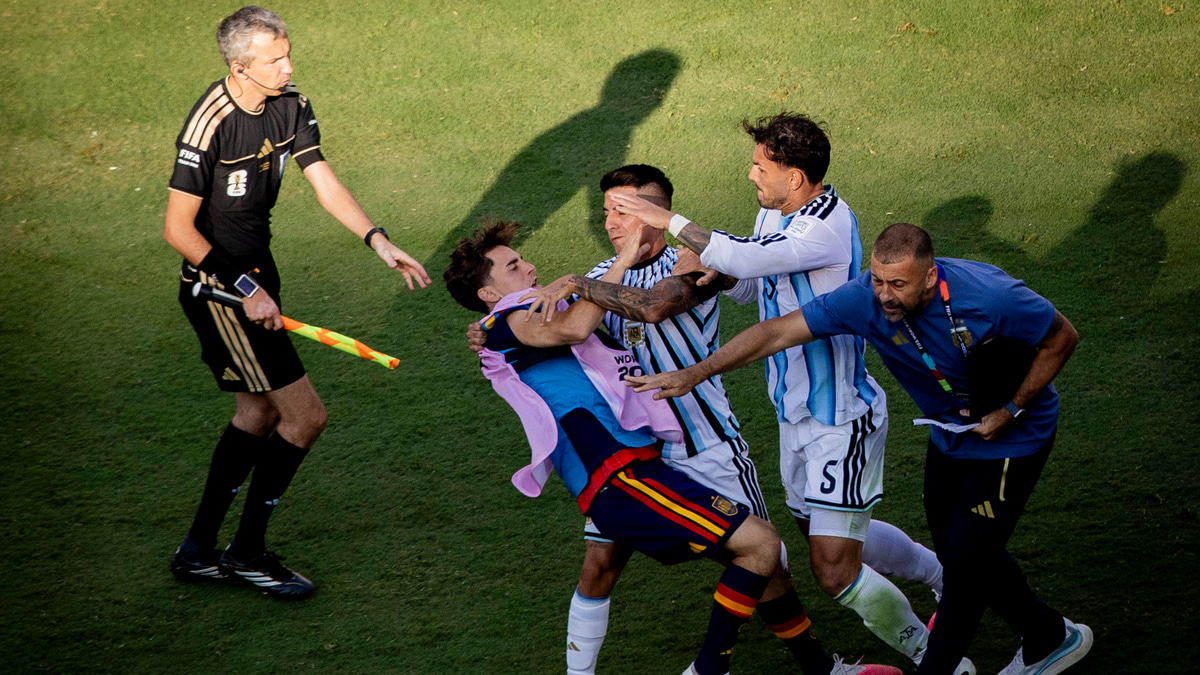
A large group of Argentina fans are demanding that the 2026 World Cup final be replayed.
The final of the 2026 World Cup was contested by the South American nation and Spain, with La Roja emerging victorious in extra time following a solitary strike from substitute Ferran Torres.
It was a fiery affair without much quality and the Argentines received criticism for their approach to the game as well as their overzealous physicality.
Enzo Fernandez was sent off in the second half after two bookable offences - one for dissent and one for leaving his studs up in a challenge with Pau Cubarsi, sending the Spaniard tumbling into the air.
Argentina supporter Gisela Sanchez started a petition on Change.org urging FIFA to order a replay of the match. At the time of writing, the petition has gained over 80,000 signatures.
Sanchez claims Slovenian referee Slavko Vincic delivered a "controversial and corrupt" officiating performance and requests FIFA to investigate a number of decisions made during the game.
The petition, however, does not present independently verifiable evidence to support those allegations. Instead, it points to videos shared on social media that Sanchez argues show refereeing decisions favouring Spain.
FIFA breaks its own unwritten rule before Argentina quarter-final
For Argentina's quarter-final fixture against Switzerland, FIFA went against one of its unwritten rules when it comes to the appointment of officials.
FIFA appointed Portuguese referee Joao Pinheiro to officiate the game, a decision that marked a notable departure from the governing body's approach earlier in the tournament.
Until the quarter-finals, FIFA had consistently followed an unwritten practice of selecting referees from a neutral confederation for every one of the tournament's first 99 matches.
Under that system, whenever teams from different continents met, the referee would come from a third confederation rather than either side's regional governing body.
Pinheiro was unique in that he was the only central official involved at that point in the competition whose country was not still active.
Read more about:
World Cup U20