
-
News
- 8 Sep 2026
Germany consider World Cup hosting bid but won't price fans out the game like 2026
29 Jul 2026 07:30 CDT |
5 min read
News

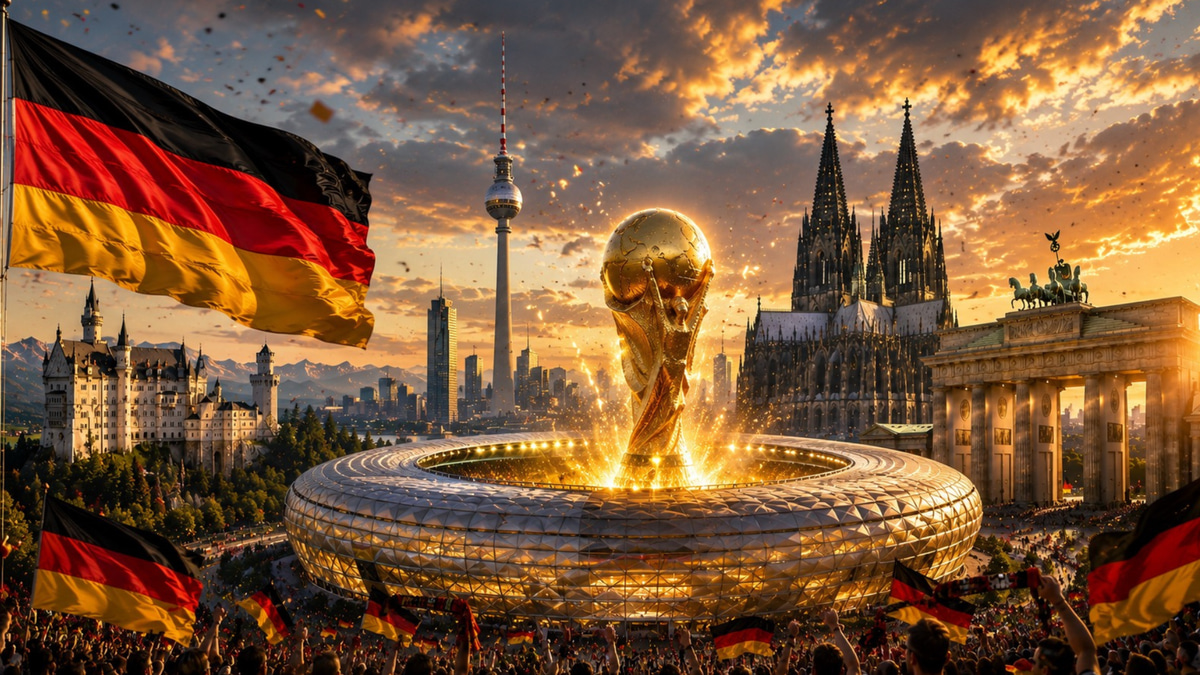
Germany are considering a bid to host either the 2038 or 2042 World Cup.
The hosts for the next two tournaments are already in place, with Spain, Portugal and Morocco set for 2030 and Saudi Arabia for 2034.
2030 will be the centenary year of the first World Cup so special matches will also take place in Argentina, Paraguay and Uruguay.
Germany's bid is being pushed by Axel Hellmann, the CEO of Bundesliga club Eintracht Frankfurt and a member of the German Football Association and Bernd Neuendorf, the president of the DFB.
“We would love to, and there is an initiative by Neuendorf and the DFB to run for 2042, maybe 2038. It depends on FIFA regulations," Hellmann told The Athletic.
The regulations that Hellman refers to are the rotation system around separate continents for World Cup tournaments.
The 2026 World Cup took place in North America, while 2030 will take place in Europe, Africa and South America, with Asia set to host in 2034.
The rules state that two World Cups must pass by before a continent can host again, which means a likely return to North America, or bid from Oceania in 2038.
Germany are hoping that FIFA will consider bending the rules to allow for a return to Europe as the 2030 World Cup is split across three continents.
Hellmann says: “Germany has the stadium infrastructure, mobility infrastructure and hotel infrastructure. Every single game will be sold out. It will be a success. There is space for (a bid) in 2038, but I’m quite sure for 2042 we have very good chances to run a successful campaign.”
Rumours have emerged about a potential joint bid alongside France, but Hellmann insists it is too early for such a plan, even if "it’s important to send a signal to German society” that they are interested in hosting.
He adds: “One thing is clear: Germany has the full infrastructure for everything that is needed. The number of stadiums at a certain size, as well as the training grounds we need. The infrastructure is there, but we need, let’s say, somehow modern or reshaped stadiums.”
The Frankfurt CEO is hoping for a similar economic and socio-economic boom that Germany enjoyed after hosting the 2006 World Cup, which changed the world's perspective on the country.
“Germany in those times, we weren’t in very good shape as a country, as an economy,” he recalls.
"The perception of Germany as a country changed totally in 2006 from, ‘the Germans, they’re too serious’ to ‘Germany is a great country with great hospitality.’
“The doors we could open in the global market were massive. I said this was the best marketing and branding campaign we’ve ever done. We invested in public transport and this could be used long-term for the whole society.”
No exorbitant ticket prices
FIFA received criticism for the prices of match tickets for the 2026 World Cup in the United States, Canada and Mexico. The group stage was, on average, three times as expensive as the previous World Cup in Qatar and many supporters felt priced out.
Germany's plan is to make their next World Cup more affordable if FIFA agrees.
Hellmann said FIFA’s pricing was “totally against the concept we follow as a club (in Frankfurt).”
He continued: “Social barriers shouldn’t work as a way to keep people away from the matches. You create social barriers with your ticket price policy.”
Eintracht Frankfurt offer cheaper tickets which are subsidised by hospitality tickets in a system which sees fans support each other as well as the team.
“This is solidarity because the people with deep pockets support the guys who can’t do more,” he said.
“Football is the sport of the people and it belongs to a certain extent to the people. If you want to create an experience for young kids to get this impulse and this magnetic effect of football, they have to follow a live match.
"That means you have to involve everybody — it’s much bigger than just a market or a capitalist system. It is about participation for everybody at the end.”
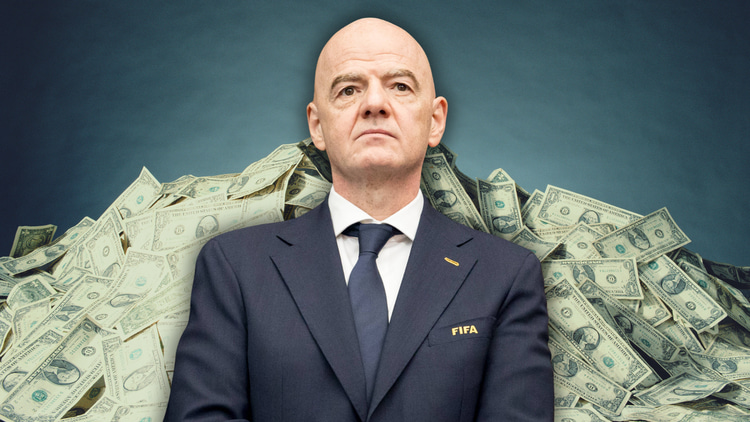
Hellmann believes that FIFA's pricing strategy was in place in order to keep certain sections of fans away, like ultras.
“Their financial interests play a role. It is also a way to keep certain groups away from football that you don’t want to have," the German explained.
"Sometimes I see that also in continental Europe if you don’t want to have ultras or other groups in the stadium.
“I can accept that there’s a calculation on the whole tournament. I’m not a guy who’s against a good and straight financial calculation that also gives long-term benefit to a lot of associations that do not participate — but get the solidarity fee out of the tournament.
“The other point is I’m a bit afraid of the future of modern football if we use a price policy just to select groups who can participate in football.
“I would even introduce safe standing again in these tournaments. We have great experience in Germany with safe standing, because this allows for cheap prices affordable for everybody."
Ultimately, the decision on ticket prices will be FIFA's again, and Hellmann is concerned about a repeat of 2026.
"That’s what I fear, yes,” Hellmann confessed.
“That’s why we should start a discussion about the future price policy.
“Sometimes I know people are rolling with their eyes about the Germans with their social approach to football. But it’s a good approach because then football is always close to people. That is the point. It allows everybody to participate, and that’s what I always say: if you follow an Eintracht Frankfurt match in the stadium, you don’t become a Paris Saint-Germain fan on the sofa.
“If we want to have the young kids really bound to football, this is the most important thing to give them: the live experience.”
Read more about:
FIFA Club World Cup