
-
News
- 19 Sep 2026
From Brazil blowout to Germany's perfect party - A look back at the 2014 World Cup
12 Jun 2026 00:00 CDT |
8 min read
Analysis

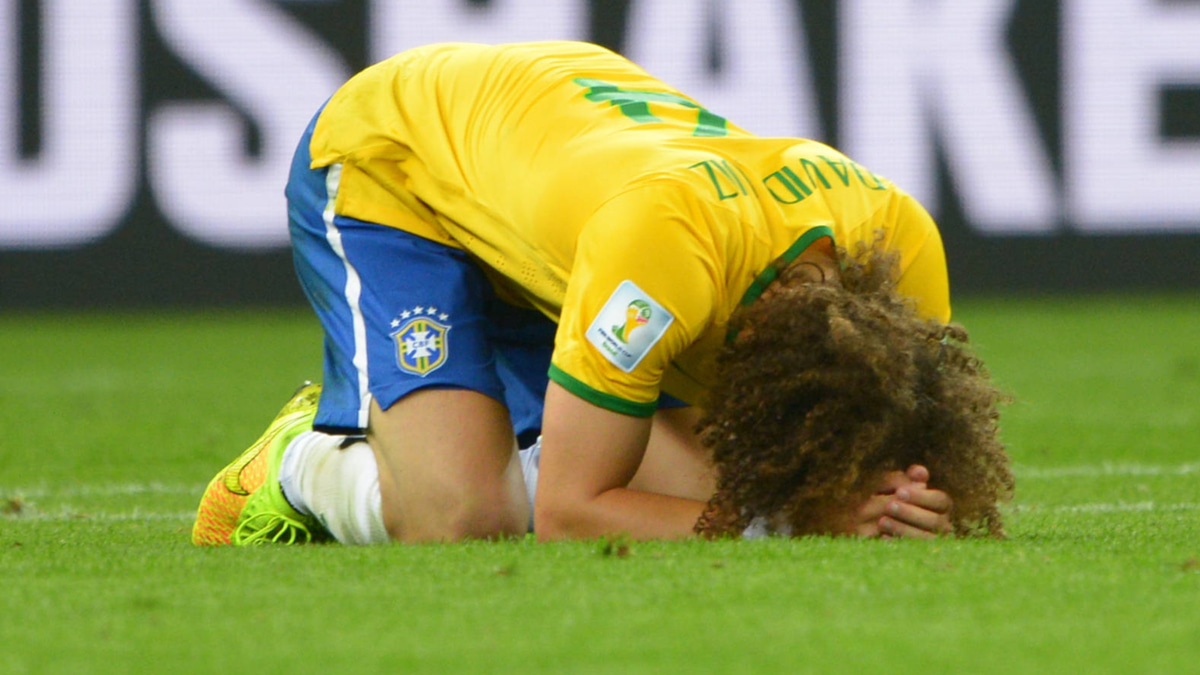
Since 1950, it seemed inconceivable that there could ever be a surprise as great as that when a job lot of part-time USA footballers beat an England team studded with stars 1-0 in Belo Horizonte, on what was a bumpy pitch in a ramshackle stadium. But in that same city, albeit in a huge imposing arena, came a surprise as great, if not greater, as Germany thrashed Brazil 7-1.
How good then were Germany? How bad were Brazil? I’d suggest that a good deal of it was Brazil manager “Big Phil” Scolari’s fault, though the absence in defence of Thiago Silva – would he have let David Luiz run riot? – and Neymar in attack was crucial.
When the smoke clears, I think it will be realised that this was not one of the great World Cups. Were it not for the decisive presence of Lionel Messi, you might say that once Neymar was so shamefully kneed out of action it almost became a question of Hamlet without the Prince.
Neymar, before his injury after that appalling foul by Colombia’s Juan Zuniga in the quarter-finals, had been extremely important to a team which played virtually without a centre-forward. Poor, pedestrian Fred.
What happened to the great Brazilian tradition of centre-forwards?
Go back to the 1938 World Cup in France and there was little Leonidas, with his famous bicycle-kick, who was top scorer in that tournament. In 1950, there was Ademir at the centre of a devastating attacking trio and the scorer of nine goals. When Brazil won the World Cup in Sweden in 1958 their attack, as again in 1962, was led by the incisive and quick Vava, with the young Jose “Mazzola” Altafini a precocious alternative. More recently there was the dynamic Romario, followed by the powerful, formidable Ronaldo.
If Brazil relied so heavily on Neymar, so eternal rivals Argentina were even more deeply indebted to Messi. This gloriously elusive player scored and set up vital goals. What would a largely modest Argentina team have been without him?
Brian Glanville
THE PERFECT ENDING
Germany’s success provided a fitting end to a wonderful tournament in Brazil
- “Te German fans were in no rush to leave the Maracana. An hour earlier, Mario Gotze’s goal had won a fourth World Cup for Germany. They were not leaving until they had savoured every last drop of victory.
Players joined supporters in joyful celebrations that epitomised the unity of their squad. It was another triumph for the World Cup’s most consistently successful nation. Brazil may have won more trophies, but Germany now have a quartet of cups, as well as a record 14 appearances in semi-finals. Brazil, by contrast, have contested nine semis.
The final had pitted individual brilliance in the form of Lionel Messi against the collective power of Germany; the tournament’s most talented individual against its strongest team. The great faultline of top-level football had been clearly drawn.
In the end, Argentina produced their best performance of the tournament but they lacked the killer touch when they needed it most. Germany’s deep squad proved too strong. Two substitutes combined for the decisive goal, with Andre Schurrle providing the cross for Gotze’s electric finish.
Gotze was the hero of the night, but it was a victory obtained through old-fashioned virtues of guts and determination. Nobody epitomised that more than Bastian Schweinsteiger, his face marked with blood after a clash with Sergio Aguero.
“If anyone deserves it then it’s this team with Lahm, Schweinsteiger, Mertesacker, Podolski, Klose,” Joachim Low said.
Germany’s squad was packed full of big personalities but nobody was bigger than the team itself. Manuel Neuer was more than a goalkeeper, often operating as a third centre-back.
Mats Hummels and Jerome Boateng proved a solid centre-back partnership in the knockout stages after Low had moved Philipp Lahm back to right-back from the quarter-finals onwards. On the other flank, Benedikt Howedes excelled despite being played out of his usual central position.
Sami Khedira made a miraculous recovery from a knee injury and was exceptional alongside Schweinsteiger in the semi-final demolition of Brazil. Khedira’s injury in the final warm-up would have derailed lesser teams, but Germany were able to re-jig their resources. Even when Christoph Kramer, making his first competitive start, was forced off with concussion after half an hour, Toni Kroos dropped into a deeper midfield role with substitute Schurrle providing more attacking bite.
Kroos came of age during the tournament. Mesut Ozil was quietly effective. Thomas Muller was the silent assassin, scoring a hat-trick against Portugal. Miroslav Klose, the veteran of the squad by some distance, eclipsed Ronaldo’s 15 goals as the World Cup’s all-time highest scorer with his strike against Brazil. The striker was originally restricted to cameo appearances, with Gotze preferred in a “false nine” position. But Low demonstrated his ability to adapt formations by bringing in the 36-year-old Klose as a conventional centre-forward in the latter stages of the knockout phase.
For Low and the German football federation, victory at the Maracana was the culmination of a process that began a decade ago. Germany’s successive failures at the European Championship – failing to win a single game in 2000 or 2004 – prompted a thorough re-think of German football structures. Money was invested in youth development, with the full co-operation of Bundesliga clubs.
Germany’s line-up against Brazil in the semi-final included six players who won the 2009 European Under-21 Championship: Neuer, Howedes, Boateng, Hummels, Khedira, Ozil. The ability to integrate young players has been key to their success. So has the ability to respond to changes in football’s tactical landscape.
While Germany have adapted, so Brazil have stagnated. Luiz Felipe Scolari won the 2002 World Cup because he found a tactical template that allowed Ronaldo, Ronaldinho and Rivaldo to thrive in the same team.
Twelve years later, Scolari tried to create a system that would get the best from Neymar. But when the music stopped and Brazil’s poster boy was injured, a team built around a static target man and midfield destroyers was woefully exposed.
Germany’s demolition of Brazil in Belo Horizonte was dazzling in its ruthlessness. Technically superior on every level, in movement, touch and thought, Low’s men highlighted the importance of mental strength at the highest level of the game. Brazil tried to ride a wave of national emotion as they sought a sixth World Cup victory. The tears shed by Julio Cesar and David Luiz may have galvanised the public, but they also exposed the emotional fragility at the heart of the squad.
Luiz, captain in the absence of Thiago Silva, and Cesar had held aloft a Neymar shirt during the singing of the national anthem before the semi-final. But such actions only highlighted Brazil’s dependence on their star player and their subsequent weakness without him. Dunga, the former captain and coach, criticised the action for placing unnecessary strain on the players.
In contrast, Germany’s players waited until after their final victory before celebrating with a shirt in honour of Marco Reus, the Borussia Dortmund winger who was injured on the eve of the tournament. A time and a place for everything.
When it came to mental pressure Lionel Messi showed that he could cope. He turned 27 in Brazil and was named Player of the Tournament, but he will be 31 at the next World Cup and probably missed Argentina’s best chance at the World Cup for a generation. Nonetheless, Argentina coach Alejandro Sabella defended his captain, saying: “As for his reputation, he is in that pantheon. But he was there before. He has been there for quite some time.”
We were fortunate that Messi made it to the final at all. Neymar was the high-profile casualty of a brutal foul by Colombia’s Juan Zuniga in the quarter-final, even if Brazil’s players were also guilty of systematic, rotation fouling of six-goal Golden Boot winner James Rodriguez in that same match. Almost every game contained an incident where a yellow card should have been issued, but was not.
By default, referees contributed to greater attacking play. The 48 group matches featured 136 goals, an average of 2.83 – way up on 2010 and the highest since 1970. In total, 171 goals, a joint-record with 1998 and far more than the 145 in 2010.
So how to explain the change? We had more goalkeeping mistakes (step forward Spain’s Iker Casillas) and poor defending from set-pieces (Italy’s opener against England). There were a lot of early goals, forcing teams into earlier-than-planned changes of formation. The Brazuca ball was a clear improvement on the Jabulani from 2010. Players had more confidence that the Brazuca would not swerve out of control, as the Jabulani did, and so could shoot with greater confidence.
The crowds, too, played their part. In South Africa, the vuvuzelas deflated the atmosphere at stadiums. Spectators in Brazil expected to be entertained and applauded attacking play.
There was no obvious plan to promote greater attacking football. It just happened. Indeed, this was the accidental World Cup, the DIY Mundial. Despite warnings beforehand that things would not be ready everything worked, more or less. FIFA got away with things through luck, rather than judgement.
South American supporters ignored warnings from FIFA not to visit Brazil without hotel bookings and travel reservations. Thousands jumped in their cars and camper vans, drove hundreds of miles and stayed in improvised campsites far away from FIFA’s controlling gaze. The corporate commercial yardstick which FIFA applies to all its activities was ignored by the supporters, who provided the colour and personality that previous tournaments have lacked.
All of which made FIFA’s folly in taking the World Cup to Qatar in 2022 look all the more ridiculous. The 2014 finals were an outstanding success because they took place in a country where football is the lifeblood of the people.
After holding the tournament in South Africa in 2010, FIFA believed it could take the World Cup anywhere in the world. But Brazil have shown the value of hosting the World Cup in a traditional football nation.
Just ask the German supporters celebrating in the Maracana.
By Gavin Hamilton
Read more about:
FIFA Club World Cup