
-
News
What was the world like when Arsenal last won back-to-back titles?
4 min read
News

Arsenal finally won their long-awaited Premier League title in 2026, having previously emerged as champions of the top flight in 2004.
Mikel Arteta's men fought off fierce competition from Manchester City to win the title in Emphatic fashion, seven points clear of Pep Guardiola and his players.
With the likes of Chelsea, Liverpool, Tottenham and Manchester City all adapting to new or relatively new managers in 2026/27, Arsenal are the favourites to reclaim the Premier League this season and started the campaign off with a bang on Friday evening as they swept Coventry aside with an impressive 3-0 win at the Emirates.
Kai Havertz, Bukayo Saka and Martin Odegaard all got on the scoresheet.
Man Utd, Liverpool and Tottenham all failed to win over the weekend, while Man City were unconvincing in a late comeback win against Bournemouth.
Arsenal's continuity will be key in retaining the title and they undoubtedly look the best-equipped club to win in 2026/27.
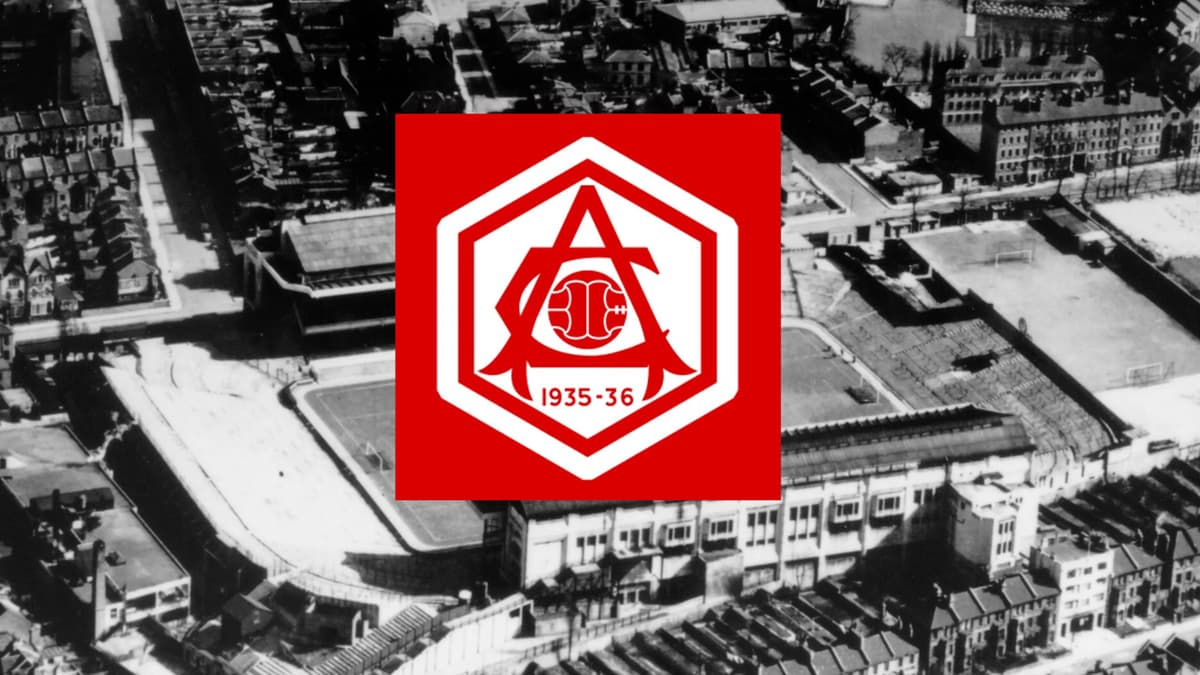
If they were to achieve that, they would match a record that has been in place since before the Second World War, as the last time Arsenal won back-to-back English titles was in 1935.
In fact, they won three titles in a row from 1933 to 1935.
Here are some notable events from the year Arsenal last managed to defend their title...
Modern Monopoly is released
In 1935, Parker Brothers bought the rights to Monopoly from Charles Darrow, who had been making and selling his own version of the game. The company saw how popular it had become and purchased the rights in March 1935.
Parker Brothers then began mass-producing a modernised version of the game, selling around 250,000 copies by Christmas that year.
Hitler violates the Treaty of Versailles
In March of 1935, Adolf Hitler openly announced that Germany was reintroducing compulsory military service (conscription). This directly violated the Treaty of Versailles, which had limited Germany's army to 100,000 volunteer soldiers and banned conscription. Hitler also announced plans to expand the German army to around 550,000 men, while Germany had already begun secretly rebuilding its military.
This was an important step in Hitler's challenge to the Treaty of Versailles and his wider policy of rearming Germany.
Nuremberg Laws introduced
In September of 1935, Nazi Germany introduced the Nuremberg Laws, announced by Hitler at the Nazi Party rally in Nuremberg. The laws consisted mainly of the Reich Citizenship Law and the Law for the Protection of German Blood and German Honour. The first removed German Jews from full citizenship and denied them political rights, while the second banned marriages and sexual relationships between Jews and people considered “German or related blood.”
The laws were significant because they turned Nazi antisemitism and racist ideology into official German law. Instead of defining Jewish identity through religion, the Nazis classified people according to their ancestry and grandparents. This created a legal system that isolated Jews from wider German society and provided the foundation for further anti-Jewish restrictions and persecution in the following years.
Movies released
1935 was a particularly important year for cinema, with several films that are still considered classics today. The 39 Steps, directed by Alfred Hitchcock, was a British thriller about a man who becomes involved in an international spy conspiracy and has to escape while trying to prove his innocence. Another major film was Bride of Frankenstein, a horror sequel starring Boris Karloff as Frankenstein's monster.
Other major releases included Mutiny on the Bounty, starring Clark Gable and Charles Laughton, which dramatised the famous 1789 mutiny aboard HMS Bounty. Top Hat, starring Fred Astaire and Ginger Rogers, was a hugely popular musical comedy featuring elaborate dance numbers. The Marx Brothers also released A Night at the Opera, a comedy built around their chaotic humour and musical performances.
Celebrity births
Several famous people were born in 1935, including Elvis Presley, one of the most influential rock and roll musicians; Julie Andrews, famous for Mary Poppins and The Sound of Music; and Judi Dench, one of Britain's most respected actresses.
Other notable people born that year included Luciano Pavarotti, one of the world's greatest opera singers, Donald Sutherland, a famous Canadian actor, and Alain Delon, a major French film star. Mahathir Mohamad, who later became Prime Minister of Malaysia, was also born in 1935.
Owens wins gold
In May 1935, American athlete Jesse Owens had one of the greatest performances in athletics history at the Big Ten Championships in Ann Arbour, Michigan. In less than an hour, he set five world records and equalled another, competing in events including the long jump, 220-yard dash, 220-yard low hurdles and 100-yard dash. His long jump of 26 feet 8¼ inches (8.13 metres) was particularly remarkable, as it remained a world record for 25 years.
Owens' performance made him an international sporting sensation and showed that he was one of the world's best athletes, just one year before the 1936 Berlin Olympics, where he would win four gold medals at a time when Nazi Germany was promoting racist ideologies.
Read more about:
Premier League
Arsenal