-
News
EXCLUSIVE: Expert explains why demand for soccer match tickets has skyrocketed
3 min read

News

Demand for soccer match tickets continues to grow, with supporters eager to watch their favourite teams in person despite rising prices and fierce competition for seats.
From Premier League fixtures to major European nights, to the FIFA World Cup, getting a ticket can be increasingly difficult, particularly for high-profile games. As clubs attract global audiences and stadiums struggle to keep up with demand, questions are being raised about affordability, availability and whether ordinary fans are being priced out of the game.
It's not just football, either. Look at Golf's Open Championship. Only a decade ago, one simply had to go on the official website and buy a ticket. Now, golf fans need to apply for tickets via a ballot and that's the same situation for numerous large events in entertainment in sport.
This increased demand has led to skyrocketing prices.
To try and make sense of it all, FootballTransfers sat down for an exclusive interview with ticketing expert Jim McCarthy, the owner of Impresario, a company that aims to help organisations maximise revenue by ensuring as many tickets as possible are sold for events. This includes work with football clubs.
When asked about the phenomenon of the expanding interest in live event participation, Jim replied:
"Demand has been growing for a long time. An interesting starting point is Napster.
"In 1999, when Napster launched, the music industry’s business model was based on selling CDs. CDs were incredibly profitable. People paid fifteen or twenty dollars—or perhaps ten to fifteen pounds—for a CD that might contain only two or three songs they really wanted.
"That meant bands and record labels could treat concerts almost like promotional appearances for the CD. A band would come to town, play one show, keep the ticket price relatively low, and use the concert to encourage people to buy the album.
"The theory was that if you sold out quickly by keeping the price low and limiting the number of shows, people who couldn’t get tickets would feel envious and then buy the CD instead.
"Napster and everything that followed caused that model to collapse. Physical CD sales dropped dramatically over about ten years, and there wasn’t really anything to replace that income.
"Musicians realised they had to make money on the road because live events were less vulnerable to technology. Over time, they also realised that traditional concert prices had been far too low. People valued those experiences much more highly than they had been paying for them."
Napster was a music file-sharing service launched in 1999 that allowed users to download songs for free. It became hugely popular but faced legal action from artists and record labels over copyright infringement, forcing it to shut down in 2001. Despite its downfall, Napster helped pave the way for modern music streaming services like Spotify.
Jim believes that the pandemic was a major factor in the increased interest in live event attendance as people spent so long indoors with no human interaction. He thinks young people in particular are desperate for live experiences in a world where we are perennially online.
"After the pandemic, I think we saw an acceleration of that trend," he explains.
"Our lives became more virtual. We spent more time staring at screens, attending virtual meetings, working from home, and doom-scrolling for entertainment. We also spent a year and a half at home.
"As a result, real-life experiences became more important and more scarce. Concerts and sporting events became ways for people to reconnect with reality.
"Reality became more of a luxury good, in a sense. I’m seeing more young people looking for ways to make reality a bigger part of their lives: using film cameras, buying vinyl records, joining running clubs, and looking for ways to connect with other people in the real world.
"Concerts, sports, and other live events all benefit from that trend."
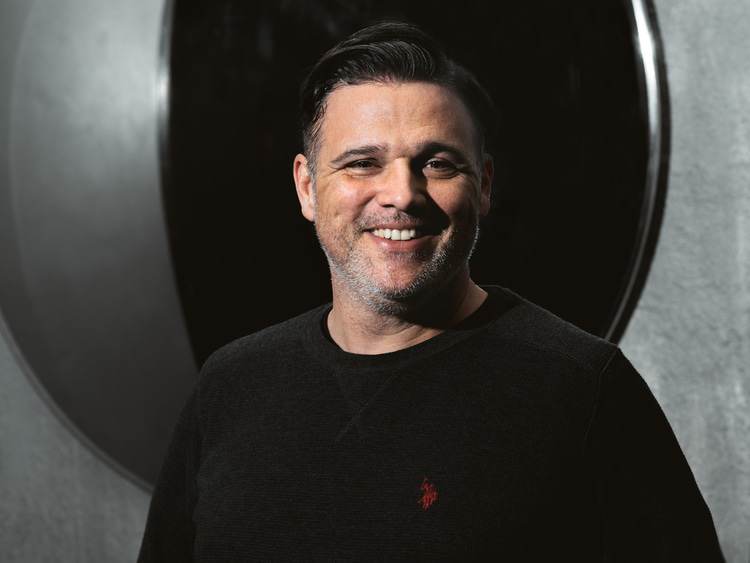
Jim McCarthy is the founder of Impresario Strategic Growth Service. The co-founder and former CEO of Goldstar and Stellar Live, Jim is the world’s leading authority on audience development for live events organisations. He and his team have supported more than 2,000,000 live events and delivered tens of millions of customers to partners and clients.
His work at Impresario Strategic Growth Service focuses that expertise on professional football clubs around the world, supporting their revenue and audience growth through the Matchday Multiplier program.
Jim also serves on the Advisory Board of the Rose Bowl Institute, the Board of Trustees at the Pasadena Playhouse and is an Expert-in-Residence at the Greif Center for Entrepreneurship at the University of Southern California. He graduated from Harvard University and earned an MBA from the Anderson School at UCLA.
Read more about:
Premier League