
-
News
- 13 minutes ago
FIFA under fire for VAR red card as major World Cup error confirmed
28 Jul 2026 09:30 CDT |
4 min read
News

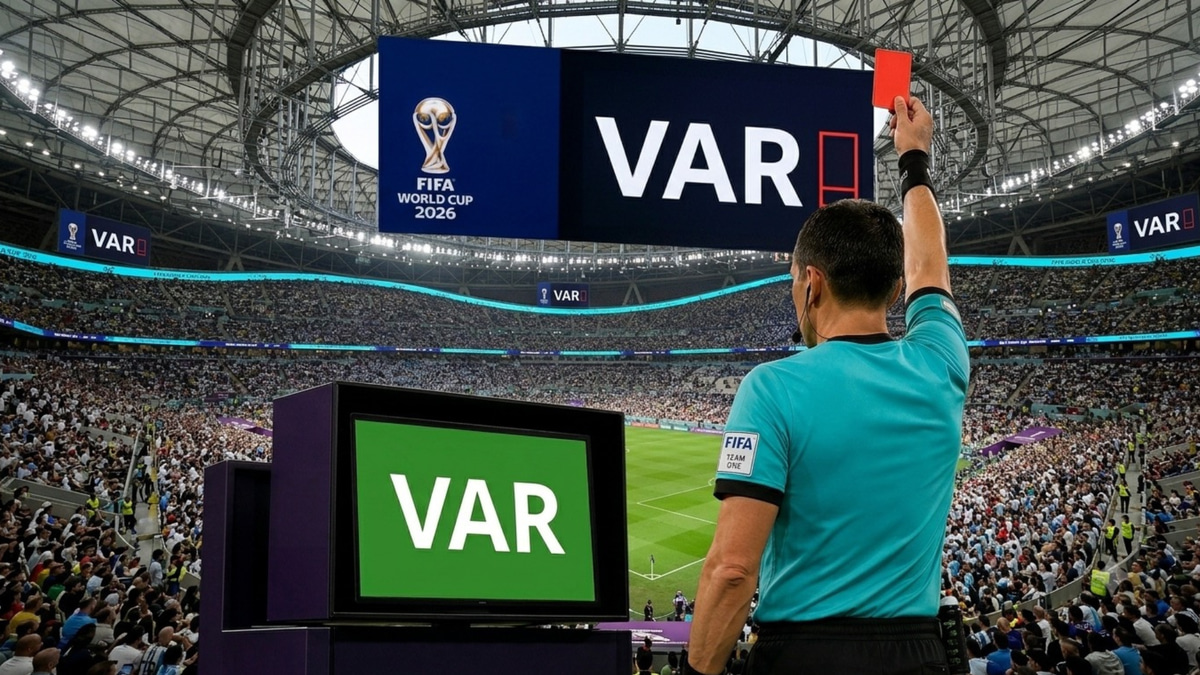
The International Football Association Board have confirmed that VAR should only be used for blatantly incorrect decisions and that one particular major World Cup decision was wrong.
There was controversy in the World Cup quarter-final between Argentina and Switzerland when Breel Embolo was shown a second yellow card for simulation.
Initially, Leandro Paredes was booked for a challenge on the Switzerland striker but VAR intervened and told the referee to punish the forward for diving. It was explained away as using the "mistaken identity" ruling that was put in place before the World Cup, but IFAB have confirmed this was not the proper use of that rule.
"A yellow card (caution) which is not a second yellow card can only be reviewed to identify the player who committed the offence that was penalised; the offence itself cannot be reviewed/changed." the organisation said in an open statement.
"The use of the mistaken identity clause to deal with simulation during the FIFA World Cup 2026 was well received and will be included in the detailed review of the VAR protocol announced in circular no. 32. However, it may not be used as such until that review is concluded."
The suggestion from IFAB is that using VAR to punish simulation instead of the person doing the tackle may eventually be used, but not at the moment.
What was unsaid can now be said.
This was always case but IFAB did not come out against during WC & understanding was new application going to be applied consistently for rest tournament.
Many liked result in Reams/Almirón.
Everyone hated Swiss Embolo 2nd YC
Clarity now. https://t.co/pF2wb9SVN4— Christina Unkel (@ChristinaUnkel) July 27, 2026
When VAR was added to the laws of the game in 2018 by IFAB, its "philosophy" was "minimum interference - maximum benefit", but at a recent meeting between chief refereeing officers from all 55 European national football associations and UEFA refereeing officials, the determination was that VAR had gone beyond its original scope.
"It was reiterated that, in accordance with protocol, VAR must only intervene in situations of 'clear and obvious' error, ie. when a referee decision is blatantly incorrect or when the referee has missed a clear incident," UEFA said in a statement.
"VAR is not meant to re-referee the game, it is an essential support to the referees, who must remain at the centre of all decision-making.
"Lengthy, microscoping reviews are often a symptom revealing that the decision on the field was not clearly and obviously incorrect, and should therefore be limited."
Members fully endorsed new pace-of-play regulations. The updates target unnecessary delays by timing goal-kicks, throw-ins, and substitutions, as well as cracking down on goalkeeper tactical timeouts and injury stoppages.
75% of fans don't want VAR
According to a survey by the Football Supporters Association, 75.5% of fans answered "No" when asked, "When taking all things into consideration, do you support the use of VAR in football?"
Eighty-six per cent expressed concerns about VAR's powers being increased further.
The FSA found that:
- More than nine in ten fans (91.7%) said VAR had removed the spontaneous joy of goal celebrations.
- Only 3.3% of fans stated that the matchgoing experience is better with VAR.
- The majority (58%) of fans wanted to retain the in-stadium announcements from referees.
- A hypothetical challenge system, whereby VAR interventions would be limited per game, had the support of almost half (47.2%) of supporters.
- Only one in five fans (20.8%) said they backed the expansion of VAR to check if corners had been correctly awarded.
“These findings back up the FSA’s previous survey in 2021, where fans expressed misgivings about the introduction of VAR," The FSA’s Premier League network manager Thomas Concannon said.
“The vast majority are reporting the same concerns five years on – the loss of spontaneity when celebrating goals, and an overall worsening of the matchgoing experience.
“We have shared the survey results with the Premier League and PGMO, and look forward to discussing its findings with them.”
Read more about:
Premier League