
-
News
- 9 hours ago
What is 'biohacking' and why are footballers doing it?
28 Mar 2026 12:01 CDT |
6 min read
News

Footballers are some of the most conditioned athletes on the planet as they strive to get themselves to peak physical fitness to maximise their performances on the pitch.
They are rigorously scheduled throughout the season through training sessions, meal times, what they eat, sleep schedules and even what they do in their spare time.
Players often look for an edge in order to maintain performance levels both on a physical and mental level.
That is why 'biohacking' has emerged as an increasingly popular trend among footballers.
What is biohacking?
Biohacking is an attempt to improve how your body and mind work by making small, intentional changes to your lifestyle. It's often described as 'Do It Yourself' approach to optimising your health.
For a lot of people, it’s just about things like getting better sleep, eating healthier, exercising more effectively, or even tracking habits with apps and wearable devices. Others take it a bit further by experimenting with supplements or different diets to boost energy or focus.
There’s also a more extreme side to biohacking that involves things like implanting technology into the body or experimenting with biology, but that’s much less common and can be risky. Overall, it’s really about taking control of your own health and figuring out what works best for you through a bit of trial and error.
Biohacking: What does it mean for footballers?
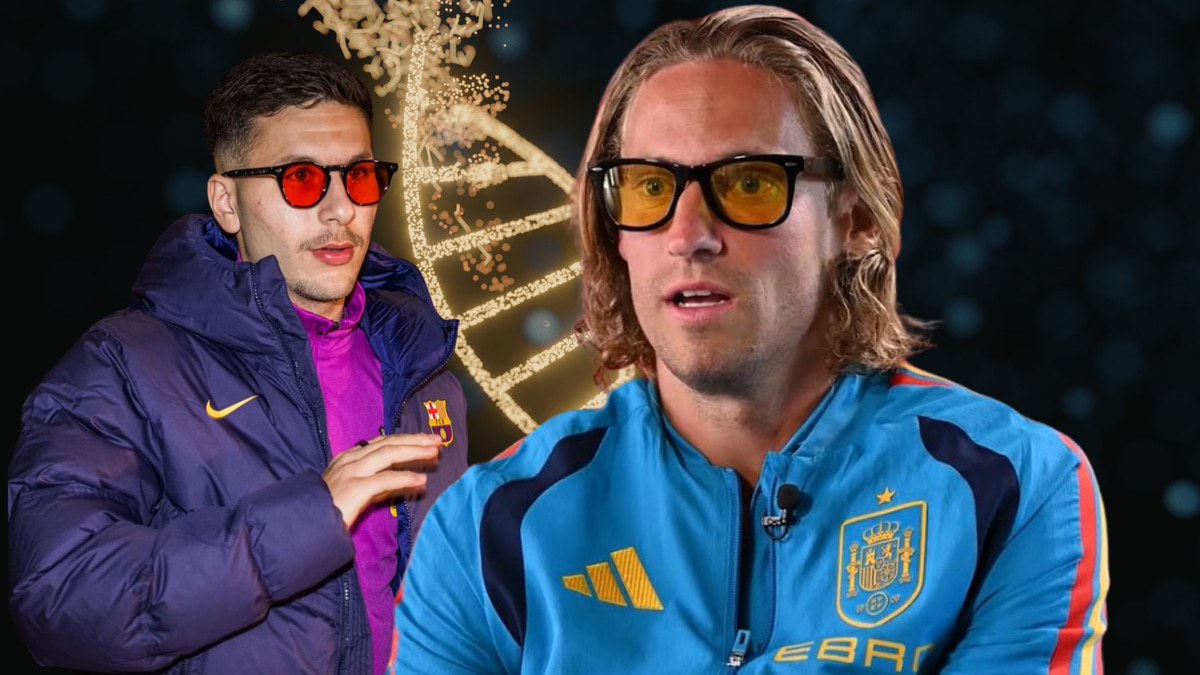
Spain and Atletico Madrid midfielder Marcos Llorente revealed that he undertakes the practice, sparking fresh interest in biohacking.
One of the main ways he does this is by wearing special glasses to block out artificial light.
"I use yellow special glasses during the day when I'm indoors. And at night, if I go out or am exposed to fireworks, I wear glasses with red glass. Why? Because I protect my biology," he said at a press conference.
"Because blue light, outside of its natural context, is toxic. And I don't say it, your mitochondria say it when they stop producing energy as they should. Your retina and skin have receptors that detect light and its colours. Your body uses it to turn on or off essential biological processes.
"If you give him a wrong signal, like a 10pm screen or a white LED spotlight while eating dinner, the body responds wrongly. Period. No debate there."
The Spain international also confirmed that he's on a 'palaeolithic' diet, which includes no processed foods and no dairy, pasta, cereals, bread or rice.
🚨 NEW: Roony Bardghji has joined the 'biohacking' trend, like Marcos Llorente.
This includes sleeping 9–10 hours, avoiding screens before bed, and using blue-light blocking glasses.
The Barça winger also uses ice baths and saunas to improve recovery.
— @sport pic.twitter.com/iiLoVJ8xcC— Barça Universal (@BarcaUniversal) March 28, 2026
It is effectively the diet that hunter-gatherer humans would have had thousands of years ago.
After he received some criticism online for his lifestyle, he hit back and encouraged others to research and potentially try biohacking for their own good.
"I see a lot of people who didn’t understand anything… or maybe they never will. And that’s okay. Not everyone is ready to question what they’ve been taught," he posted on social media.
"Nothing I share is made up. It’s not a ‘personal opinion.’ It’s biology (the real kind). You just have to read it. So if what I say bothers you, take it up with biology.
"I wear glasses with yellow lenses (special ones) during the day when I’m indoors. And at night, if I go out or am exposed to artificial lights, I use glasses with red lenses. Why? Because I’m protecting my biology. Because blue light, outside its natural context (the day), is a toxin. And I’m not the one saying it, your mitochondria say it when they stop producing energy as they should.
"Your retina and your skin have receptors that detect light and its colours. Your body uses it to turn on or off essential biological processes. If you give it the wrong signal, like a screen at 10 p.m. or a white LED bulb while you’re eating dinner, your body responds poorly. Period. There’s no debate there."
Plenty of other footballers like Erling Haaland, Robert Lewandowski and Zlatan Ibrahimovic have discussed similar lifestyles previously, though not to the extremes taken by Llorente.
Even routine self-care like ice baths counts as a form of biohacking as you are taking steps to improve your own recovery.
Most recently, Spanish outlet Sport reported that young Barcelona winger Roony Bardghji has followed in Llorente's footsteps by donning the special glasses.
The term biohacking covers such an expansive spectrum as it could mean as little as exercising, making dietary changes, using fitness trackers to monitor progress, watching stress levels, taking supplements to the extremes of putting microchips under your skin to monitor specific levels inside your body.
Undoubtedly, the most extreme form of biohacking is known as 'Crispr' which involves targeting and modifying one's own DNA.
In an interview with BBC, influencer biohacker Rich Lee discussed why he has attempted Crispr despite its dangers.
"We've got all this genetic engineering knowledge and what I'm backing is the concept of being able to change your genes or get genetic modification like you would get a tattoo," he says.
"I want to see a biologically fluid society where people can just augment these things."
Biohacking advances coming
Luke Robert Mason, director of the Virtual Futures organisation, explained that there is a great deal of excitement around biohacking, but "we are a long way from radically altering the human body in the sorts of ways they evangelise".
"What we see today are the first steps by a brave group of pioneers. Today's reality is a lot more experimental (and painful) than is often communicated to the public.
"There is a lot that can be learned from the outcome of their self-experimentation. Some have even argued that biohackers might increasingly be responsible in helping the advancement of wearables and wellness technologies."
Biohacking, at its core, reflects a human desire to understand, improve, and take ownership of our own bodies and minds. While the tools and techniques may range from simple lifestyle tweaks to cutting-edge technology, the most meaningful changes often come from consistency, discipline and self-awareness.
The FootballTransfers app
Check out FootballTransfers' new app for all of football's big storylines, transfer rumours and exclusive news in one convenient place directly on your mobile device.
The FootballTransfers app is available in the Apple App Store. Download here:
Read more about:
Premier League