
-
News
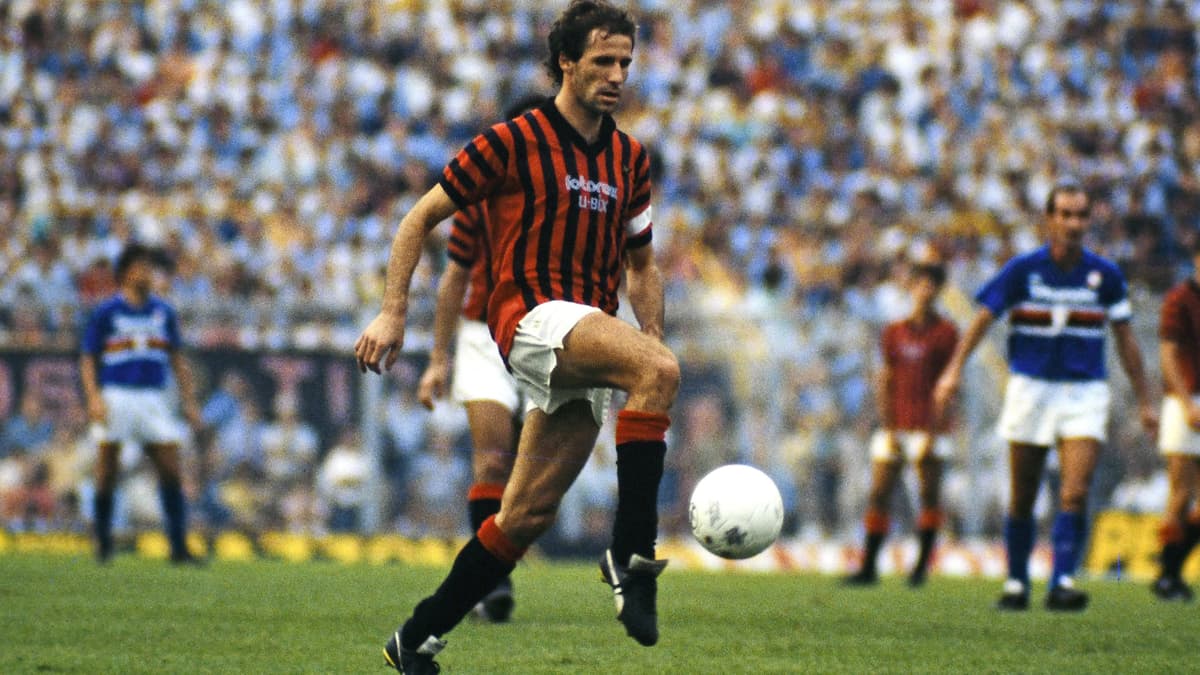
Milan’s cornerstone: How Franco Baresi provided the foundations for Arrigo Sacchi’s great Milan side
4 min read
News

Originally published in the September 2026 edition of World Soccer.
Words by Jonathan Wilson.
When Silvio Berlusconi appointed Arrigo Sacchi to be manager of Milan in 1987 he was taking an enormous risk.
Sacchi had never been a professional player. He had never managed in Serie A. His main achievement to that point had been putting Milan out of the Coppa Italia with Parma. But more than that, he was a revolutionary. Most of Italian football was still based around il gioco all'italiana, a development of catenaccio that involved some zonal marking.
Sacchi went far further. He believed in a pure zonal system, a flat back four and a high offside line with a hard press.
Critics in the media said it couldn't possibly work and when Milan lost their second game of the season at home to Fiorentina, drew with Cesena in their third, and then suffered an away defeat to Sporting Gijon in the UEFA Cup, they seemed vindicated. The first crisis passed but Sacchi was worried he was pushing his players too hard as he drilled them to learn his methods; they had to be persuaded that their positioning was not laid down by ancient custom, some set idea of where the regista or the tornante should go, but was constantly to be renegotiated, defined by four factors: the ball, the space, the team-mate and the opponent.
So Sacchi eased back, only to receive a knock on his office door. It was the team's captain, Franco Baresi. Baresi asked what Sacchi was doing. The players, he said, had to learn the new system so thoroughly that their positioning became instinctive. For Sacchi this was a vital moment: Baresi wasn't just the captain, he had grown to become the moral heart of the team. And if he was on board with the revolution, the rest would follow.
So Sacchi redoubled his efforts and, in a glorious three-year spell, Milan won Serie A and then twice lifted the European Cup. But more than that, they played style of football that thrilled the world and changed the game. Sacchi had been inspired by the Total Football of the Dutch of the early 1970s and is the tactical bridge who carried the ideas to Germany, to Helmut Gross, Wolfgang Frank, Volker Finke, Ralf Rangnick and, ultimately, Jurgen Klopp.
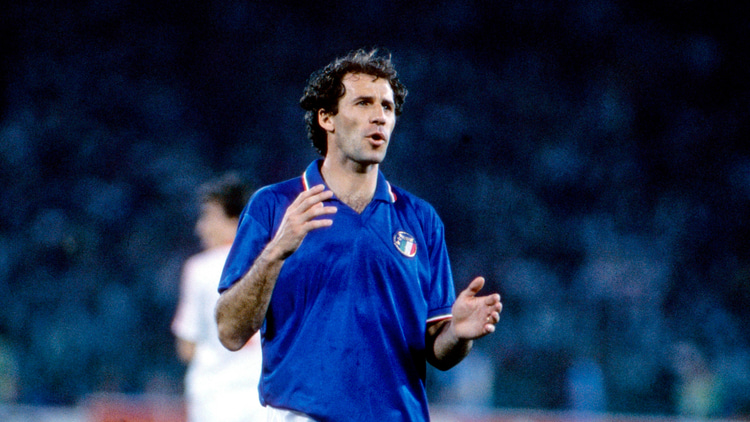
Baresi, who died in July at the age of 66, was key to that. He was an unusual type of defender, one who perhaps benefited from emerging in a country where playing with a libero was the default. It didn't matter that he was only 5ft 9in, which might have counted against him had he been expected to be a man-marker. It wouldn't be true to say he wasn't a physical player because he was quite prepared to nibble around a forward's ankles - Gianfranco Zola, for instance, spoke of the need to soak his feet in iced water after a game against Baresi - but he was not an obviously imposing presence who was going to win every header by dint of his size. His skill was as a reader of the game, forever stepping in front of a forward, holding him off, and then either clipping a ball forward or distributing it sideways.
Asked if he could teach others how to read the game, he shrugged: he had no idea, he said, it just came naturally. That perhaps explains how he made his mark so young. His elder brother was at Internazionale when he went there for a trial aged 14. But Inter were worried about his size and so asked him to come back the following year to see how he'd grown. Irritated, Baresi joined the club he claimed he'd always supported, Milan.
By the age of 18, he was an ever-present as Milan won the league under Nils Liedholm, who had begun to move away from the traditional Italian style. Baresi, with his innate ability to read the game, was ideal for his system.
Sacchi always felt Liedholm didn't go far enough. One of Sacchi's main challenges was persuading celebrity players to sacrifice themselves for the system. "I convinced [Ruud] Gullit and [Marco] Van Basten by telling them that five organised players would beat ten disorganised ones," he said. "And I proved it to them. I took five players: Giovanni Galli in goal, [Mauro] Tassotti, [Paolo] Maldini, [Alessandro] Costacurta and Baresi. They had ten players: Gullit, Van Basten, [Frank] Rijkaard, [Pietro Paolo] Virdis, [Alberico] Evani, [Carlo] Ancelotti, [Angelo] Colombo, [Roberto] Donadoni, [Christian] Lantignotti and [Graziano] Mannari.
"They had 15 minutes to score against my five players. The only rule was that if we won possession or they lost the ball, they had to start over from ten metres inside their own half. I did this all the time and they never scored. Not once."
Baresi and his ability to organise and to anticipate danger were key to that. He was central to the Sacchi revolution not only because of his own ability, but because the example he set and his capacity to inspire others.