
-
News
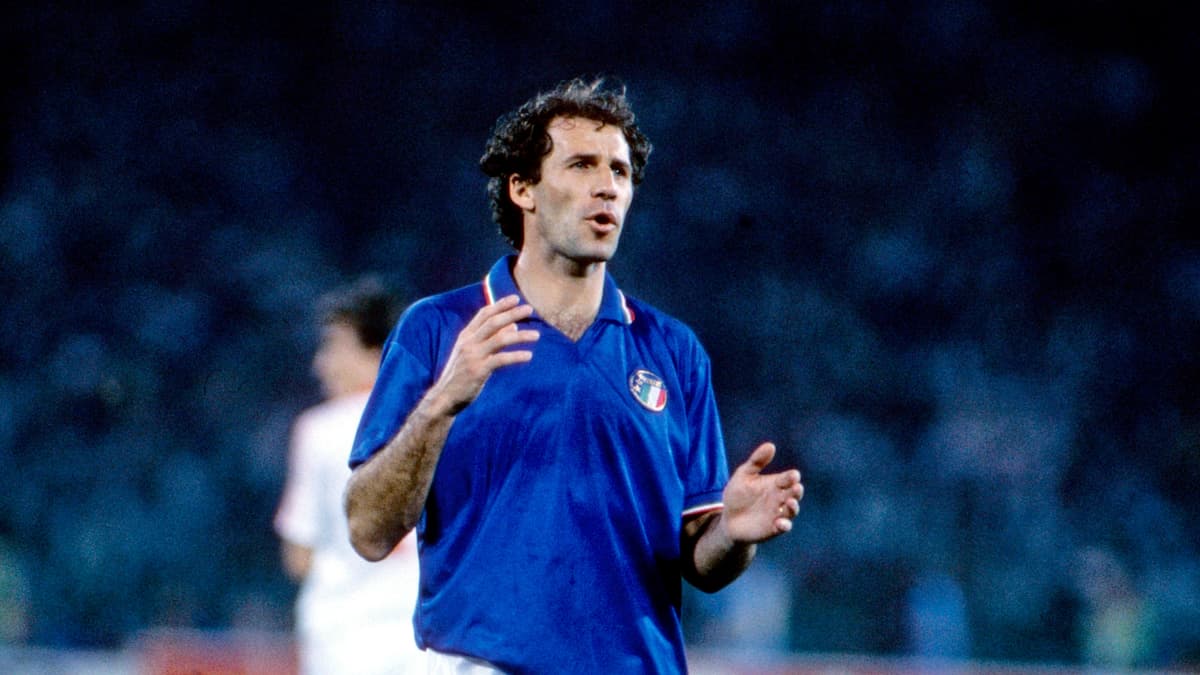
Franco Baresi tribute - the "Little One" that proved a giant on the football field
3 min read
Analysis

Franco Baresi’s death was mourned not only by Italian football but around the world
Words by Keir Radnedge
Ruud Gullit and Marco van Basten provided the attacking panache for the magnificent Milan fashioned by Arrigo Sacchi and enhanced by Fabio Capello, but the cornerstone was Franco Baresi.
When Nils Liedholm first saw the teenage Baresi in the youth set-up he had no doubt: “The new Beckenbauer is coming from our Primavera.”
Baresi may have lacked the imaginative finesse of Beckenbauer but he was the better defender, sure-footed in the last-ditch tackles and interceptions and surprisingly commanding in the air despite standing only 5ft 9in.
He was not a shouter, quite the opposite. But in his own way, Baresi left neither team-mates nor opponents in doubt about his opinions on the pitch and in the dressing room. If ever a man may be categorised as leading by example, then Baresi was that man.
Baresi’s 719 appearances for his only club (33 goals, including one hat-trick) accrued 17 major trophies: six Serie A titles, three European Cups/Champions Leagues, two Intercontinental Cups, two European Super Cups and four Italian Super Cups. He was also a World Cup winner – although his misadventure in the 1994 final has long overshadowed his membership, albeit non-playing, of Enzo Bearzot’s triumphant squad in Spain in 1982.
That 1994 World Cup remained his enduring regret. Baresi recovered from knee surgery in 25 days, in time for the final against Brazil but then missed his penalty (as would Roberto Baggio) in the shootout defeat. Ultimately he ended his career with one goal in 81 Azzurri caps.
Franchino and elder brother Giuseppe (Beppe) played their first organised football for a local oratory team in Travagliato, 50 miles east of Milan. The boys were only 14 and 16 when they were orphaned after the deaths of first their mother then their father. Coach Guido Settembrino, keeping a promise to their mother, took them to Internazionale for trials.
Inter took Beppe but thought Franco too small, unlike Milan. They nicknamed him “Piscinin” (Little One) but he proved a giant in spending 15 years of his 20-year senior career as captain.
Swedish maestro Liedholm handed Baresi his Serie A debut, not yet 18, against Verona on April 23, 1978. The following season his talents earned him a starting role in defensive midfield and he remained loyal, despite lucrative offers, through the turbulence of relegation in 1980 and 1982.
Everything changed for the better in 1987 after the club’s rescue by Silvio Berlusconi and subsequent appointment of Sacchi as coach.
Sacchi transformed Baresi into a new-age sweeper. He commanded a rock-like backline and offside trap featuring a mixture of Mauro Tassotti, Filippo Galli, Alessandro Costacurta and Paolo Maldini. Baresi also took opponents off-balance by his bursts forward to help manoeuvre attacks out of midfield. They all went marching on after Capello succeeded Sacchi in 1991; in 1993-94 Milan conceded a record low 15 goals in 34 league games.
“Defenders rarely win individual prizes but Baresi came close in 1989 as runner-up to Van Basten for European Footballer of the Year. Later Baresi recalled: “Not a problem, just finishing behind Van Basten was like beating him because in those years he was like Messi.”
Milan retired Baresi’s No.6 shirt after his exit in 1997. He had a brief three months in English football on the coaching staff of Jean Tigana at Fulham before being welcomed back with open arms at Milan. In 2000, he was hailed Footballer of the Century by the Italian players’ association and Milan fans voted him Milanista of the Century, ahead of Gianni Rivera, Gunnar Nordahl and Liedholm.
As Berlusconi once aptly said of Baresi: “The greatest, a fantastic player, a man of incredible honesty, loved and respected by everyone, even his opponents.”
Read more about:
Serie A