
-
Analysis
- 17 hours ago
Sullivan, Gozo, Albert: Predicting the USMNT's squad for the 2030 World Cup
Updated: 20 Jul 2026 15:45 CDT |
7 min read

Analysis

The United States' second World Cup on home soil was a mixed bag.
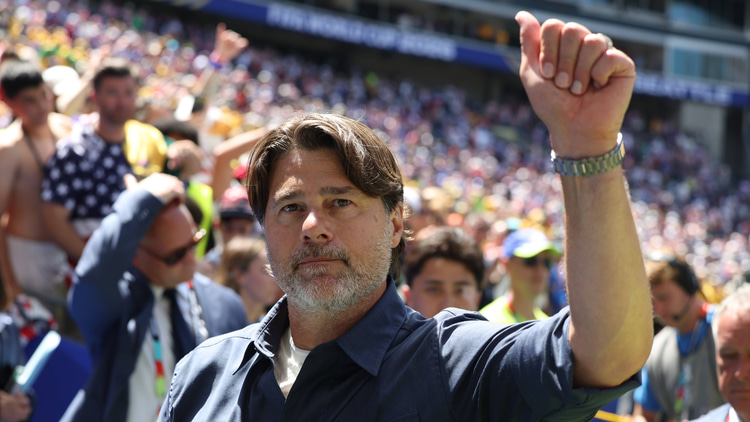
The vibes weren't particularly great heading into the tournament. USMNT boss Mauricio Pochettino appeared to be unsure of his best team and bizarrely experimented against Belgium and Portugal in March, resulting in heavy defeats.
However, once the World Cup actually started, it was as if a switch had been flipped. The US put on a scintillating show against Paraguay in their tournament opener and ran out thoroughly deserved 4-1 victors.
A professional performance against Australia followed, before a heavily rotated side lost 3-2 to Turkey in a dead rubber. In the newly-created round of 32, the US impressed with a mature display against Bosnia and Herzegovina.
The general American public appeared to be finally coming around to soccer, only for much of the USMNT's gains to be undone in the round of 16 against Belgium, when Pochettino's men, overawed by the occasion and the political fallout of Folarin Balogun's red card, simply didn't turn up.
What next for the USMNT?
2026 was the best chance to see the US become a soccer country. A World Cup on home soil and a golden generation coached by a world-class manager looked to be a recipe for success. But they squandered their chance. Or did they?
Was this really a golden generation? Similar to England, there is an argument to be made that this is actually only just the start. There is so much exciting talent coming through that it's hard to feel too down about the US's future prospects.
Several of the team's current key players will still be around in 2030, and their ceiling will hopefully be raised by even better up-and-coming talent around them.
The current youngsters emerging in Major League Soccer and in Europe are showing signs of being able to significantly increase the US's level in the future. Of course, player development isn't linear.
Alex Freeman has shown that you can come out of nowhere and become a Champions League-level player in the space of 12 months, while Gio Reyna is a great example of a promising career ruined by injuries.
Trying to predict the US's possible 26-man squad for the 2030 World Cup is therefore an exercise in futility - but we'll do it anyway!
Goalkeepers
Chris Brady, Julian Eyestone, Diego Kochen
*2026 holdovers in italics
The goalkeeper department is arguably the hardest one to project because the US's tradition of elite goalkeepers has been broken in recent years. There are no longer any Tim Howards or Brad Guzans.
Matt Turner and Matt Freese are good shot-stoppers, but neither is a really elite option, and it will be tough for the latter to bounce back from his disastrous mistake against Belgium, even if he will only be 31 in 2030.
There is also the problem that goalkeepers, perhaps more than outfield players, can emerge completely out of the blue. And they can also fall by the wayside just as rapidly because there is only one guy who can get on the field.
Just look at Gabriel Slonina. He was the biggest goalkeeper talent in the US pool during his time at the Chicago Fire. Then he went to Chelsea, where he hasn't played at all, and now he's not even a serious consideration for a national team spot - despite being just 22.
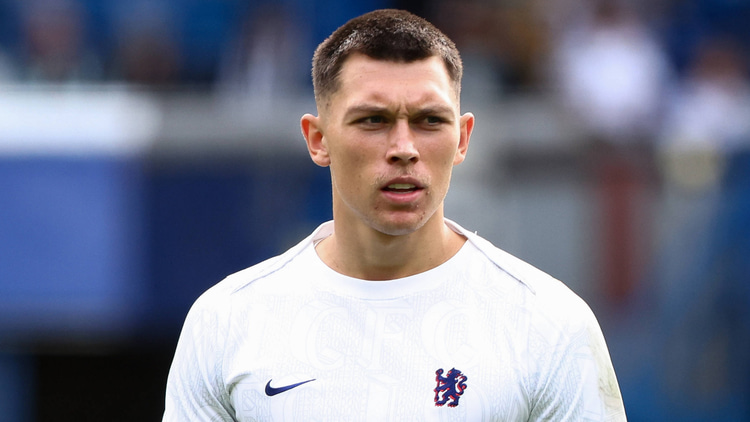
Our only holdover from the 2026 squad is Chris Brady. The Chicago Fire star will be 26 in 2030, and he could conceivably make the No.1 position his own in the next cycle if he can manage to displace Freese.
Additionally, we went for Diego Kochen and Julian Eyestone. Both are highly-rated youngsters, but they need to play in order to enter the national team frame.
Kochen, who is on the books at Barcelona and is also eligible for Peru and Venezuela, has just joined Lyngby in Denmark in order to get regular minutes under his belt. Eyestone, meanwhile, has so far only played for Brentford's reserve teams.
Defenders
Alex Freeman, Antonee Robinson, Chris Richards, Sergino Dest, Josh Wynder, Neil Pierre, Noahkai Banks, Peyton Miller, Zavier Gozo
The US is struggling to produce high-level centre-backs, so one can only hope that some players from the upcoming crop live up to their potential. Wynder, Banks and Pierre will be 25, 23 and 22, respectively, in 2030.
Banks and Pierre, in particular, are hugely exciting prospects. Of course, their inclusion here is predicated on US Soccer convincing them to declare for the USMNT. This should be easier to do with Pierre, who is eligible for Haiti, than Banks, who grew up in Germany.
The latter, currently at Augsburg in the Bundesliga, could potentially have made the 2026 roster, but he did not want to rush into a decision over his international allegiance. He has dropped hints that he could choose the US, but the opportunity to now work with Jurgen Klopp for Germany, who are themselves not blessed with many elite centre-backs, must be appealing.

Wynder's chances of becoming a USMNT regular currently look slim because he has failed to break into Benfica's first team. However, if he leaves the club and plays regularly, he could still fulfil the huge potential he showed at Louisville City in the USL Championship.
As for the possible holdovers, Alex Freeman and Chris Richards will almost certainly make the 2030 roster (if fit), while Sergino Dest and Antonee Robinson are perhaps more up in the air. The former didn't have a great 2026 tournament, and Zavier Gozo, who is currently starring for Real Salt Lake, is coming for his job, although he could conceivably also transition to being a full-time winger.
Robinson, meanwhile, will be 32 in 2030, and it remains to be seen if he can carry out his physically demanding left-back duties to a high level at that age. Peyton Miller is his heir-apparent, and the New England Revolution youngster looks a bright talent.
Midfielders
Malik Tillman, Tyler Adams, Weston McKennie, Adri Mehmeti, Cavan Sullivan, Johnny Cardoso, Rokas Pukstas, Snyder Brunell
Picking the midfield for 2030 is really difficult because there is so much talent coming through. It is entirely possible that the tournament comes too soon for players like Adri Mehmeti, Cavan Sullivan and Snyder Brunnell, who will all be in their early 20s in four years. But given their level of potential, at least one of them will surely make the cut.
Rokas Pukstas, meanwhile, is perhaps a bit of a left-field shout given that he has yet to make his USMNT debut despite being 21 and having already made 134 appearances for Hajduk Split. However, he will surely get a look-in now that the World Cup is over and there is a chance for a fresh start.
The final new name is Johnny Cardoso, who was cut from the 2026 roster due to injury. He will be 29 by the time the 2030 edition rolls around, so there is plenty of time for him to get back in the national team frame.
The holdovers are almost guaranteed to be Malik Tillman, Tyler Adams and Weston McKennie. Tillman will only be 28, while Adams and McKennie will be 31. They are expected to be the leaders of the next generation.
Quinn Sullivan, Jack McGlynn, Sebastian Berhalter and Aidan Morris didn't make our final cut, but they will also surely be in the frame in 2030. Sullivan, in particular, looked like such a good prospect for the Philadelphia Union before his ACL injury. If he can get back to his former level, he could become a shoo-in for the next World Cup.
Forwards
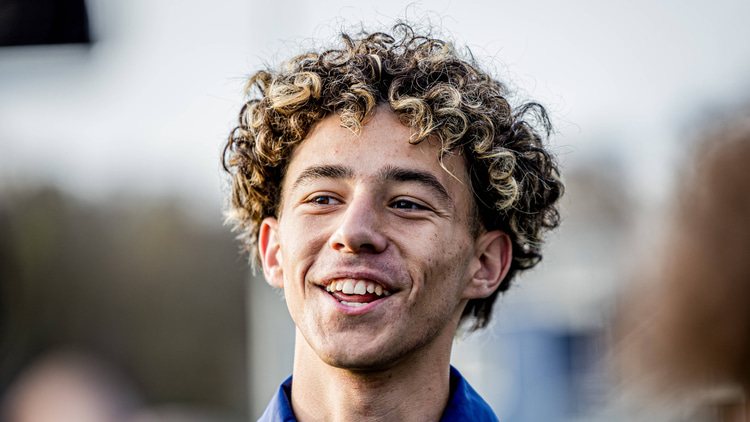
Christian Pulisic, Folarin Balogun, Ricardo Pepi, Diego Luna, Julian Hall, Mathis Albert
Our forward line looks a little slim, particularly in wide areas, but midfielders like Sullivan, Tillman and, if need be, even Brunell can cover out wide, so it shouldn't be a problem that Pulisic, Luna and Albert are our only traditional wingers.
17-year-old Albert is currently following in Pulisic's footsteps by making waves at Borussia Dortmund. He made his senior debut in April, and people at the club believe that he can reach a similar - or even higher - level as Pulisic.
Luna, meanwhile, was a notable omission from the 2026 roster, but there is plenty of time for him to keep impressing. He will only be 26 in 2030. Pulisic will be 31, and surely the only thing possibly stopping him from making the roster is an injury.
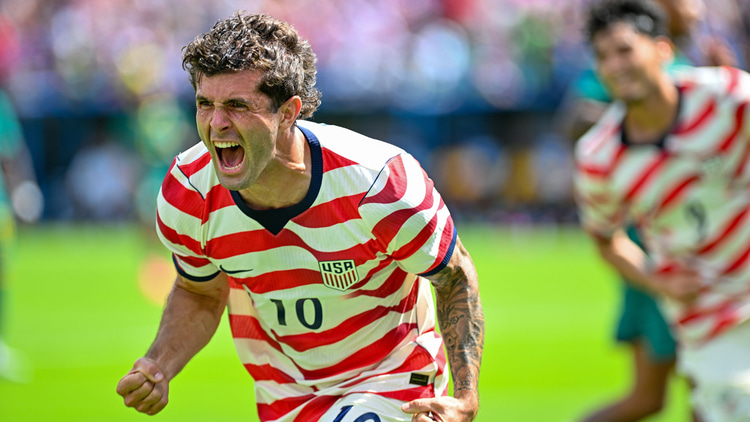
Folarin Balogun, Ricardo Pepi and Julian Hall are our strikers for the next World Cup. Balogun and Pepi will be 28 and 27, respectively, and will hopefully continue to go from strength to strength in Europe in the next few seasons.
Hall, meanwhile, is currently tearing it up at Red Bull New York and looks destined for a major move across the pond. The 18-year-old has taken his game to a new level in 2026 and, who knows, if he keeps developing this rapidly, he could already be the USMNT's starting No.9 in 2030.
Our predicted USMNT squad for the 2030 World Cup
Goalkeepers: Chris Brady, Julian Eyestone, Diego Kochen
Defenders: Alex Freeman, Antonee Robinson, Chris Richards, Sergino Dest, Josh Wynder, Neil Pierre, Noahkai Banks, Peyton Miller, Zavier Gozo
Midfielders: Malik Tillman, Tyler Adams, Weston McKennie, Adri Mehmeti, Cavan Sullivan, Johnny Cardoso, Rokas Pukstas, Snyder Brunell
Forwards: Christian Pulisic, Folarin Balogun, Ricardo Pepi, Diego Luna, Julian Hall, Mathis Albert