
-
News
- 15 hours ago
Psychologist explains why football fans can't bear watching penalties
14 Jul 2026 08:30 CDT |
3 min read
News

It is unquestionably the most tense aspect of football - the penalty shootout or a last-minute penalty.
No matter the level, penalties can be nerve-shredding, but for fans watching their nation in the World Cup, that anxiety can increase tenfold.
We've already seen some hugely dramatic penalty shootouts in the 2026 World Cup in North America, most notably Germany being eliminated at the Round of 32 stage by Paraguay and Switzerland's progression at the expense of Colombia after their narrow penalty win in the Round of 16.
The anticipation is actually building again towards a potential semi-final penalty shootout as all the quarter-final matches concluded without the need for penalties. France beat Morocco 2-0 and Spain defeated Belgium 2-1 in regular time, while England and Argentina beat Norway and Switzerland in extra time.
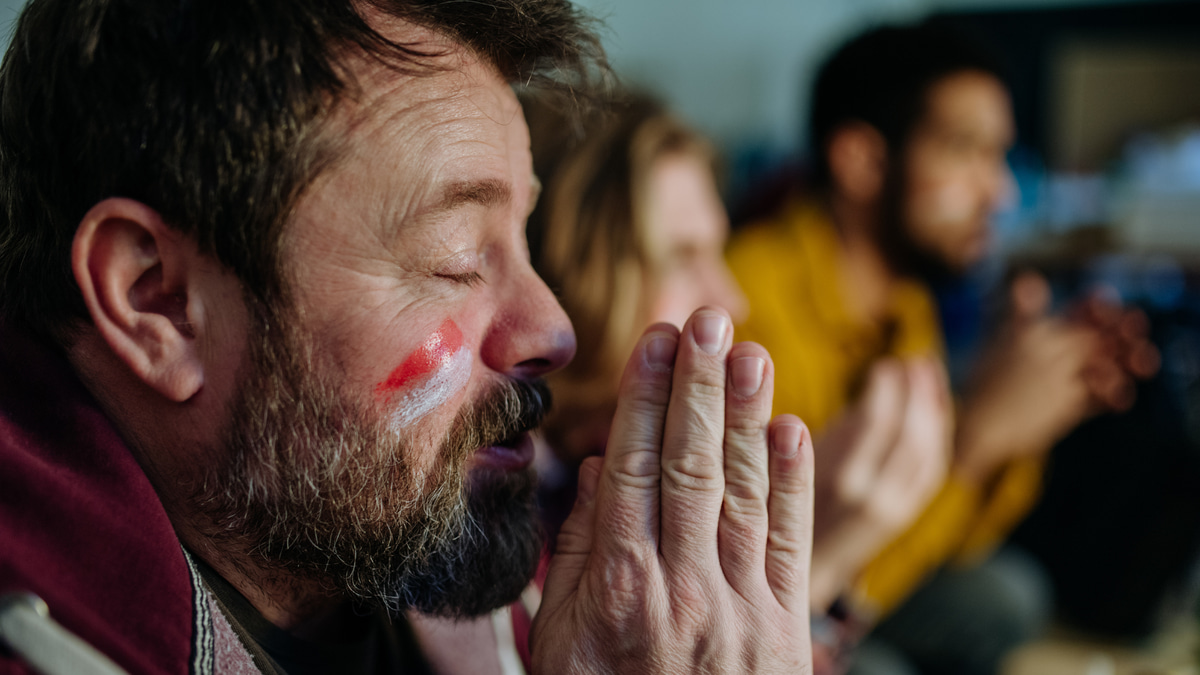
The nerves can overcome football fans so much that they can't even bear to watch penalties due to the stakes on the line.
Some managers and head coaches also refuse to watch certain penalties.
Rudi Garcia, for example, turned away when Youri Tielemans stepped up in the last minute as Belgium sought to complete a remarkable turnaround to beat Senegal 3- in the Round of 32, which he accomplished.
Though Garcia received some criticism for this, Ayala Denul, a doctoral student in psychology at the University of Ghent, has explained why he looked away.
"How many Belgian supporters were hiding their faces in their hands at that time? She asked, as quoted by L'Equipe.
"The stakes were huge! Do we really expect, at this stage, that our great coaches and athletes are robots insensitive to psychological and emotional processes? It disappointed me a little. Especially since there is a lot of research that explains this type of behaviour."
Denul believes a fundamental lack of control is one of the reasons why some of us can't watch penalties.
"They know how stressful a penalty kick is and understand the consequences of a potential failure," she added.
"And on the other hand, they cannot influence the outcome of this action. This lack of control is likely to accentuate emotional distress, anxiety, frustration or feeling of helplessness. "
In the stands themselves, Denul believes that a mutual feeling of uncertainty can spread through the crowds.
"Being surrounded by other people and wearing the same jersey will reinforce this feeling, leading us to live their successes and failures like ours," she explains.
"During a penalty, our attention is often more on what could go wrong.
"Belgian supporters wondered: 'What if we missed it?' While the Senegalese said to themselves: 'What if they scored?'"
Case Study
One man who certainly understands the pressure of a World Cup spotkick is Yannick Stopyra, who was first to step up in France's 1986 quarter-final shootout against Brazil.
Did he feel the pressure from the stands or the dugout?
"We try not to put more things in our brain," he says.
"Emotion is 80 or 70% of a goal shot. So it depends mainly on whether you are good or not good, on your latest performance. Personally, I thought of my father, I thought I was going to go for him."
"It allowed me to forget all the French and especially those who said to themselves: "F**k, he's going to miss it.
"Looking for this family side, I was safe. Later, my mother told me: 'Yannick, if you had seen your father's condition when he saw that you were going to hit...'"
His father, Julien, famously refused to hit a penalty on one high-profile occasion.
Read more about:
World Cup U20