
-
News
Chicago makes 2031 World Cup bid after refusing FIFA demands for 2026 tournament
3 min read
News

Chicago have submitted their availability to act as a host city for the 2031 Women's World Cup as part of the United States' bid to hold the tournament.
The US have already submitted a bid to host the competition in partnership with Mexico, Costa Rica and Jamaica, with it set to be expanded to 48 teams for the first time.
“We already have tremendous excitement, as more than 30 U.S. cities have expressed interest in hosting matches,” U.S. Soccer president Cindy Parlow Cone said a year ago.
“But what excites me most isn’t just putting on a world-class tournament. It’s the legacy we will create, because this Women’s World Cup will be equal in every sense of the word to a men’s World Cup, not just in the number of teams and matches, but equal in the quality of the facilities, with the same type of travel accommodations and support.”
Chicago was not initially part of that bid but the Athletic reports that the 'Windy City', along with Portland, have submitted late requests to be involved.
“The FIFA Women’s World Cup in 2031 is a great opportunity,” Kara Bachman, the executive director at the Chicago Sports Commission, told the publication.
“In Chicago, we have great women’s sports advocates, including the Chicago Stars owner Laura Ricketts. In Chicago, we will always seek to ensure the terms are fair and good value for the people of our city.”
Why did Chicago not host 2026 World Cup games?
Chicago did not host any World Cup matches this past summer but there's a good reason for that, according to former mayor Rahm Emanuel.
For the 2026 World Cup, the United States hosted matches across 11 major metropolitan areas, stretching from coast to coast. Fans watched in major East Coast hubs like New York/New Jersey (MetLife Stadium), Boston (Gillette Stadium), and Philadelphia (Lincoln Financial Field), as well as southern destinations including Miami (Hard Rock Stadium), Atlanta (Mercedes-Benz Stadium), Houston (NRG Stadium), and Dallas (AT&T Stadium).
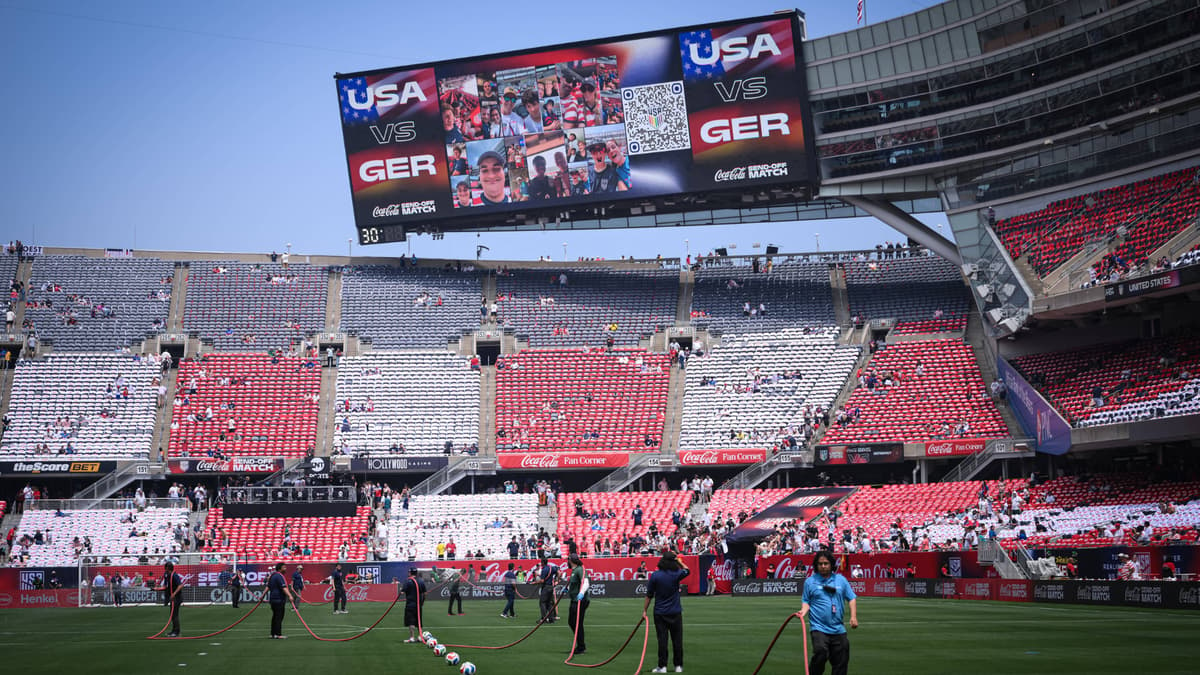
The 'Second City' didn't play host, though, despite their eligible Soldier Field venue, the home of the Chicago Bears and Chicago Fire FC. Indeed, it hosted six games in the World Cup in 1994, including the opening ceremony that featured Oprah Winfrey and Diana Ross.
It all stems from some over-the-top demands from FIFA as three months before the USA, Mexico and Canada were confirmed as co-hosts of the tournament, Chicago bowed out.
Upon reviewing the financial realities of FIFA’s host city contract, Emanuel chose to opt out of the bidding process. Under FIFA's business model, soccer's governing body retains nearly all lucrative revenue streams, including ticket sales, broadcasting rights, sponsorships, concessions, and parking.
Meanwhile, host cities are left to shoulder the massive financial burden of operational demands, covering the costs for expanded public transit, emergency services, fire protection, heavy police security, and even private escorts for FIFA-designated VIPs.
“We were on the front end of the bad side and the back end of the good side,” Emanuel, a former White House chief of staff to President Barack Obama and advisor to President Bill Clinton, previously told The Athletic.
“I said, ‘I don’t know what any other mayor or governor is doing, but do you expect me to treat the Chicago taxpayers as the dumb money at the table? You’ve got to be kidding me!'
The final straw for Emanuel came when it emerged FIFA had written into the contract that they could request a dome be built over the open-air Soldier Field stadium.
“They said in the contract that they had the right to request a dome being built over Soldier Field," he continued.
"So I said: ‘You have got to take that out.’
“They go, ‘We never exercise it, but it’s something we ask everybody to include.’ I said, ‘I don’t care if you’ve never exercised it. There will always be a first. Take it out and we can work through the other issues.’ They said, ‘We can’t take it out.’
“So I said there is not a chance I am going to have you directing me on a $50 million-$100 million expense to the taxpayers. That was the straw that broke the camel’s back. You can’t have something in there that leaves the city and the taxpayers exposed, where (FIFA) gets to decide it and I have no vote in it.”
Soldier Field has been around since 1924 is also listed in the National Register of Historic Places, meaning any changes to its structure would require governmental and public authorisation.
Read more about:
FIFA Club World Cup