

-
News
The one lesson the next USMNT generation must learn from 2026 World Cup failure
4 min read
Analysis

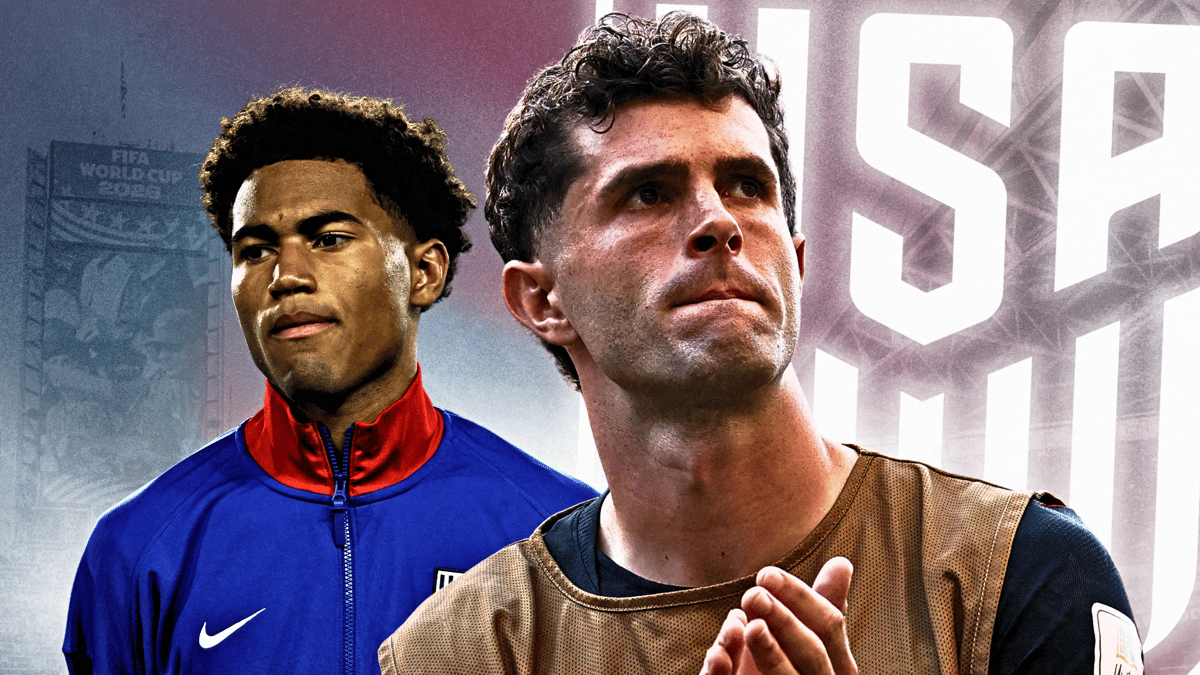
The USMNT's 2026 World Cup came to a screeching halt after a devastating defeat to Belgium on Monday.
The co-hosts looked poised to go on a fairytale run on home soil after cruising through the group stage in an unexpectedly exciting fashion and comfortably dispatching Bosnia and Herzegovina in the round of 32 despite being down to 10 men for 30 minutes.
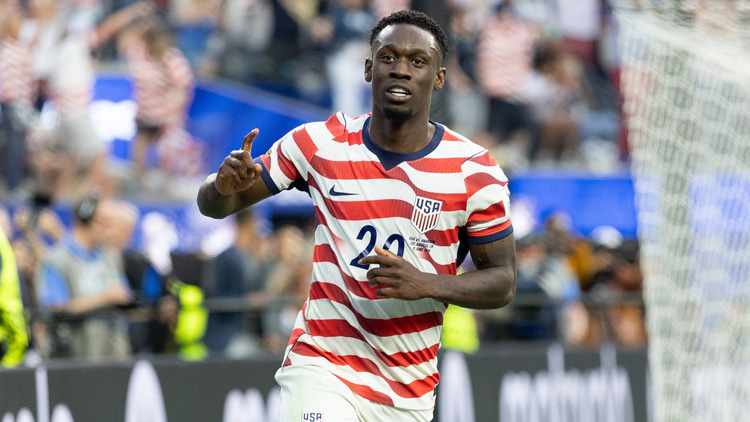
However, that red card ultimately came back to haunt the US - but not in the way anyone could have anticipated. Despite his sending-off, Folarin Balogun was cleared to play against Belgium in the round of 16 after the intervention of the US government.
White House supremo Donald Trump bragged about calling FIFA president Gianni Infantino to have Balogun's one-match ban suspended, thus calling into question the integrity of the game.
Despite his claim that the decision was made by an independent body, it is evident that Infantino spinelessly caved to the pressure of a man whose favour he has tirelessly curried in recent years.
Balogun, who had accepted his punishment without protest, was caught in the middle of a political storm, and the game against Belgium turned into an unmitigated disaster for everyone involved.
One of the most painful defeats in US history
Speaking after the game, head coach Mauricio Pochettino insisted that it was simply a case of Belgium being the better team and that the Balogun saga did not influence proceedings on the pitch.
Watching the game, however, it was clear that something was off. The US put in a diabolical performance and looked completely unrecognisable from previous matches. Belgium were good but not extraordinarily so.
The Red Devils never got out of third gear because they quite literally did not need to - that's how easy the US made it for them. The Americans were second-best in every department, and the fact that they were even still in the game after the first half was a miracle.
The Belgians were galvanised by the Balogun decision, while the Stars and Stripes were overawed by the occasion. As if paralysed because the entire world was watching, they helplessly watched on as a Belgium side that had been far from inspiring previously ran rings around them.
It was one of the most humiliating performances in the history of the national team program, which is remarkable when you consider how enjoyable and professional the US had been in the previous fixtures.
The fact that the US recently played Belgium makes this even more embarrassing. They knew what was coming and still couldn't stop it. The 5-2 loss in March was chalked up to Pochettino experimenting with his system and squad. It was, after all, just a friendly.
He faced hefty criticism for tinkering when the games against Belgium and Portugal could have served as ideal yardsticks to see how his best eleven would fare against decent European teams.
That the US learned absolutely nothing from those games and made the same mistakes on Monday is nothing short of laughable. Let's face it, nobody would have batted an eye had a spirited USMNT lost to Belgium. This is still the US after all - we're not talking about Spain or France.
But the feeble manner in which they crashed out is unforgivable, and it undid much of the goodwill the team had accrued with their previous performances in the tournament.
After an encouraging 2022 World Cup with a young team, 2026, on home soil, should have been the US's coming-of-age tournament where the "golden generation" of Christian Pulisic, Weston McKennie and Tyler Adams finally established the team as a genuine international powerhouse.
When all was said and done, the performance on Monday looked more like regression than progression.
The US can't keep crumbling under pressure
The worrying part about it all is that the US has been here before - many times. In fact, one of the defining aspects of the USMNT's modern history is that they invariably crumble under pressure.
To be sure, they have won the odd CONCACAF trophy here and there, but when the going gets tough and it's time to knuckle down, the US generally does not come out on top.
There were flashes that Pochettino, with the mindset of a truly elite coach, could change this. At times during the Argentine's era - which is surely coming to an end now - it seemed that he had created a new-look USMNT. But Monday's game showed that the same old flaws remain.
The Pulisic generation has been accused of being soft and entitled. There is perhaps some truth in this, but it ignores some important context: many mid-sized national teams face the same problem as the US.
When going up against equal opposition, making that leap from being the underdog to the protagonist, from a team that is used to losing to one that mostly wins, is eminently difficult. Canada and Mexico are in the same boat, as are Australia and Japan.
Japan and Mexico have been the closest to achieving this, and yet they once again crumbled. Morocco, on the other hand, have successfully reached that next level. Norway are on course to do the same if they can prove that this World Cup isn't just a one-off.
That transition is as much about quality as it is about mentality and many other factors such as player pathways, infrastructure and coaching. It's not simply a case of producing better players. In terms of raw talent, the US should be able to cope with Belgium and most European teams.
Thanks to the growth of MLS and USL academies, a consistent pipeline of high-level talent is emerging - despite the pay-to-play system - but this is not enough.
The next step is ensuring that players consistently compete against elite-level opposition in high-pressure environments - and actually win - in order to get rid of that inferiority complex that is often on display when the lights get too bright.
Players like Pulisic, Balogun, McKennie and Adams, who will all still be around for the 2030 World Cup, need to mature and grow from the Belgium experience so that this vicious cycle of self-sabotaging and imploding at every major tournament stops.
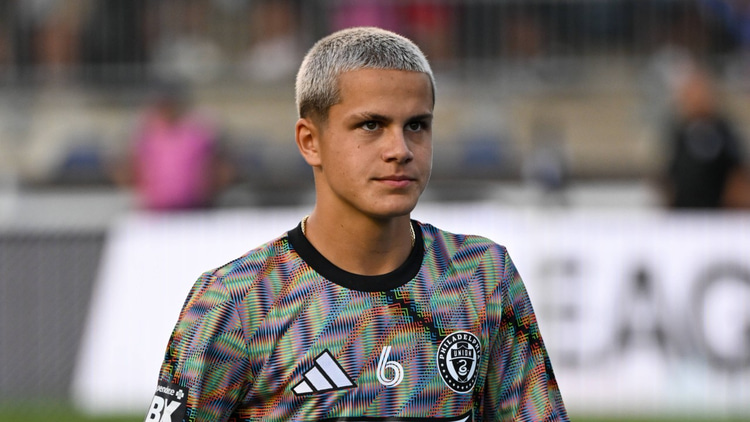
They are the ones who will lead the incredibly talented next generation - the Zavier Gozos, Julian Halls, Adri Mehmetis and Cavan Sullivans - and they need to instil a belief in them that they can not only hang with anyone in the world but actually beat them.
There is no shame in losing as long as you actually compete. Against Belgium, the Americans did not compete. They were paralysed.
Read more about:
World Cup U20
FIFA Club World Cup