

-
News
- 2 hours ago
UEFA fear 'worrying concentration of talent' in the Premier League as new spending rules set to benefit English clubs
4 min read

News

UEFA have expressed concern that the financial gap between the Premier League and other leagues in Europe will only grow due to the upcoming financial regulation changes in England.
From the 2026/27 season, Premier League teams will need to abide by a new Squad Cost Ratio (SCR) and Sustainability and Systematic Resilience (SSR) rules.
At the moment, clubs in the Champions League, Europa League and Conference League are limited to spending 70% of their annual revenue on player costs such as wages and transfers.
The Premier League has determined that those clubs not in European competitions will be allowed to spend 85% on player costs.
The BBC reports that a "complicated set of factors" could allow clubs to spend as much as 115% of revenue on player costs, however, if fines are paid.
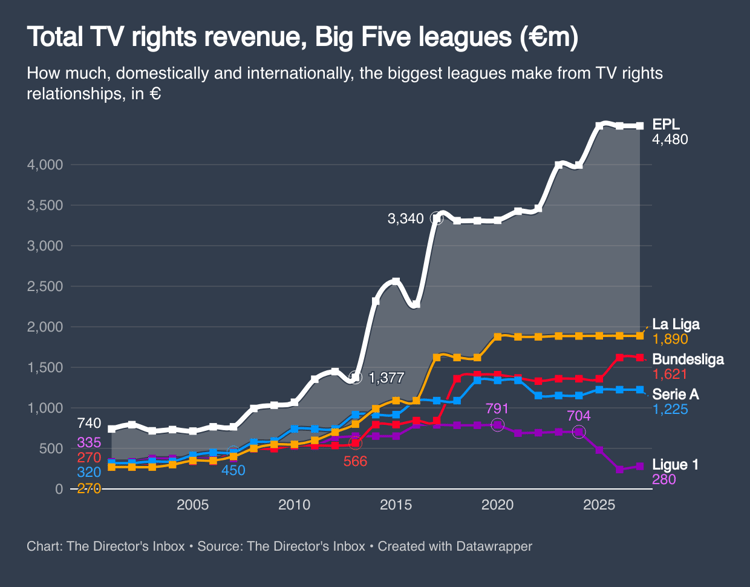
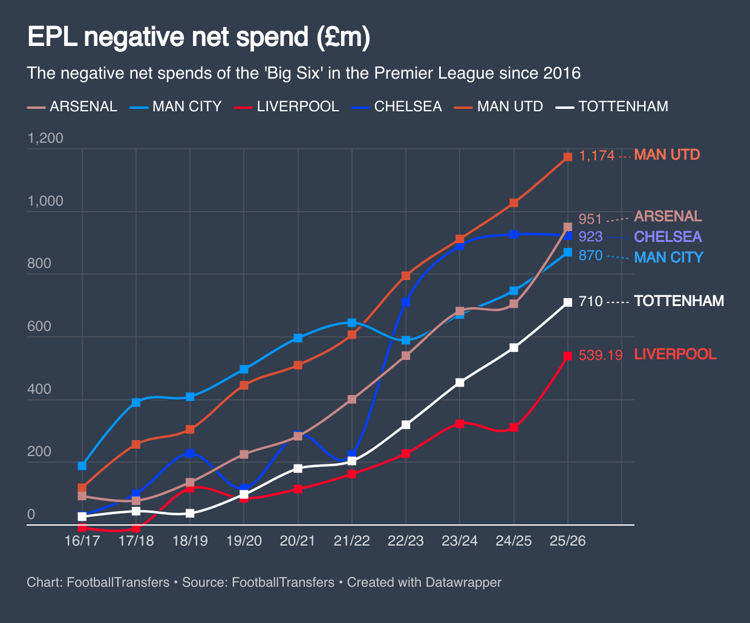
With Premier League clubs enjoying significantly better broadcast deals each year, their spending dwarfs that of some of the biggest clubs in Europe.
Other leagues have more stringent spending caps in order to hopefully maintain sustainability which gives English clubs a real advantage in the transfer market. Not only can they spend a lot on transfers, but they can also tempt players from other leagues by offering much higher wages.
Andrea Traveso, UEFA's director of financial sustainability and research, outlined some of the concerns at the Financial Times Business of Football Summit in February.
"The Premier League alone now generates a quarter of all European club revenues," he explained.
"With more spending power on top, this will create tensions in the market. The objective at Uefa is financial sustainability. The objective at the Premier League is competitiveness."
Traveso added:"40% of the top-value players in the world [are at Premier League clubs], but many are sitting on the bench or, even worse, in the stands.
"This is an extraordinary and worrying concentration of talent."
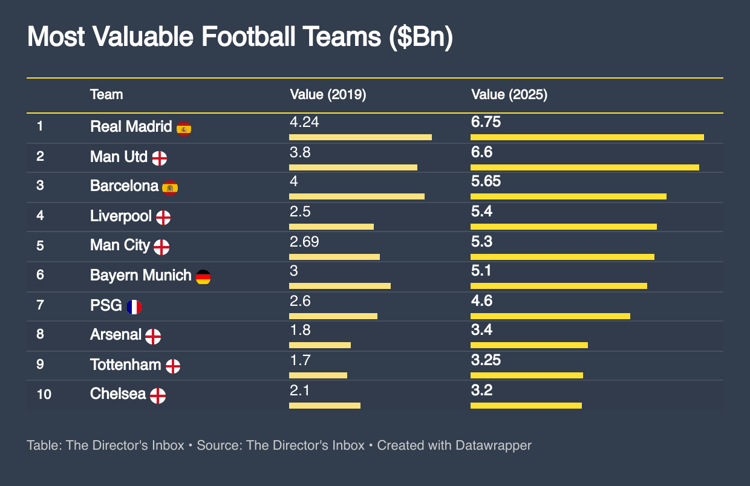
To see the gulf in power and competitiveness between the Premier League and other nations, all you need to do is look at the current continental competitions. The English top-flight still has nine clubs involved in UEFA competitions, with Spain the nearest to that with six.
Germany has five, while France and Italy have four.
Five out of the top eight automatic qualifiers for the Champions League knockout phase were English clubs, while Newcastle destroyed Qarabag in the playoff round to progress to the last-16.
Traverso believes that an "inconsistent application of financial regulations" could increase the gap further.
Notably, La Liga's salary cap means that each club's spending is limited to how much money they make. This even impacted Barcelona a few years ago when the club could no longer afford to register the wages of Lionel Messi.
La Liga president Javier Tebas said last month: "The regulations will cause more inflation and more problems.
"Someone has to harmonise all of this. Financial fair play for La Liga, the Bundesliga, Uefa - this isn't rocket science."
The Premier League have looked inwards with regards to these rulings. They want the teams not in European competitions to be able to spend more in order to compete with the elite, but with that higher spending power from mid and lower table clubs will allow them to take talent away from other leagues more easily.
What the Premier League’s squad cost ratio means for clubs
Squad cost ratio (SCR) has been imposed by UEFA since 2023 and limits how much clubs can spend as a percentage of their earnings.
Under UEFA’s legislation, clubs can spend 70% of their revenue on their squads, which includes transfers and wages.
The Premier League is proposing that its clubs in Europe follow this rule, but clubs that do not have continental football can spend up to 85% of their revenue on their squads.
Why do non-European clubs have the opportunity to spend more money? Simply because they are missing out on the lucrative income that playing in the likes of the Champions League can bring and, therefore, it is seen as a way to balance out competitiveness.
One advantage of this system is that clubs are not studied by looking at past results. Instead, they are given a clear budget that they should stick to each season. This is revised each year.
Football finance expert Kieran Maguire believes UEFA's squad cost ratio crucially does not include other running costs.
"It completely ignores your non-football-related costs, non-player-related costs," he told BBC Sport.
"What happens if you're borrowing money at huge rates of interest?
"What happens if you've had a disastrous overspend in terms of some of your maintenance and infrastructure costs?
"I'm not convinced with the central tenant of the argument, but Uefa, to its credit, has not been bothered about having a competitive product.
"Uefa has given away so many concessions to the bigger clubs to effectively ring-fence it as far as the Champions League is concerned."
The FootballTransfers app
Check out FootballTransfers' new app for all of football's big storylines, transfer rumours and exclusive news in one convenient place directly on your mobile device.
The FootballTransfers app is available in the Apple App Store. Download here: