
-
News
- 11 hours ago
Why do fans boo and does it actually impact footballers?
14 Feb 2026 02:00 CST |
Updated: 17 Mar 2026 10:01 CDT |
6 min read
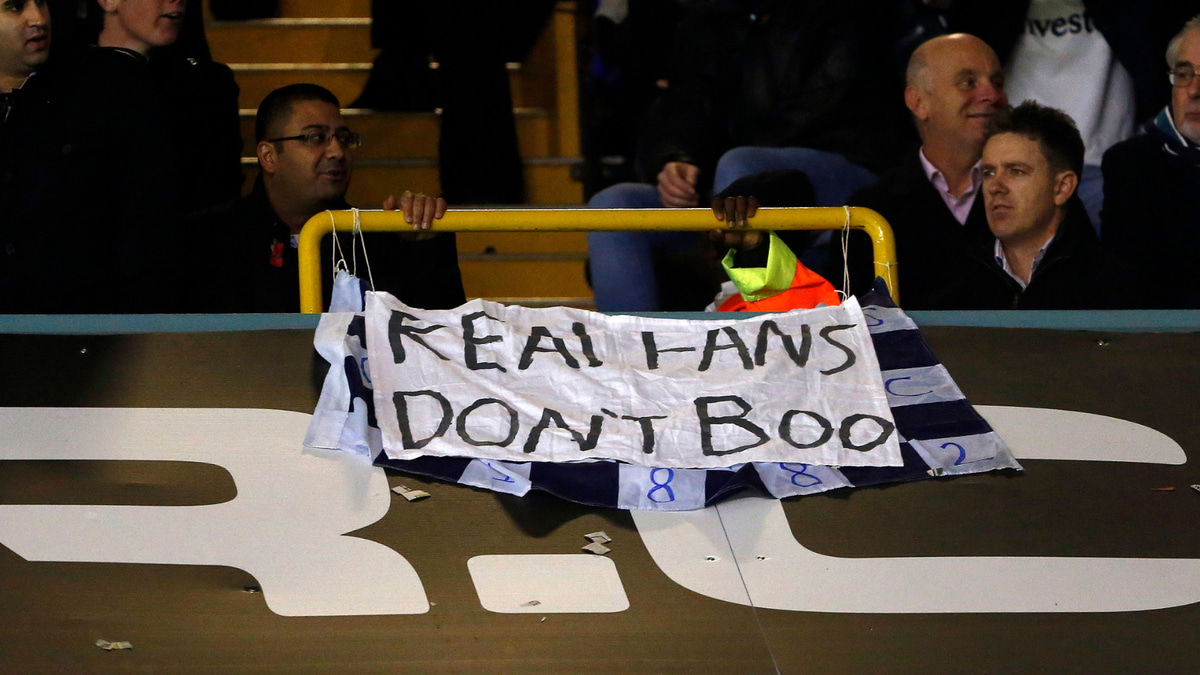

Booing from disgruntled supporters has been commonplace in football for well over a century, but it seems to be more prevalent in the modern game.
There are a few reasons for this, but perhaps the main one is that football has become so expensive for the average fan to attend that they feel within their rights to let players, managers, owners or board members know exactly how they feel.
There has also never been more football available to watch, either on television or on streaming, while footage can be posted on social media from spectators at a game. That means we, as consumers, are more exposed to things like booing than ever before.
This season we have seen Thomas Frank lose his job at Tottenham after what has seemed like a constant vitriolic atmosphere at the Tottenham Hotspur Stadium, caused by the current battle against relegation. Arne Slot and the Liverpool players have also notably had waves of boos aimed at them from the Anfield stands after their underwhelming campaign so far.
🇩🇰Thomas Frank says it was unacceptable for Tottenham Hotspur fans to boo Guglielmo Vicario:
🗣️”I didn't like that our fans booed at him straight after and a few times after that.”
📺[@SkySportsPL]#THFC | #COYS | #TOTTENHAM | #SPURS | #TOTFUL | #FRANKpic.twitter.com/IsvrpKc028— Last Word On Spurs (@LastWordOnSpurs) November 30, 2025
But, does hearing boos from fans actually impact footballers?
Wayne Rooney, who famously shouted into the camera about being booed by England fans during a match in 2010, believes it is part of the game, but insists some abuse can go too far.
"It's always been there. Fans obviously have their opinions and sometimes they're with you and sometimes they're against you," the former Manchester United star said.
"It's probably just picked up a little bit more now with more TV cameras, with social media and with phones filming from the stands.
"Obviously if a player or a player's family is getting abused at stadiums then it can become more of an issue, but generally I think booing is fine."
His former England team-mate Joe Hart agrees.
"You get booed by the away fans," he said. "That's kind of par for the course. I've probably received a few from home fans in my time - not many. If I was being booed I was probably doing something wrong!"
When asked if boos affected him, he replied:
"Maybe it did at the time. I've got no scars from it though, put it that way. I was very much focused on what I was doing so whether I was getting applause or boos it didn't make any difference to how I tried to play the game."
Danny Murphy reflected on a tough period at Fulham when they were fighting relegation, and he took the boos as a challenge to try and get the team out of the slump.
"At Fulham when we were fighting relegation, there were lots of boos," he explains.
"You have to take it as a challenge. You have to want to overcome it rather than go the other way and let it affect you, drain your energy and put fear into your play.
"I always felt like it was a challenge to overcome it, to try and do better. I think if you're playing Premier League football and you're at that level that's your job to do so.
"We all love it when the fans are singing your name when you've scored the winner or when the team's winning - you can't have just one and not the other."
Why do fans boo?
Apparently, booing comes from an animalistic need to express our anger and comes from thousands of years of evolution.
Stephen Smith. chair of the British Psychological Society's Division of Sport and Exercise Psychology, says:
"We love to believe we are logical, rational animals at the pinnacle of evolution but that's not how we work. 85-90% of human decisions are irrational, illogical and completely emotionally driven.
"When fans boo they make a sound which is guttural and vibrates through the bones, which means it has to be deep. It sounds like a hunting animal and it goes to the heart of our DNA.
"Emotions feed through a crowd like nothing else. Emotions are infectious. It only needs one or two people to start leading the booing and if someone else starts doing it you want to fit in with the tribe.
"The emotional part of the brain kicks in and says 'right, I want to display my emotions, the tribe around me are doing it with this behaviour, I'm going to fit in with them'. Booing is the most natural behaviour to show that you're displeased."
Smith says the cost of attending matches has undoubtedly led to an increase in booing from the stands.
"Previously, there was almost an agreement that existed between fans and the club," he continued.
"They wanted you in to come and support the team, wear the colours and support the boys, but they weren't going to rip you off in terms of the cost.
"Clubs nowadays have changed that model, that psychological contract between club and fans is broken.
"They've said 'we're just going to treat you as any other customer, all we're interested in is what you have in your wallet, we're not actually interested in your loyalty to the club'."
The FootballTransfers app
Check out FootballTransfers' new app for all of football's big storylines, transfer rumours and exclusive news in one convenient place directly on your mobile device.
The FootballTransfers app is available in the Apple App Store. Download here:
Read more about:
Premier League