
-
News
- 25 minutes ago
From Celtic legend to King Kenny: The Dalglish deal that built a Liverpool dynasty
Updated: 13 Feb 2026 08:14 CST |
6 min read
Analysis

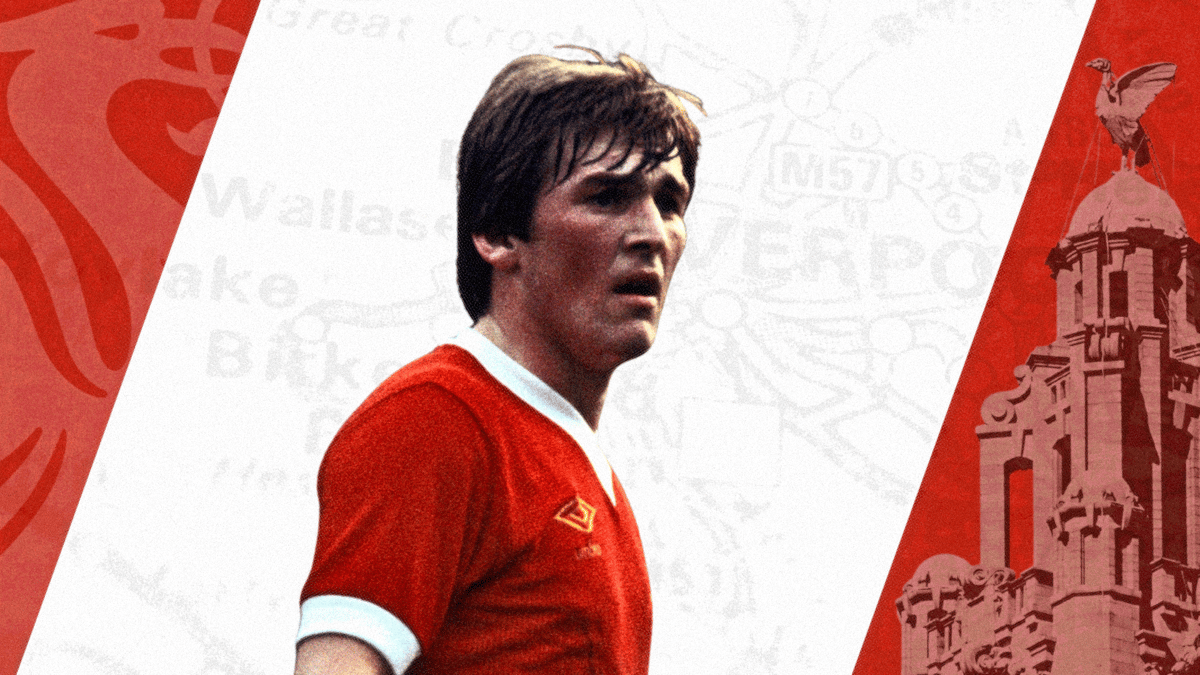
Liverpool’s decision to sign Kenny Dalglish in a record-breaking move from Celtic is one that set the Anfield club up for a dynasty of success and in doing so is one of the most important transfers of all time.
At FootballTransfers, we determine the importance of a deal based on influence, legacy or the huge impact it had on a particular club or indeed the sport as a whole.
It could be because of a record-breaking or history-making transfer fee. It could be a transfer that broke down a social, cultural or racial barrier. It could be a move that transformed the fortunes of a team and led to a period of dominance. It could be a transfer that simply transcended the sport.
In the case of Dalglish, he became one of the most legendary figures in Liverpool's history, serving as a player, player-manager, and then manager for the club.
Why did Liverpool buy Kenny Dalglish?
Despite growing up as a Rangers supporter, Dalglish signed for Celtic as a youth player in May of 1967 and spent a season on loan at Cumbernauld United.
After years of impressive work in the reserves, he was eventually given his professional debut by iconic boss Jock Stein.
His first professional goal for the club came in the pressure-cooker of Ibrox as he stepped up to score a penalty in a 2-0 victory in August of 1971.
Dalglish quickly established himself as not only one of the best players in Scotland but one of the best in Britain. With the Hoops, he won four Scottish Division One titles, four Scottish Cups, and one Scottish League Cup as well as the Drybrough Cup and the Glasgow Cup.
European success eluded him and Celtic during his period at the club, however, as the team was unable to replicate the glory of 1967 in Lisbon. It was that hunger that led him to seek pastures new down in England - especially when Liverpool came calling.
"If Kenny had wanted to stay at Celtic Park, I would have turned down any amount of money offered for him. Now where do I find another player like Dalglish?" Stein said at the time.
A historic deal that changed everything
Liverpool and Bob Paisley broke the British transfer record to sign Dalglish from Celtic for £440,000 in August of 1977.
"This really was the offer I could not refuse," he said. "There was no way I could turn down such a fabulous offer, although I am very sad to be leaving Celtic. But I am happy to be going to such a great club as Liverpool."
On 11 August, 1977, the Liverpool Echo printed the following:
"Liverpool manager Bob Paisley booked into a Scottish hotel under an assumed name as his bid to sign Kenny Dalglish reached a climax. For two weeks now Celtic have been saying 'No' to all Liverpool's attempts to sign their Scottish international. Then late yesterday afternoon, Celtic manager Jock Stein finally agreed to listen to Liverpool's proposals. So Mr. Paisley and chairman John Smith made a car dash north and booked into an hotel at Moffat, some 30 miles outside Glasgow.
"But false names were used so that outsiders would not be alerted to their presence in Scotland. Celtic wanted everything done secretly because if the deal fell through they did not want other clubs to know that they were even willing to talk about Dalglish. Last night Celtic played at Dunfermilne and Mr. Paisley and Mr. Stein finally got together at 10.30 p.m.
"Both went into Celtic Park by the back door and the talking began. The fee was agreed between the clubs – and the deal to shatter the existing British transfer record was on."
Keegan who?
Dalglish was brought in as a replacement for Kevin Keegan, who had left massive boots to fill after being a wonderful player for the Reds, winning three league titles and the European Cup in 1977.
He quickly made supporters forget about Keegan, though, as he started at Anfield in tremendous fashion. He scored in both his league debut against Middlesbrough and his Anfield debut against Newcastle.
Due to their exploits in the previous campaign, Liverpool and Hamburg met in the 1977 European Super Cup. Naturally, a lot of the attention went on Dalglish and Keegan, but the former left the second leg happier after a big 6-0 Liverpool win against the German outfit, with him scoring the sixth.
'King Kev' would enjoy success in his own right, going on to win the Ballon d'Or on two separate occasions with Hamburg.
Dalglish topped off his debut campaign with a goal in the 1978 European Cup Final in which Liverpool defeated Club Brugge 1-0.
As a player, the Scot won six First Division titles, one FA Cup, three European Cups and four League Cups among other trophies for the Reds - as well as numerous individual accolades, including Player of the Year.
In 1985, following the retirement of Joe Fagan, Dalglish was asked by the Liverpool hierarchy to act as player-manager. Initially hesitant, he eventually agreed to the role and what a decision that proved to be, as he enjoyed huge success in his first spell as a manager.
He would still select himself to play on occasions, but he famously tried not to substitute himself on; acting as the manager in the dugout was both physically and mentally draining, he argued.
During his time as manager, English clubs were banned from European competitions between 1985 and 1990 following the Heysel Stadium disaster, with Liverpool actually not returning until 1991.
Though a European Cup as manager of Liverpool eluded him, he guided the team to three titles, two FA Cups and one League Cup among smaller trophies.
In February of 1991, he resigned as manager of Liverpool following a 4-4 draw with Everton in the FA Cup at Goodison Park. In an infamous interview afterwards, he said:
"I've been in the front line for 20 years, and it's just really a result of 20 years' active involvement in football at a very high and successful level, and Kenny Dalglish is a person that has pushed himself to the limit. It's a decision that many people will find difficult to understand, a decision that only I could have made. And it would have been wrong to mislead people that everything was fine with me."
A formidable legacy
Even though Dalglish was hugely successful both as a player and a manager for Liverpool, what he means to the club transcends football.
After the Hillsborough disaster, which claimed the lives of 94 Liverpool fans on the day of a FA Cup tie between the Reds and Nottingham Forest in April of 1989, Dalglish attended most of the funerals, including four in one day.
During the Hillsborough Memorial Service in 2011, Liverpool MP Steve Rotheram announced he would campaign for Dalglish to be knighted, "not only for his outstanding playing and managerial career, but also the charity work he has done with his wife, Marina, for breast cancer support and what he did after Hillsborough. It is common knowledge it affected him deeply."
He officially became Sir Kenneth Mathieson Dalglish in 2011, having affectionately been called 'King Kenny' by the Liverpool fans for so long.
The Scot returned for a second spell as Liverpool boss in 2011 and managed to win a League Cup before departing after one season.
In October 2013, Dalglish returned to the club a non-executive director, and Anfield's Centenary Stand was renamed after him in October of 2018.
The FootballTransfers app
Check out FootballTransfers' new app for all of football's big storylines, transfer rumours and exclusive news in one convenient place directly on your mobile device.
The FootballTransfers app is available in the Apple App Store. Download here:
Read more about:
Premier League
Liverpool