
From Prime Minister to Puskas Akademia: Viktor Orban’s fall from power will reshape Hungarian football
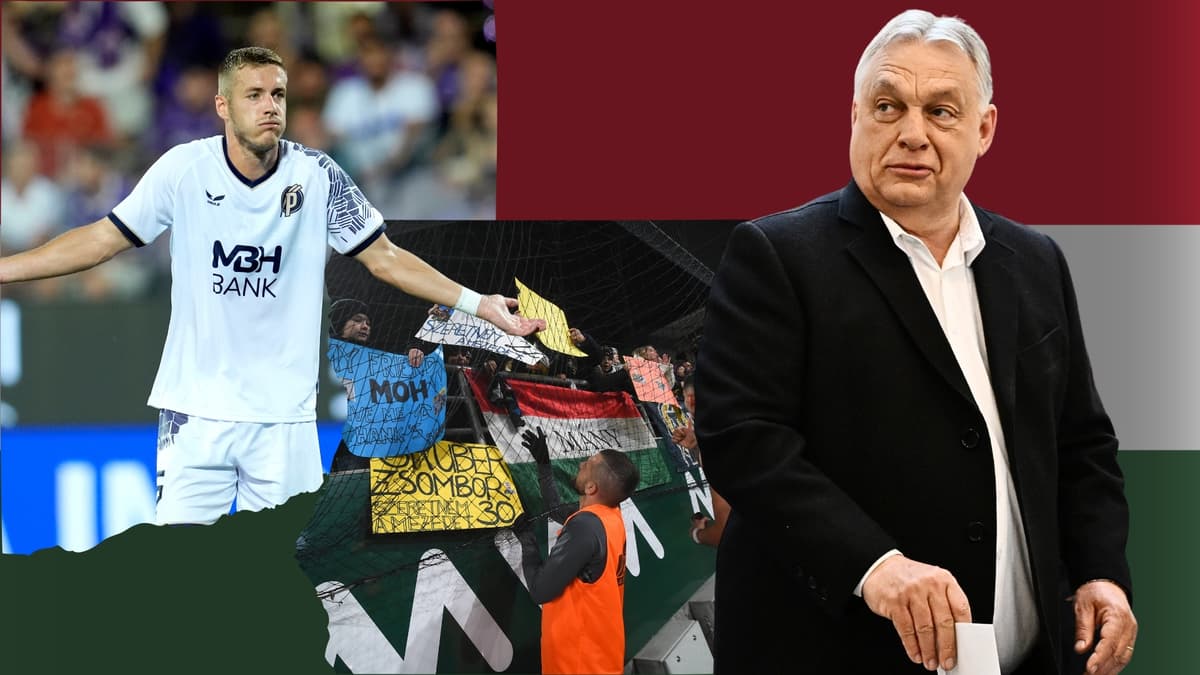

The Champions League final will take place in Budapest’s Puskas Arena, but the man who was the driving force behind football in Hungary is no longer in power to enjoy the moment, having been unexpectedly dethroned in an election that will totally reshape the nation’s footballing landscape.
Viktor Orban’s crushing defeat to Peter Magyar promises to have phenomenal political consequences – but it will also shake up the footballing hierarchy of one of the game’s most storied nations.
With the dust settling on Magyar’s landslide victory and a seismic political shift in the nation, claims of corruption and crony capitalism can now be addressed in all spheres throughout the country.
Football certainly did not escape the hand of Orban and indeed was at the forefront of his political ideology during a reign as Prime Minister that lasted 16 years. This legacy outlives his presidency via the Champions League final, which pits Arsenal and PSG against each other in Budapest.
Viktor Orban: Shaped and influenced by football
Hungary is a nation steeped in footballing heritage and can claim to be one of the most important countries in the development of the modern game. As football emerged from the rubble of World War II, there was no stronger national team than the Mighty Magyars, which lost only one match from 1950-56 – the 1954 World Cup final to West Germany – and famously became the first side from outside the British Isles to beat England at Wembley.
Orban was born in 1963, shortly after his country’s golden age, yet still at a time when Hungary were regularly reaching the latter stages of both the World Cup and European Championship.
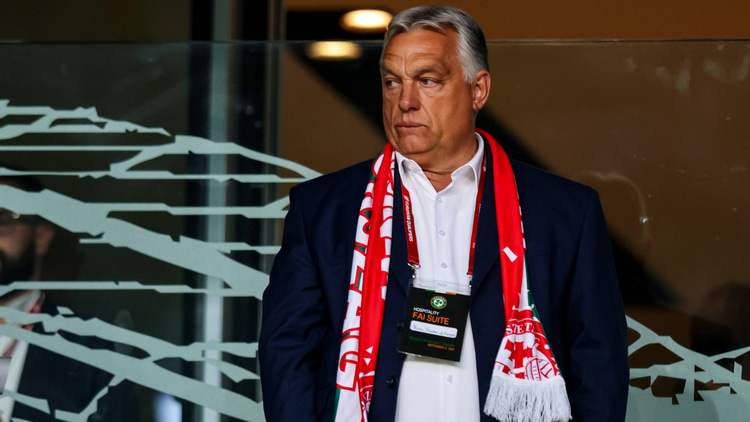
Football was part of his identity as he grew up. He played for Videoton as a youth and continued to play at an amateur level in Hungary’s fourth or fifth tier, even playing during a stint as Prime Minister in 1998.
“It is difficult to gauge whether politicians do something for politics, or their heart is, indeed, in it,” Gergely Marosi, a sports journalism lecturer at Budapest Metropolitan University told The Parliament in 2022. “But in this case, I am quite sure Orban’s love for the game is real. He is a genuine football fan, and he is also a former lower-league player. Football definitely shaped and influenced his life and how he thinks.”
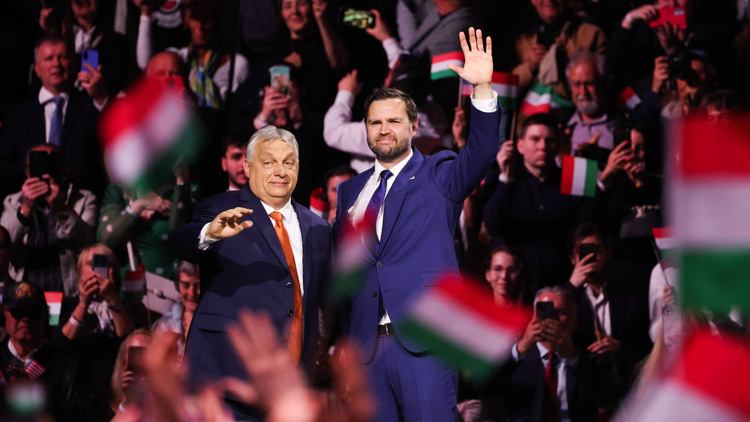
Orban brings the footballing world to Hungary
Football is an integral part of Orban’s identity, and after becoming Hungary’s autocratic leader in 2010, he believed it was his duty to tie this further to the national identity and his government spent lavishly on the game.
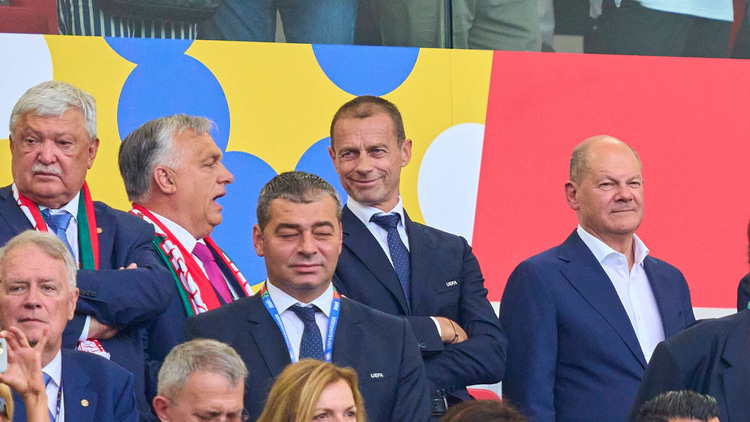
The spectacle of Budapest in Euro 2020 was especially notable as the world came out of the Covid-19 pandemic. Orban opened the country up far earlier than many other European nations, so the sight of a full Puskas Arena was, at that time, a throwback to a life many had not known for 18 months.
In 2023, the Europa League final was played in Budapest, and the 2026 Champions League final will also be played in the Hungarian capital. This is thanks to the Orban regime.
Puskas Akademia: Orban’s pet project
The domestic football scene, too, has transformed under Orban’s influence. Most notably, there is a new name persistently towards the top of the league: Puskas Akademia. It is this side from the village of Felcsut around which so much controversy surrounding Hungary’s deposed leader has been generated.
Felcsut is Orban’s hometown, and it became a pet project during his premiership to develop it. Naturally, for a football lover, this meant investing the local club, which he once played for.
It was a long-standing project for the part-time footballer but full-time politician, who had been wheeling and dealing behind the scenes on behalf of Felcsut for years to help lift the side from regional football to the second tier. His efforts culminated in visiting Ferenc Puskas, one of the greatest players ever, on his deathbed and attaining the rights to use his name from his wife, while his trademark would go to Gyorgy Szollosi, a friend of Orban.
Puskas died on 17 November 2006, but his academy was born exactly nine days later with the aim of developing top local talent.
By this point, it was clear that the incumbent government was lurching from crisis to crisis, so Orban was able to consolidate his political power and in May 2010 claimed a historic election success that granted his Fidesz party a supermajority in parliament and with it enormous power.
This would be a turning point for football in the country, and in particular Orban’s beloved Felcsut, which was rechristened Puskas Akademia in 2009 to provide it some historical clout that its 70-year history otherwise lacked.
A footballing revolution
Money poured into football, and while the deals surrounding this investment were dubious, clubs turned a blind eye as their aging infrastructure was rapidly upgraded.
Those close to Orban had a particular knack for benefitting. The Prime Minister’s childhood friend Lorinc Meszaros became the country’s richest man during his premiership. He was also handed the presidency of Puskas Akademia in 2010 after his predecessor disagreed with plans to build a 4,000 all-seater stadium in a village of less than 2,000.
Meszaros, instead, led the project, with his struggling construction company winning the contract to build the €12.5m arena, marking a remarkable turning point in his fortunes.
The deal was funded by a corporate tax benefit scheme (TAO), which encouraged influential politicians to use their sway to persuade businessmen to invest in sports clubs.
The big winners
Puskas Akademia, very publicly known as the powerful Prime Minister’s favourite club, would be one of the biggest benefactors. The club’s new stadium would be built quite literally in Orban’s backyard on land he gifted them, with the lavish project funded by TAO money.
The influx of TAO money also proved useful in recruiting experienced players to help win promotion to the top flight, much to the general anger of the Hungarian football-going public.
"I thought at the time Puskas was founded that it was a good initiative because it promised to give young Hungarians an opportunity to play football at a high level and state-of-the-art facilities that they didn’t really get before in Hungary," Hungarian football expert Bence Bocsak explained to FootballTransfers.
"But while there have been some success stories for Puskas, including selling Armin Pecsi to Liverpool, I have been disappointed by their lack of promotion for Hungarian talent, which is what their whole ethos was supposed to be about.
"They have ‘akademia’, which is ‘academy’, in their name but they regularly have one of the oldest teams in Hungary."
The Guardian reports that Puskas Akademia have received around €370m through state subsidies, tax redirection schemes, and corporate sponsorships since 2010. This has resulted in the club building some beautiful infrastructure and establishing itself as a top-four finisher in Hungary in each of the last six seasons.
Nevertheless, it has remained without meaningful support and its supposed founding principle of producing high-quality academy players has largely been cast aside in favour of foreigners or more experienced stars from elsewhere.
Puskas Akademia did not stand alone in having received questionable government support. Ferencvaros president Gabor Kubatov, who stood behind Orban during his concession speech, Honved president Peter Szijjarto and MTK Budapest president Tamas Deutsch are all prominent Fidesz politicians.
While almost every club benefitted from TAO, these sides were among those best-placed politically to exert influence.
Orban’s Hungary in microcosm
Puskas Akademia’s rise and fall is an important microcosm of Orban’s Hungary.
His genuine love for the club reflects his love for the game, yet the manner in which they became a force was by the manipulation of the rules and financial deals that benefitted those close to the Prime Minister.
The manner in which Meszaros has fled the company in the aftermath of the Magyar’s victory points to a fear that there will be serious recriminations for those to have benefitted from any misdirection of state funds.
And this leaves football in the country facing an uncertain future.
"The truth is that no one really knows what will happen now," Bocsak admits. "It all depends on what Magyar wants to do.
"Without government support or without Meszaros, I don't know what the future holds for Puskas."
As Hungary is welcomed back into the European fold with its rejection of Orban’s politics, Puskas Akademia are unlikely to see such a stage again. Having qualified on five previous occasions, the club’s influence domestically is already on the wane. With four league games remaining, they lie sixth in the top flight.
Nevertheless, the Hungarian streets won’t forget the brief flourishing of Orban’s favourite club and what it meant to the country and its football.