
-
News
- 1 minute ago
IFAB expands VAR powers and clamps down on time-wasting at World Cup
1 Mar 2026 05:00 CST |
6 min read
News

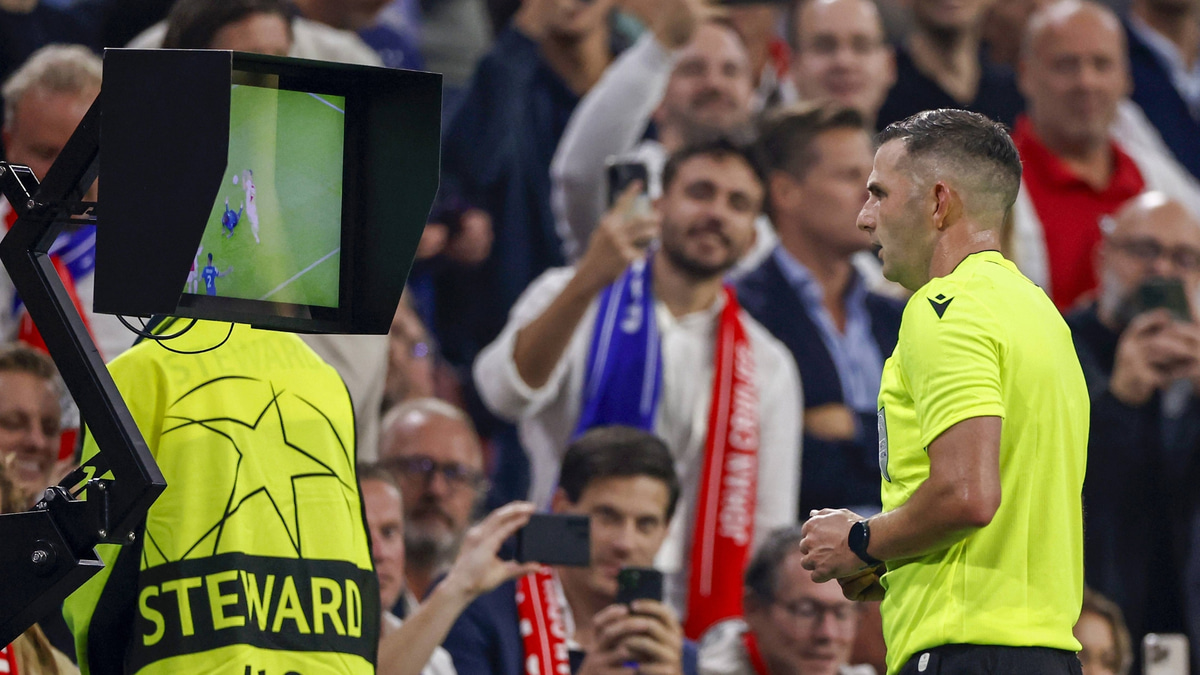
The International Football Association Board (IFAB) has ratified several law changes that will affect refereeing at the 2026 World Cup and beyond.
IFAB announced after its annual general meeting that a host of new rules would come into effect starting 1 June in an effort to increase the reliability of the Video Assistant Referee (VAR) and to clamp down on time-wasting.
The new measures have been added to the laws and will be fully implemented for the first time at the World Cup in Canada, Mexico and the United States. They will also be in effect for the 2026/27 season, although leagues can opt out of the change to corners.
This new rule will expand the VAR's powers to corner kicks, allowing for the overturning of wrongly awarded corner kicks, which have resulted in several goals across Europe this season.
FIFA was pushing for this change, but domestic leagues have raised concerns that it will increase delays. As a result, the amendment will be in force at the World Cup, but leagues can opt out.
The BBC reports that the Premier League and UEFA will opt out, while Serie A is expected to implement this change.
More VAR and countdowns
VAR's powers will also extend to wrongly awarded second yellow cards and yellow cards awarded to the wrong team, but the VAR will not be able to step in if a second yellow card was missed by the referee.
Additionally, IFAB has approved several more countdowns, similar to the eight-second time limit already in force for goalkeepers to release the ball. There will be a five-second time limit on goalkicks and throw-ins, with possession going to the opposition if a player takes too long.
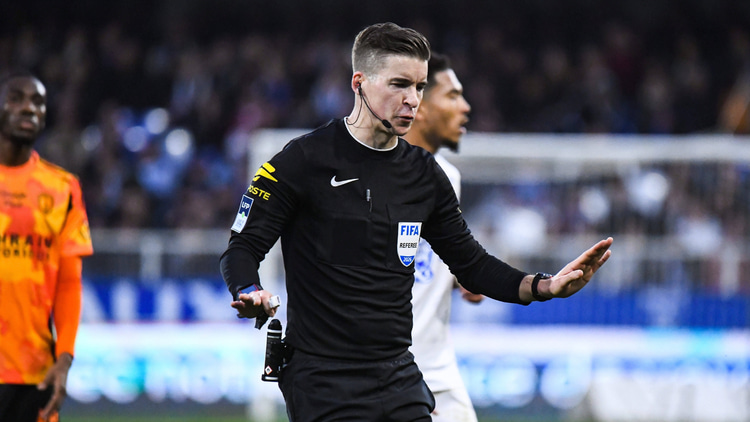
Players who are substituted will have to leave the field within 10 seconds, while players who receive treatment have to stay off the pitch for a minute, rather than 30 seconds as is currently the rule in the Premier League. Both of these rules were trialled in Major League Soccer.
The current exemptions will continue to apply, so if a player is booked for a challenge, the opposition player who required treatment will not be forced to remain off the pitch for a minute.
Goalkeepers are also still exempt from this rule, with IFAB unable to reach a consensus on what to do about so-called "tactical timeouts" (goalkeepers feigning injury). Further trials and innovations are required on that front.
The DOGSO rule (denial of a goalscoring opportunity) has also been amended. The new law will not only apply to fouls on players who are through on goal, but also to fouls on players who could pass to a better-placed teammate who would be through on goal.
Lastly, the widely trialled rule that only captains are able to speak to the referee and the new double-touch penalty modification have also been officially added to the laws.
The latter was famously tested after Atletico Madrid striker Julian Alvarez had a penalty against Real Madrid controversially ruled out after accidentally touching the ball with both feet. Under this new law, Alvarez would have been allowed to retake his penalty.
A challenge system - known as Football Video Support (FVS) - has not yet been added to the laws as IFAB believes that further trials are needed. Leagues in Malta, Italy and Spain are currently testing a procedure that allows coaches to make two FVS challenges per game.
"It is probable that in the next weeks we will open the possibility to join the trial for the next season to member association and competition organisers," Pierluigi Collina, head of FIFA referees, said.
5 minutes between these 2.
Clear and obvious? VAR is simply not fit for purpose. pic.twitter.com/edO0jrFbUi— ben (@matchdayben) February 28, 2026
IFAB's expansion of VAR's powers shows that the controversial system is here to stay, despite growing dissatisfaction with the direction the game is heading due to VAR. When asked about the matter, Collina offered a cryptic response.
"In Italy, we say that in every wonderful marriage, there is a crisis after seven years. So it might be possible that people fall in love with the VAR, and then after some years... crisis."
Even among referees, VAR does not enjoy universal support. Two referees in Northern Ireland have withdrawn from this weekend's games after it was announced that VAR would be implemented for the first time at the upcoming cup final on 15 March.
Only three Northern Irish referees are currently trained in the use of VAR, essentially denying the other referees the opportunity to take part in the final. Addressing the concerns, Northern Ireland Football League chief executive Gerard Lawlor clarified that VAR would not be implemented during league action - yet.
"Some of the referees spoke to me about this closing off for them the opportunity to do finals," he said. "But if more people need trained to get opportunities that can be easily fixed. This is just a first step in the water, and we just have to get them trained up for the future.
"In this particular fixture, the opportunity arose due to the presence of the cameras and the camera set-up in the ground, the availability and the offer of support from other countries of VAR and assistant VARs, plus a commercial agreement in place so that there is no cost to us as a league and no cost to the club.
"I believe it's a valuable experience for our referee team and for these two clubs, who hopefully will be making progress in Europe next year. When we put all of that together, we thought here is a valuable opportunity.
"We have always said we will always use technology to help and support our referees where possible. But I do not see this being implemented on a week-to-week basis. That was never our intention."
The FootballTransfers app
Check out FootballTransfers' new app for all of football's big storylines, transfer rumours and exclusive news in one convenient place directly on your mobile device.
The FootballTransfers app is available in the Apple App Store. Download here:
Read more about:
La Liga
Serie A
Bundesliga
Ligue 1
Premier League
World Cup U20
FIFA Club World Cup