
-
Analysis
- 3 hours ago
Explaining USL's CBA standoff: 2026 season in limbo as players threaten strike action
6 min read
Analysis

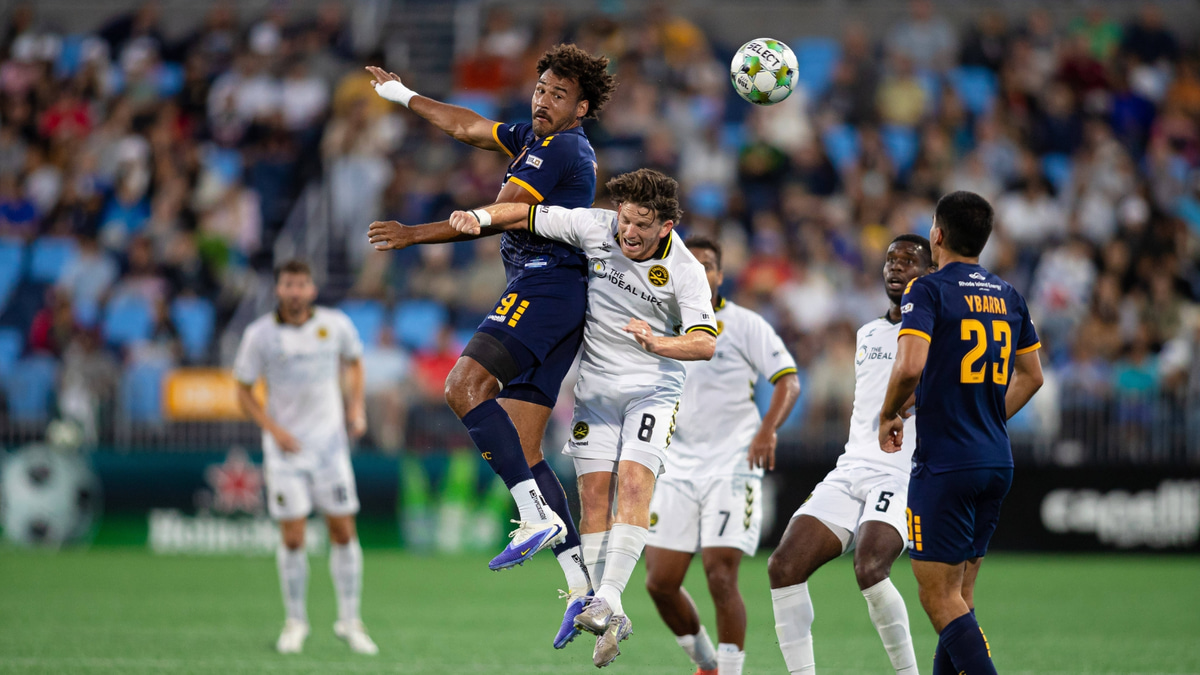
The 2026 USL Championship season has been plunged into doubt amid ongoing disagreements over a new Collective Bargaining Agreement (CBA).
The second tier of American men's soccer is slated to kick off its 2026 campaign on 6 March when Lexington take on Louisville City in the derby known as the Commonwealth Cup.
However, whether this game and subsequent matches will actually go ahead is currently uncertain. The USL Players Association (USLPA) has authorised potential strike action because of a lack of a CBA.
Despite 18 months of tense and tedious negotiations, there is still no agreement. The previous CBA expired on 31 December, and with the two parties still unable to find common ground, players are understandably threatening to boycott the start of the new season.
With USL trying to expand at a breakneck pace - promotion and relegation and a new Division I league are scheduled for 2028 - the CBA standoff has raised questions about the organisation's sustainability and ability to realise its grand plans.
USL's CBA impasse explained
The CBA issue has been rumbling on since 2024, when negotiations over a new arrangement officially began. However, it wasn't until 2025 that things really began to pick up, and information made its way to the public.
As the 2025 USL season drew to a close, the looming expiration of the previous CBA became a hotly discussed topic. It was no secret that the league was playing hardball with the USLPA.
Players from FC Tulsa and Pittsburgh Riverhounds walk onto the field for the USL Championship final wearing shirts saying “USL HQ: Pro Rel? Try pro standards first.”
USL HQ has announced a new first-division league including promotion & relegation in 2028. pic.twitter.com/0iLOXLUljS— Ben Wright (@benwright) November 22, 2025
The players ultimately decided to use the USL Championship playoff final to draw nationwide attention to their struggle. Pittsburgh Riverhounds and FC Tulsa players walked out onto the pitch wearing T-shirts with the message, "USL HQ: Pro Rel? Try Pro Standards First."
Because of the protest, the Hounds were denied a proper trophy ceremony after beating Tulsa. December came and went, and nothing changed. The CBA deadline expired, and now here we are.
Generally speaking, the main point of contention is professionalisation. The USL Championship and USL League One are fully professional on paper. However, they essentially remain minor leagues and, as such, there are vast discrepancies compared to other pro leagues in the US.
Something as basic as healthcare was not enshrined in the previous CBA. Player insurance was at the clubs' discretion, and while around 80% of them did cover their players' healthcare, the economically weaker ones did not.
Although USL's expansion fees have massively increased in recent years, they are nothing compared to the eye-watering sums of cash ownership groups pay to get into MLS. Accordingly, club owners in USL are generally not as wealthy as in MLS.
This means that there are plenty of clubs in USL that struggle to offer a fully professional environment. Over the past decade, there have been various reports of players working in unacceptable conditions, with clubs like Hartford Athletic and Loudoun United notorious offenders.
USL clubs are generally not profitable. 20 pro franchises have folded since 2015, and it is likely that an increase in expenses, brought about by a new CBA, would result in more clubs going under. That said, if you can't pay your players, you shouldn't own a club. It's as simple as that.
Official club statement on the 2026 @USLLeagueOne season. pic.twitter.com/XHqItQ77zh
— South Georgia Tormenta FC (@Tormenta_FC) February 23, 2026
League One side South Georgia Tormenta suspended operations two weeks before the start of the new season due to an inability to cover workers' compensation, leaving a full roster of players suddenly without employment.
Earlier in the offseason, North Carolina FC, a team that had flip-flopped between League One and the Championship, announced that it would go on hiatus until the launch of the new Division I league.
Around a quarter of players made less than $35,000 in 2025. By comparison, the minimum salary for reserve players in MLS was $80,622 last year. For a senior roster spot it was $104,000.
In early December, ESPN reported that, as part of the CBA negotiations, USL had proposed a minimum salary for its new top division, the USL Premier, of $55,000 for its inaugural season in 2028. By 2031, it was supposed to rise to $70,000.
To again compare this with MLS, in 2027, the final year of the current CBA, a reserve player will make at least $97,970, and a senior player will make $125,875. The minimum salary for an NWSL player will be $67,000 in 2028, as per the league's new CBA.
Understandably, USL's proposals have thus far been well below the USLPA's expectations. That is why last week the union announced that 90% of the players had rejected USL's latest offer and authorised strike action if necessary.
"With one week until kickoff of the 2026 season, United Soccer League Players Association players remain without a new collective bargaining agreement following 547 days of negotiations with the United Soccer League and its USL Championship clubs," the USLPA wrote.
"This week, around 90% of the player pool participated in a vote on the League’s latest proposal. Approximately 90% of the players rejected it and authorized the player-led bargaining committee to take all necessary steps, including calling a strike if negotiations fail to produce a satisfactory agreement.
"Players are preparing for the start of the Championship season while continuing to push for an agreement that reflects true professional standards. Players are unified in their demand for a fair deal that guarantees basic protections, safe working conditions, and standards that professional athletes deserve."
USL Statement pic.twitter.com/1tbXg7yPz4
— USL Championship (@USLChampionship) February 27, 2026
The USL was forced to address this announcement with a statement of its own. "We have been negotiating in good faith with the USLPA for more than a year and remain committed to reaching a fair and sustainable collective bargaining agreement," the league stated.
"During that time, we have met regularly - including through mediation - and have made meaningful progress on key issues identified by the players. The league and its clubs have proposed 12-month contracts, increased minimum compensation, health insurance for all players, and expanded professional standards covering housing, travel, team meals, medical staffing, training facilities, and overall player care.
"We have also proposed increased group licensing compensation and league-level royalties as part of our broader economic package. Our latest proposal reflects significant increases in pay, benefits, and professional standards while preserving the stability and growth of the USL Championship.
"While the players have authorized a strike, we remain focused on continuing negotiations and finalizing a CBA that supports the players, strengthens the league's future, and ensures the game remains accessible to fans and communities across the country."
The USLPA has since released a scathing response to USL's statement, deconstructing the league's claims with an infographic. The union also accuses the league of unilaterally announcing the launch of its D1 league without informing the players, which "derailed" negotiations at the time.
Let’s dig into what this statement is saying, and not saying.
2/3 pic.twitter.com/spHIslAwRe— USLPA (@USLPlayers) March 2, 2026
Even before the USLPA officially authorised a strike, Pittsburgh Riverhounds midfielder Robbie Mertz, a member of the USLPA executive board, confirmed to journalist Matthew Baldwin that there is a non-zero chance of a strike happening.
“I mean, I’m not going to say that it’s not in the cards," Mertz admitted. "The CBA has expired, and there are some legal ramifications and a process for how the negotiations will continue once the CBA expires. I won’t necessarily go into that, but it’s been a difficult process for both sides. There hasn’t been a lot of progress, or as much progress as I think any of us has wanted to see.
"And ultimately, from the player’s perspective, I think we feel like our demands are very reasonable, that we’re trying to put guys into a situation where what they’re doing here on the football field as part of their careers is sustainable for them, and we think that that’s a good thing for the entire ecosystem when you have players who can stay in the league longer, because the product improves.
"Speaking for myself, I’m an example of one of those people who has benefited from the first CBA, and I think everybody recognizes that the first CBA put our league in a better position, and we are trying to continue to advance that," he added.
"I don’t think that that has necessarily been reciprocated from the other side. So, we’re looking for them to invest in their product. I think they’re a little bit right now, trying to keep costs as low as possible. And they view us as expenses, not as assets."
Lockouts due to CBA standoffs are nothing out of the ordinary in professional American sports. The NHL, MLB and WNBA have all been in similar situations with their players, while MLS referees went on strike in 2024.
In the latter case, an agreement was only reached more than a month into the new season, necessitating the use of replacement referees. This, of course, is not an option during a player lockout.
With no arrangement between USL and the USLPA in sight, it seems doubtful that the 2026 season will go ahead as planned. Unless an agreement can miraculously be reached in the next few days, players will surely refuse to play at the weekend, as is their right.
The FootballTransfers app
Check out FootballTransfers' new app for all of football's big storylines, transfer rumours and exclusive news in one convenient place directly on your mobile device.
The FootballTransfers app is available in the Apple App Store. Download here:
Read more about:
MLS
USL Combine