

-
News
FIFA accused of conspiracy as new World Cup rule makes Infantino's dream come true
4 min read
News

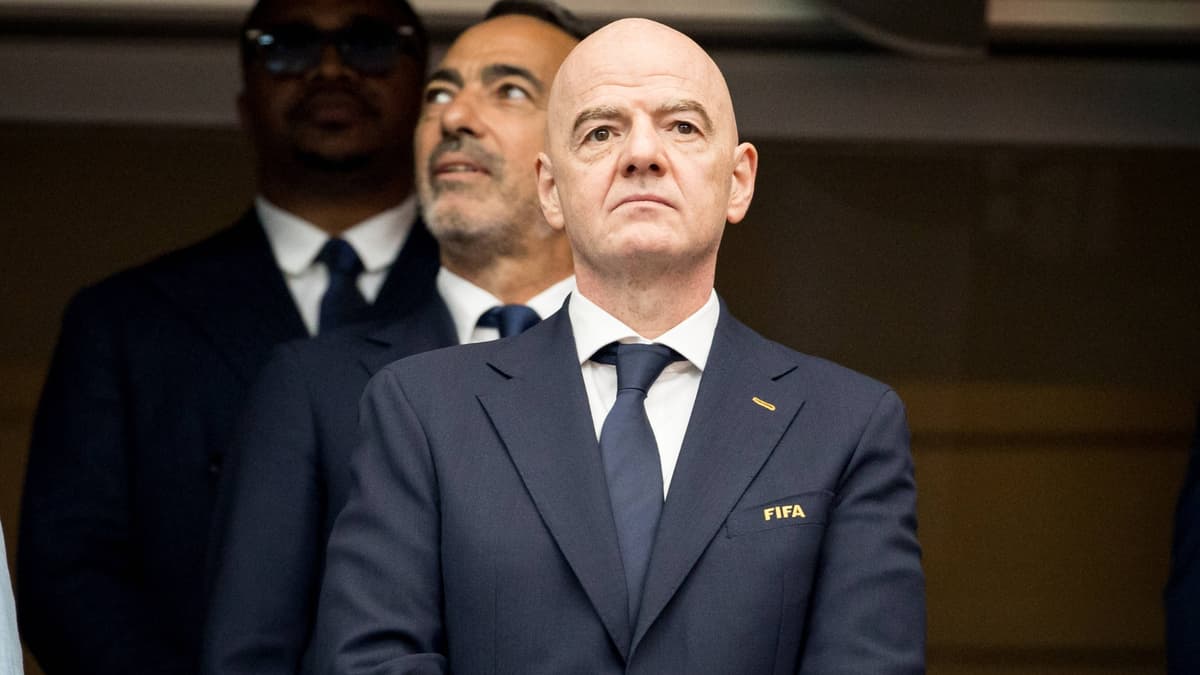
FIFA have been accused of deliberately fixing the 2026 World Cup on a number of occasions throughout the tournament and a new rule they introduced regarding the draw has fuelled further conspiracy theories.
Ahead of the 2026 tournament, FIFA decided to slightly alter the process of determining the pathway to the final and the result is a semi-final line-up they wanted all along. The top four countries in the FIFA World Ranking - Spain, Argentina, France and England - were separated in the draw to ensure they couldn’t face each other until the semi-finals if they all topped their groups.
When announcing the seedings last November, FIFA said: “To ensure competitive balance, two separate pathways to the semi‑finals have been established. This will ensure that, should they win their groups, the two highest-ranked teams will not meet before the final [Spain and Argentina].”
All four countries duly won their groups and after three knockout stage victories apiece, Spain will play France in the first semi-final, before England meet Argentina in the second semi-final clash.
FIFA adopted this tennis-style seeding in order to avoid blockbuster clashes until the final stages of the World Cup, but the draw was ultimately designed for this exact scenario to happen.
As a result, conspiracy theorists have argued that FIFA have made a number of decisions to favour the biggest nations in order to make sure that Spain, Argentina, France and England all made it through to the semi-finals.
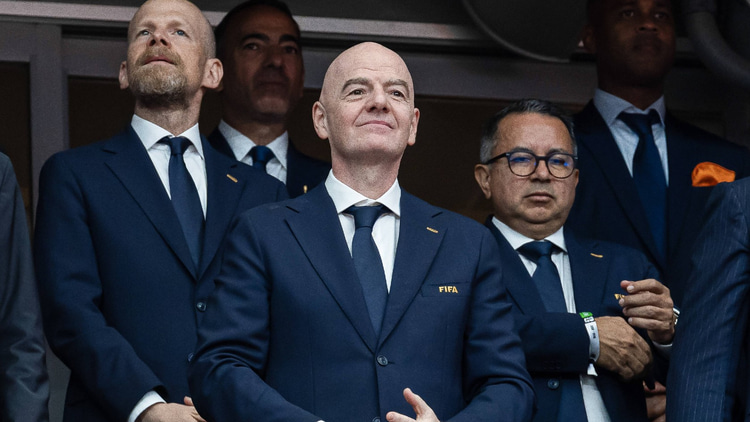
FIFA in conspiracy battle
Spain and France have largely avoided any major incidents at the World Cup, but the same can’t be said for Argentina and England, both of whom have benefitted from decisions throughout the tournament.
Jude Bellingham’s equaliser against Norway in the quarter-final was highly controversial as the ball appeared to hit a spidercam wire in the air before it was collected by Elliot Anderson. FIFA’s telemetry data confirmed that no touch occurred, however this was contested by Norway boss Stale Solbakken after the match.
“He [the referee] says that he didn't see it himself and that he didn't get any message that it actually happened,” Solbakken told reporters.
“That's a good explanation and since Fifa says there was no touch and there was no signal from the chip of the ball, then he can't do anything about it. The ball fell straight down, right in front of the bench, so it did touch it…
“I can’t say anything about that because if there was no sound from the chip, what can I say? The ball dropped down straight from heaven, says everyone – including the goalie, including the guy who was going to receive the ball. I think it was pretty clear that it did. It was a strange thing.”
Norway later had a goal disallowed for a foul committed by Erling Haaland on Elliot Anderson and this decision was also slammed by several players after the match. However, the Manchester City striker did appear to push his new club team-mate, while England were on the wrong end of a VAR decision in extra-time when a penalty for a foul on Djed Spence was contentiously overturned.
Before England’s goal in minute 45+2 against Norway, the sensor in the Connected Ball showed no peak in the 'heartbeat of the ball' when in the air, and therefore no evidence that the ball touched the overhead wire and changed the movement of the ball. pic.twitter.com/gYf9ukfveT
— FIFA Media (@fifamedia) July 11, 2026
Argentina, on the other hand, have benefitted from several huge referee decisions and FIFA have been accused of deliberately favouring Lionel Scaloni’s side in order to ensure Lionel Messi continues to progress in the tournament.
The Inter Miami star is a global superstar, and arguably the best player of all time, and conspiracy theorists have argued that keeping him in the competition will keep eyeballs on the World Cup, and therefore improve FIFA’s revenue.
Egypt were on the wrong end of a number of debatable refereeing decisions during their last-16 loss to Argentina, most notably when their second goal was ruled out for a foul on Lisandro Martinez in the build-up.
Against Switzerland, Argentina benefitted from a VAR check yet again as Breel Embolo was shown a second yellow card for simulation after a new rule allowed referee Joao Pinheiro to overturn a booking he had initially given to Leandro Paredes.
After the match, Switzerland manager Murat Yakin said: “We were punished because of a mistake. There was no reason for that booking. I don’t understand it. It was an innocent situation; there was nothing malicious about it.
“That decision was simply unbelievable. I completely disagree with it. There was clear contact, and I don’t understand how the referee and the VAR came to that conclusion.”
Spain and France haven’t benefitted from any hugely contentious decisions at the World Cup, while a number of situations have perhaps evened themselves out for England. Argentina, however, have certainly been fortunate with several VAR calls and with FIFA’s dream semi-final coming true, it’s no surprise that president Gianni Infantino is embroiled in a conspiracy battle.
Related stories:
Transfer Rumours: Alejandro Garnacho talks as Arsenal target surprise move
Premier League summer transfers 2026: All the Done Deals
The FootballTransfers app
Check out FootballTransfers' new app for all of football's big storylines, transfer rumours and exclusive news in one convenient place directly on your mobile device.
The FootballTransfers app is available on Google Play and in the Apple App Store. Download here:
Read more about:
World Cup U20
FIFA Club World Cup