
-
News
- 4 hours ago
FIFA breaks its own unwritten rule before Lionel Messi's World Cup quarter-final
4 min read
News

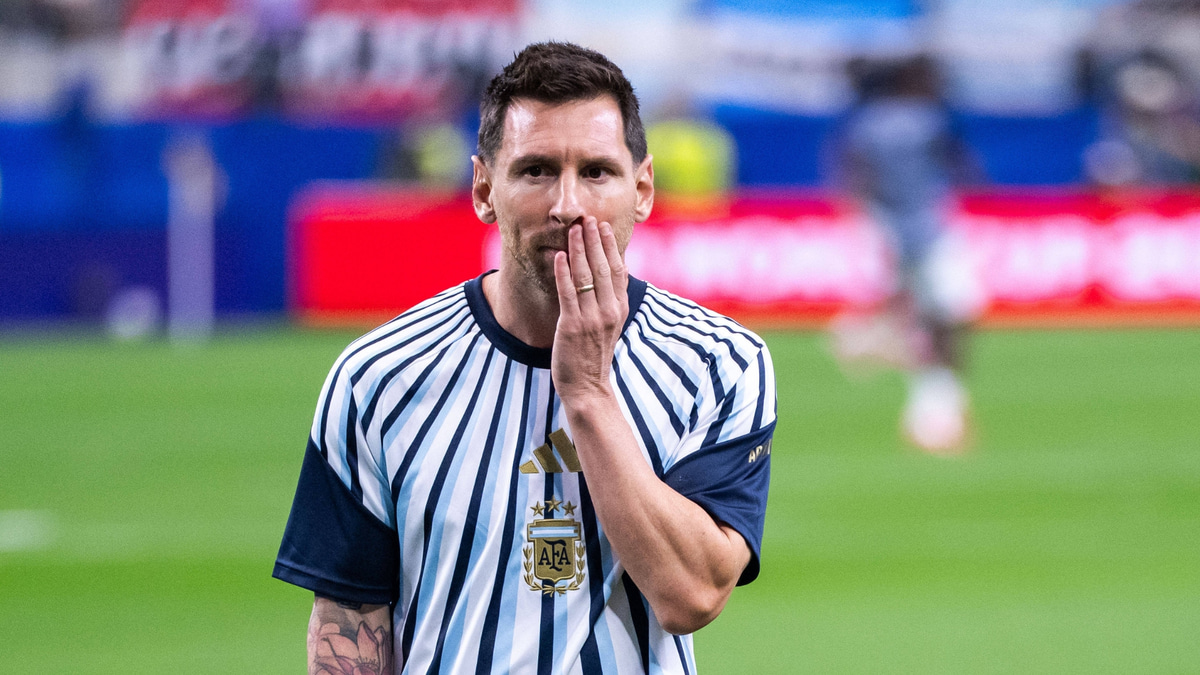
Referees have been a hot topic of conversation at the World Cup throughout the competition, and FIFA is ready to court more controversy on the issue for Argentina’s quarter-final meeting with Switzerland, during which it has broken its own unwritten rule on the subject.
Lionel Messi’s side are aiming to defend their title successfully for the first time, but have two hurdles yet to clear before potentially facing France or Spain in the showpiece in East Rutherford on 19 July.
Argentina have already overcome Algeria, Austria, Jordan, Cape Verde and Egypt to reach this stage of the competition, albeit struggling in their two knockout games. Messi’s influence, though, has been decisive, with the eight-time Ballon d’Or winner scoring eight times to fire the defending champions to the last eight.
FIFA put Portuguese referee in charge of Argentina v Switzerland
FIFA’s choice of referee for the Albiceleste’s quarter-final could potentially be an inflammatory one.
Portuguese ref Joao Pinheiro has been nominated as the central match official. In itself, this is nothing unusual, but it marks a first for FIFA at the 2026 World Cup in that football’s governing body previously had an unwritten rule to nominate confederation-neutral match officials in each of the tournament’s previous 99 games.
This means that when two nations from different continents have faced off against each other, the referee has previously been from a third confederation.
The shift in stance comes after a series of controversies, which have prompted FIFA to opt for officials who habitually oversee top-level, high-pressure games for the quarter-final stages.
This has led to referees whose nations remain active in the tournament being assigned to these fixtures, with Argentina’s Facundo Tello taking charge of France’s clash with Morocco, England’s Michael Oliver getting Spain v Belgium and Frenchman Clement Turpin overseeing Norway’s match with England.
Pinheiro will be unique in that he is the only central official involved at this point in the competition whose country is not still active.
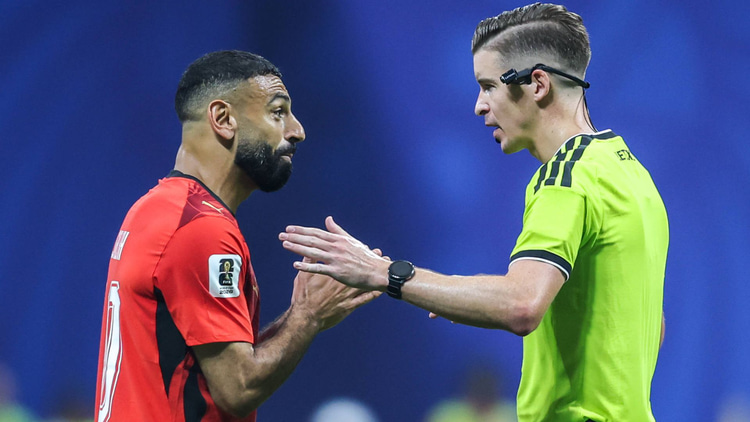
FIFA’s chief refereeing officer Pierluigi Collina is confident in his team of officials.
“Of course, constructive discussion about decisions will always be part of football, but unfounded allegations have no place in our sport,” he said.
“Nobody can question the integrity of the FIFA World Cup match officials. When this happens, it may provoke reactions that lead to threats against them and their families. This is not right.
“Equally, nobody can claim that FIFA refereeing can be influenced by anyone, not even by the FIFA president Gianni Infantino.”
World Cup 2026’s biggest refereeing controversies
5. Balogun’s red threatens to set off chain reaction (USA v Bosnia, last 32)
While the legality of Folarin Balogun’s red card appeared clear, what followed could not be predicted and was entirely without precedent. FIFA elected to ignore its own statues to ensure that the USMNT striker was not banned for the following clash against Belgium, despite fining the Monaco star for his challenge. The decision may be the least controversial of those on this list but threatens to have the biggest long-term ramifications as it came after an intervention from US President Donald Trump and is one that threatens to undermine the leadership of FIFA president Gianni Infantino.
4. Tantashev ignores Paraguay's brutality (Paraguay v France, last 16)
Uzbek referee Ilgiz Tantashev proved to be out of his depth as Les Bleus struggled past a very physical challenge from Paraguay as a string of major incidents were missed. Among the biggest were an apparent punch on Kylian Mbappe off the ball in the first half, a kick aimed at the Real Madrid striker in the second and a booking for Michael Olise for confronting an opponent who clearly dived. It didn’t cost France, but it was a shambolic performance from the match official, who had earlier in the tournament denied Scotland two clear penalties and a red card against Morocco.
3. Tah thwarted by dubious call (Germany v Paraguay, last 32)
Paraguay's progress to the last 16 arrived at the expense of Germany, who were left seething as a goal from Jonathan Tah was disallowed for a ‘foul’ on goalkeeper Orlando Gill. In reality, any contact made with Waldemar Anton seemed to be initiated by the shot-stopper. Yes, goalkeepers tend to be treated leniently, but this was an example to that took that to the extreme and ultimately cost Julian Nagelsmann his job.
2. Pharaohs furious after disallowed goal (Argentina v Egypt, last 16)
Argentina have been at the heart of their own World Cup controversy already this summer, with a goal for Mostafa Zico disallowed for a foul on Lisandro Martinez at the other end of the field. This infraction came several seconds before the ball found the net. Egypt’s anger was magnified by the fact that in the lead up to what proved Argentina’s winning goal, they felt they had strong claims for a penalty.
1. Croatia denied by new technology (Portugal v Croatia, last 32)
Croatia’s Josko Gvardiol has a last-gasp equaliser controversially ruled out for offside after new ‘Snickometer’ technology is applied for the first time. FIFA go public on the issue but there is widespread scepticism over the lack of ‘noise’ on the graphic, particularly since the vibration, which could only have been caused by a literal hair of a Croat, is only picked up in a frame well after the contact might have taken place. On top of this, there appears a legitimate claim that the goal arrived in a new phase of play after a defender deliberately played the ball. This sparked conspiracy theories suggesting that FIFA wanted Cristiano Ronaldo’s side to progress.