
-
News
- 11 Aug 2026
Lionel Messi Becomes the World Cup's Most Decorated Scorer EVER, But Is This His Final Bow?
15 Jul 2026 04:27 BST |
8 min read
News

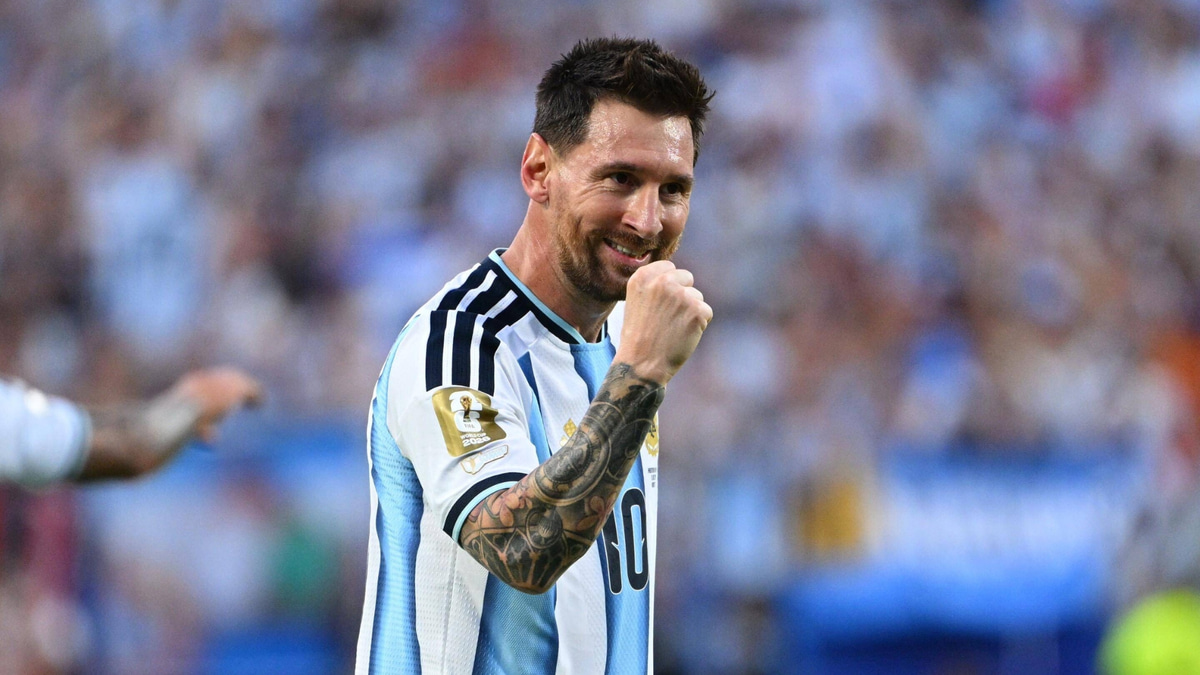
At 39, Lionel Messi is probably playing in his final World Cup, and he’s spending it breaking records that may survive long after he leaves the international stage.
Eight goals. Four assists. Twenty-one World Cup goals across his career. A place in another final. One more chance to lift the trophy, and one more match in a Golden Boot race.
He was supposed to arrive as Argentina’s respected captain, manage his minutes carefully and choose his moments. He might still provide the occasional pass, penalty or free kick, but the physical demands of an expanded tournament were expected to push younger teammates into the leading positions.
Instead, Messi has become the tournament’s leading scorer and the new owner of its most famous individual record.
His eight goals have placed him level with Kylian Mbappé in the Golden Boot race. His four assists give him the advantage if the two finish level. His career total of 21 World Cup goals has taken him past Miroslav Klose and onto the top line of the competition’s record book.
A Tournament for the Ages
Messi arrived at the 2026 tournament having already won every major international trophy. He had won the Copa America, the Finalissima and, most significantly, the 2022 World Cup. That victory in Qatar removed the one argument that had survived every club trophy, individual award and extraordinary season of his career.
Argentina had a title to defend, Messi had an almost perfect ending to protect, and the expanded format created a longer route to the final. He returned anyway. The result has been one of the greatest late-career tournament performances football has seen.
His game has changed, but its effect has not disappeared. He doesn’t cover the same ground he once did. He spends more time watching the defensive line and waiting for the match to reveal where the next opening may appear. He doesn’t press every center-back or repeatedly sprint from the halfway line. And Argentina doesn’t need him to.
8 Goals, 4 Assists, One Record-Breaking Run
The raw totals say that Messi has directly contributed to 12 goals during the tournament. He has scored eight himself and created four for teammates, placing him at the center of Argentina’s title defense and the Golden Boot race.
Messi remains Argentina’s leading penalty taker, which gives him a clear route to goals whenever opponents make a mistake inside the area. He’s still a threat from direct free kicks and can punish goalkeepers who leave space around either side of the wall.
Also, Messi no longer needs to dominate every minute. He needs to dominate the right five seconds. England discovered that in the semifinals. For 84 minutes, they prevented him from scoring and limited his clearest shooting opportunities. By the end, he had created both Argentina goals and decided the match.
The Goal Everyone’s Still Arguing About
Argentina’s equalizer against England should have been remembered primarily for Enzo Fernández’s finish and the pressure that had built before it. Instead, much of the post-match discussion centered on Messi’s position during the build-up and whether or not he was offside.
Being in an offside position is not automatically an offence. A player must become involved in active play, interfere with an opponent or gain an advantage from the position. The precise moment of the pass, Messi’s effect on England’s defenders and whether a new phase had begun were scrutinized on social media.
A single image travels fast. Supporters see Messi standing beyond a defender and assume the decision must be obvious. Others see the same image and argue that he was not involved in the decisive action.
Earlier in the tournament, Messi avoided a card after appearing to catch Algeria’s captain with a stamp. Other opponents and supporters had complained about refereeing decisions during Argentina’s route through the knockout rounds.
So, has Argentina received favorable treatment? Were referees reluctant to punish the tournament’s biggest player? Was the reaction simply the normal frustration that follows a dramatic defeat? Were viewers looking for evidence to support a conclusion they had already reached?
The scrutiny exists because Messi remains decisive. Every call involving him can affect the record book, the Golden Boot race, the World Cup odds or even the identity of the champion.
The Numbers That Will Outlast Him
The debate around Argentina’s equaliser will eventually lose some of its heat. The numbers will remain.
He has played across six World Cups, from a teenage appearance in 2006 to a final at 39 in 2026. He has developed from a substitute in a team built around older stars into Argentina’s captain, leading scorer and central creative player.
Few players have remained at the top long enough to succeed in so many different stages of their careers.
21 Career Goals-The All Time Record
Miroslav Klose’s record once looked safe. The German striker scored 16 World Cup goals across four tournaments.
For more than a decade, 16 represented the number every elite tournament scorer had to chase. Messi has moved it to 21.
Messi scored once in 2006 but went without a goal in 2010. He scored four times during the 2014 group stage, then failed to find the net in the knockout rounds. He added one goal in 2018. At that stage, Klose remained 10 goals ahead, and Messi was already 31 years of age.
Qatar transformed the chase. Messi scored seven goals in 2022, taking his career total to 13. He then added eight in 2026 to reach 21 and move five beyond Klose.
Yet his record may face an immediate challenge.
Mbappé has already reached 20 World Cup goals at the age of 27. France’s elimination from the title race didn’t end his tournament because he can still score in Saturday’s third-place match against England. One goal would bring him equal with Messi before the final.
Six Straight Knockout Goals
For years, one statistic followed Messi into every World Cup - he had never scored in a knockout match.
He had created goals and produced excellent performances, but the absence remained easy for critics to target. Argentina had reached the quarterfinals in 2006 and 2010, the final in 2014 and the round of 16 in 2018 without Messi scoring after the group stage.
The World Cup in Qatar changed everything. Messi scored against Australia in the round of 16. He converted a penalty against the Netherlands in the quarterfinal, scored another against Croatia in the semifinal and found the net twice against France in the final, becoming the first player ever to score in every knockout round.
This year, Messi scored in Argentina’s first two knockout matches, extending the sequence to six consecutive knockout appearances with a goal. No player had managed such a run for 60 years.
Tied With Mbappé, Favored for the Golden Boot
Messi and Mbappé enter the final weekend with eight goals each. That’s where the comparison ends.
Messi has four assists, while Mbappé has three. Under the tournament’s Golden Boot tiebreak procedure, assists separate players who finish level on goals, meaning that Messi has an advantage.
France still has one match remaining. Their third-place playoff against England takes place on Saturday, and goals scored in that fixture count toward individual tournament totals. Mbappé could therefore move ahead before Messi walks onto the pitch against Spain.
That creates several possible scenarios.
If Mbappé doesn’t score, Messi can win the Golden Boot without adding to his eight goals.
If Mbappé scores once, Messi may need a goal or another assist to restore his advantage.
If Mbappé scores twice, the pressure will be on Messi.
Messi will know the target before the final begins.
The race is also a preview of the record battle likely to continue beyond 2026. Messi has 21 career World Cup goals. Mbappé has 20. Messi has eight at this tournament. Mbappé has eight. One is approaching the end of his international career. The other may have several World Cups ahead of him. For one final weekend, they remain neck to neck.
One Last Chance at a Fourth Star
Sunday gives Argentina the chance to add a fourth star to their shirt. The country won its previous titles in 1978, 1986, and 2022. Victory against Spain would make the current side the first Argentina team to retain the World Cup and the first nation to win consecutive tournaments since Brazil in 1958 and 1962. For Messi, it would be the second World Cup title.
Messi is not personally chasing a fourth championship. He’s trying to lead Argentina to their fourth while adding a second winner’s medal to his own career. He doesn’t need it to complete his legacy. That happened four years ago in Qatar.
Returning in 2026 risked disturbing that perfect record. Instead, he has created the possibility of an even greater one.
Argentina is one victory from becoming repeat champions. Messi is one match from finishing his final World Cup with the scoring record, the Golden Boot and the trophy. But Spain won’t go down without a fight.
Their possession game could force Argentina to defend for extended periods. Their midfield movement may limit Messi’s touches, while their high defensive line will attempt to keep him away from the penalty area.
Two Live Promos, One Final: Betting on Messi to Be the Difference-Maker
There are two live Stake promotions connected to Sunday’s final, and both offer a different way to approach Messi and Argentina.
“Score First, You Win” applies to the match-winner market. Under the promotion, an eligible selection is settled as a winner if the backed team scores the opening goal, regardless of the eventual match result. That changes the normal risk attached to the 1x2 market.
Under standard settlement, backing Argentina requires them to win within the specified match period. With “Score First, You Win”, an Argentina opening goal can trigger the promotional payout even if Spain later equalizes or completes a comeback.
The second promotion focuses directly on Messi and Lamine Yamal. Both players are boosted to 10.0 to score at any time. Fans choose one of the two players, and the maximum stake is $5. The offer runs alongside “Score First, You Win.” At odds of 10.0, a successful $5 bet would return $50, including the original stake.
The market does not require the selected player to score first. It only requires him to score during the qualifying match period.
The anytime market is more relaxed. Messi can score early or late. He can convert a penalty, finish a transition, strike from distance or find the net from any other position.
The order of goals doesn’t matter. His tournament numbers provide obvious arguments. He has scored eight times. He has reached 21 career World Cup goals.
Before the England semifinal, he had scored in six consecutive knockout matches. He remains Argentina’s penalty taker and has another full match in which to settle the Golden Boot race.
Backing Argentina through “Score First, You Win” is a team-result selection with an early-payout condition. Backing Messi at boosted anytime scorer odds is an individual player bet.
Messi can score while Argentina loses.
Argentina can score first without Messi finding the net.
Back Him for One More Moment
Messi’s World Cup legacy was secure before this tournament began. Now it has another page of numbers. Eight goals. Four assists. Twenty-one career World Cup goals. Six consecutive knockout appearances with a goal before the semifinal. Nine straight World Cup matches with a goal or assist.
Two assists in the final minutes against England. One more final.
Has the scoring record finally become unreachable? Mbappé is one goal behind.
Has Messi secured the Golden Boot? Mbappé still has the third-place match.
Has his perfect ending already happened? Spain is waiting in the final.
Is he too old to decide another major match? He has eight goals and four assists at 39.
However Sunday ends, Messi has already rewritten the World Cup record book. The career total belongs to him, even if Mbappé may soon take it. The knockout scoring run belongs to him. The 2022 title is there, and the 2026 final adds another extraordinary achievement.
Read more about:
World Cup U20